
KAI plans to implement ATP technology to enhance safety
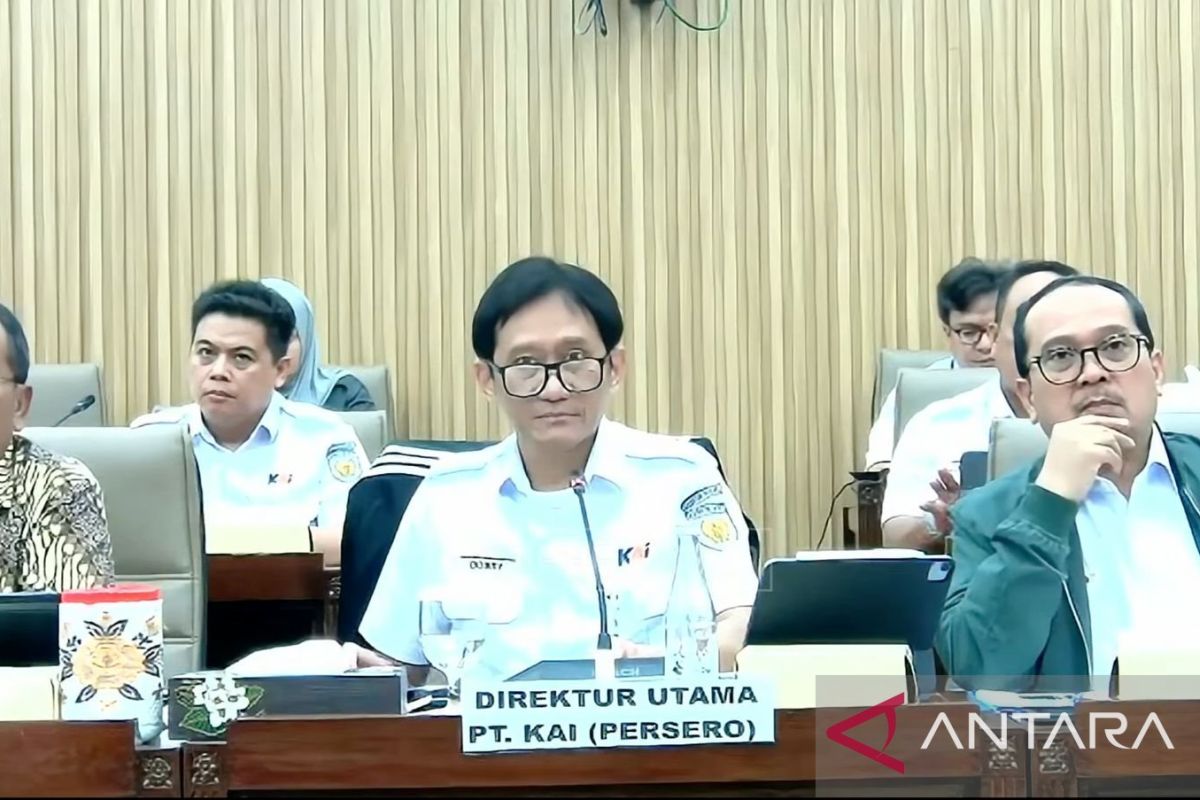
PT Kereta Api Indonesia (Persero), known as KAI, plans to implement Automatic Train Protection (ATP) technology on conventional railway networks to enhance the safety and security of train journeys.
During a hearing with Commission VI of the Indonesian House of Representatives (DPR RI) in Jakarta on Wednesday, KAI President Director Bobby Rasyundian explained that currently, train drivers serve as the final layer of protection, relying on visual observations of trackside signals. In contrast, the Light Rail Transit (LRT) system has already implemented Grade of Automation (GoA) 3, a driverless system where computers manage protection against potential train collisions.
“For conventional trains, we are currently planning what we call Automatic Train Protection,” said Bobby. He noted that two technological approaches are being considered. The first is a conventional method based on wayside and onboard systems, which relies on sensors installed on trains and receivers placed along the tracks. “This is certainly expensive, heavy, and will take a long time to implement,” Bobby added.
Alternatively, KAI is considering newer technology based on satellite and wireless communications via the Future Railway Mobile Communication System (FRMCS).
On the same occasion, Bobby emphasised KAI’s focus on improving safety and security at level crossings. He stated that safety is one of the company’s three main pillars, alongside maintaining operational performance and strengthening customer service.
Bobby explained that the responsibility for managing level crossings lies with central or local governments, depending on whether the intersecting roads are national, provincial, or regency/city roads. Out of a total of 3,674 recorded level crossings, 1,810 are unmanned. Of these, 172 crossings have a road width of less than two metres, while the remaining 1,638 are wider than two metres.
To improve safety, KAI has already closed the 172 narrower crossings. For the remaining 1,638 crossings, the company plans to install portals or safety devices to reduce accident risks. For high-traffic road sections, KAI has proposed the construction of grade-separated crossings to the government, estimating that approximately 40 locations require flyovers to separate rail tracks from vehicular traffic.
According to company calculations, Bobby noted that the required capital expenditure (capex) to manage the 1,638 crossings reaches approximately Rp1.2 trillion. Additionally, the estimated annual operational expenditure (opex) is around Rp700 billion, as it would require more than 8,000 guards working across three shifts.