
KAI Non-Coal Freight Reaches 9.15 Million Tonnes, Trial for Banyuwangi–Jakarta Agricultural Transport Begins
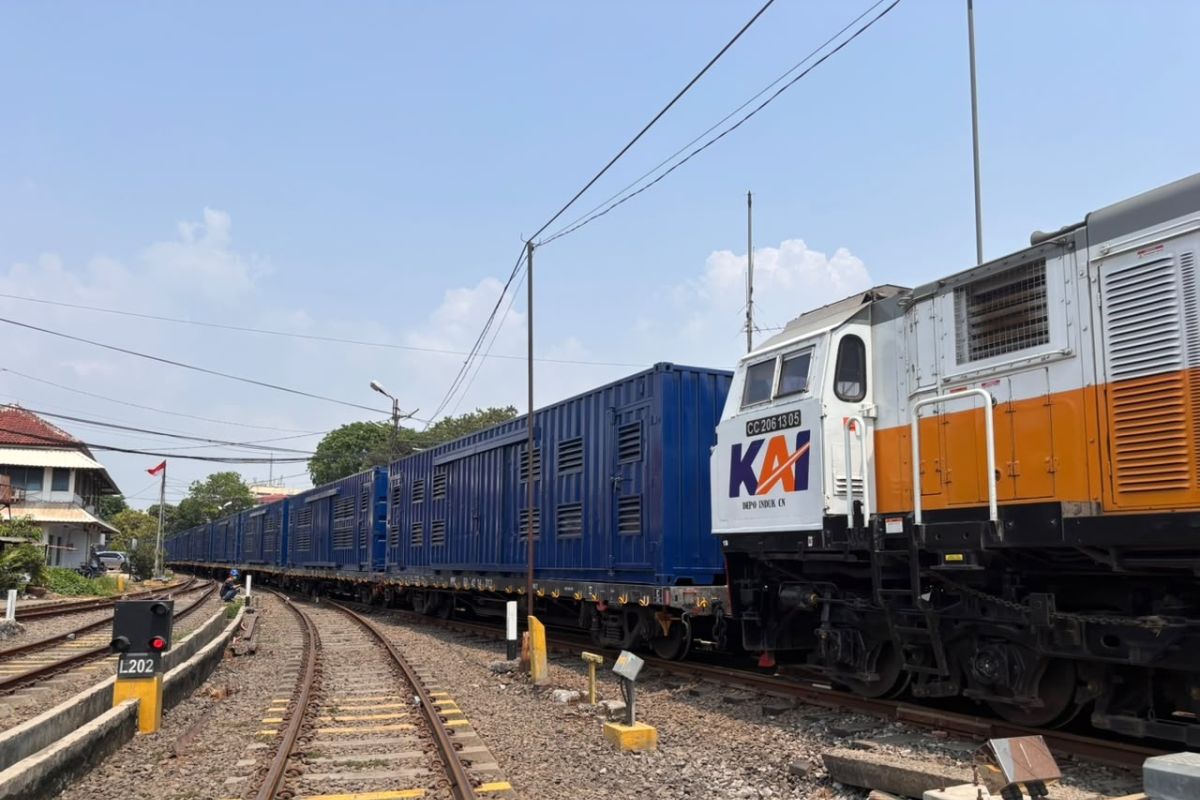
PT Kereta Api Indonesia (Persero) continues to develop rail-based freight services to support the distribution of various national commodities. Between January and September 2026, KAI’s non-coal freight volume reached 9,148,571 tonnes, a 2.6% increase compared to the 9,812,566 tonnes recorded during the same period in 2025.
KAI’s non-coal freight includes various commodities, such as cement and clinker, containers, fuel (BBM), plantation products, retail transport, and fertilisers. In line with this development, KAI is continuously expanding the types of commodities served via rail, including agricultural, food, and livestock products.
One of the latest developments is being undertaken by KAI’s subsidiary, KAI Logistik, which conducted a trial for agricultural transport on the Banyuwangi–Jakarta route on 28 September 2026.
KAI Vice President of Corporate Communication, Anne Purba, stated that the development of this service is part of KAI’s efforts to expand the utilisation of the railway network to support the movement of goods from production areas to consumption centres.
“KAI’s non-coal freight continues to grow with increasingly diverse commodities. The development of agricultural transport from Banyuwangi opens opportunities for wider railway utilisation to support the scheduled and integrated distribution of food commodities between regions,” said Anne.
Dragon fruit served as the initial cargo for this trial. The train departed from Argopuro Station, Banyuwangi, on 28 September 2026, at 08:00 WIB, carrying 10 wagons. The cargo was dominated by agricultural products from Banyuwangi, specifically dragon fruit.
The service is being developed to transport agricultural and livestock commodities from production centres in East Java, particularly Banyuwangi, to Jakarta.
This trial is also part of a comprehensive evaluation of service readiness, covering operational, technical, travel time, loading/unloading processes, supporting facilities, and service readiness from the point of origin to the destination.
“The trial phase is crucial to ensure every process can run according to operational needs. We want this service to be well-prepared, from loading in the production area and the train journey to the commodities arriving at their destination,” said Anne.
The development of this transport is a continuation of preparations for a delivery service for agricultural products such as vegetables and fruit, food, and livestock such as live cattle, on a round-trip Banyuwangi–Jakarta route.
The service is planned to begin regular operations in November 2026. The expansion of this service is intended to continue until December 2030, with a plan to transport 84,200 flat wagons during the cooperation period.
To support operations, loading areas are being prepared at four strategic stations: Argopuro and Kalisetail in Banyuwangi, Rambipuji in Jember, and Probolinggo.
When fully operational, each train is planned to carry up to 20 container wagons with a capacity of approximately 550 tonnes of commodities per trip.
Under the prepared operational scheme, approximately 75 cattle can be transported using three wagons, while the remaining wagons will be used for agricultural products and other commodities.
Transport will utilise containers tailored to the characteristics and type of commodity. For live livestock, facilities are being prepared according to technical standards, safety, operational feasibility, testing, certification, and legal regulations, while also ensuring animal welfare.
In its development, return cargo from Jakarta to Banyuwangi is also being prepared to optimise transport capacity. Potential commodities for the return trip include animal feed, fertiliser, bran, and other logistical needs.
Anne noted that the development of this service will complement KAI’s existing non-coal freight portfolio.
“Railways possess large transport capacities and scheduled journeys. From cement and clinker, containers, fuel, plantation products, retail, to fertilisers, KAI’s freight services continue to evolve alongside logistical needs. The introduction of agricultural and livestock transport is expected to further connect production centres with markets and support the smooth operation of the national food supply chain,” Anne concluded.
Source: jawawa.id (https://jawawa.id/newsitem/kai-non-coal-freight-reaches-9-15-million-tonnes-trial-for-banyuwangi-jakarta-agricultural-transport-begins-1790939011)
Originally published by Antara (Indonesian) (https://www.antaranews.com/berita/5768760/angkutan-non-batu-bara-kai-capai-915-juta-ton-uji-coba-angkutan-hasil-pertanian-banyuwangi-jakarta-dimulai), translated from Indonesian