
KAI Monitors Rail Journey Readiness Amid Changing Weather
Jakarta (ANTARA) – Changing weather is one factor that needs to be taken into account in rail travel. Heavy rain can affect conditions around railway lines, making regular infrastructure inspections and maintenance necessary to support safety and operational reliability.
The Meteorology, Climatology and Geophysics Agency (BMKG) predicts that the start of the 2026/2027 rainy season will be delayed in several parts of Indonesia. Different weather conditions across regions mean travel readiness must take account of the characteristics of each route, including the condition of the line and its surrounding environment.
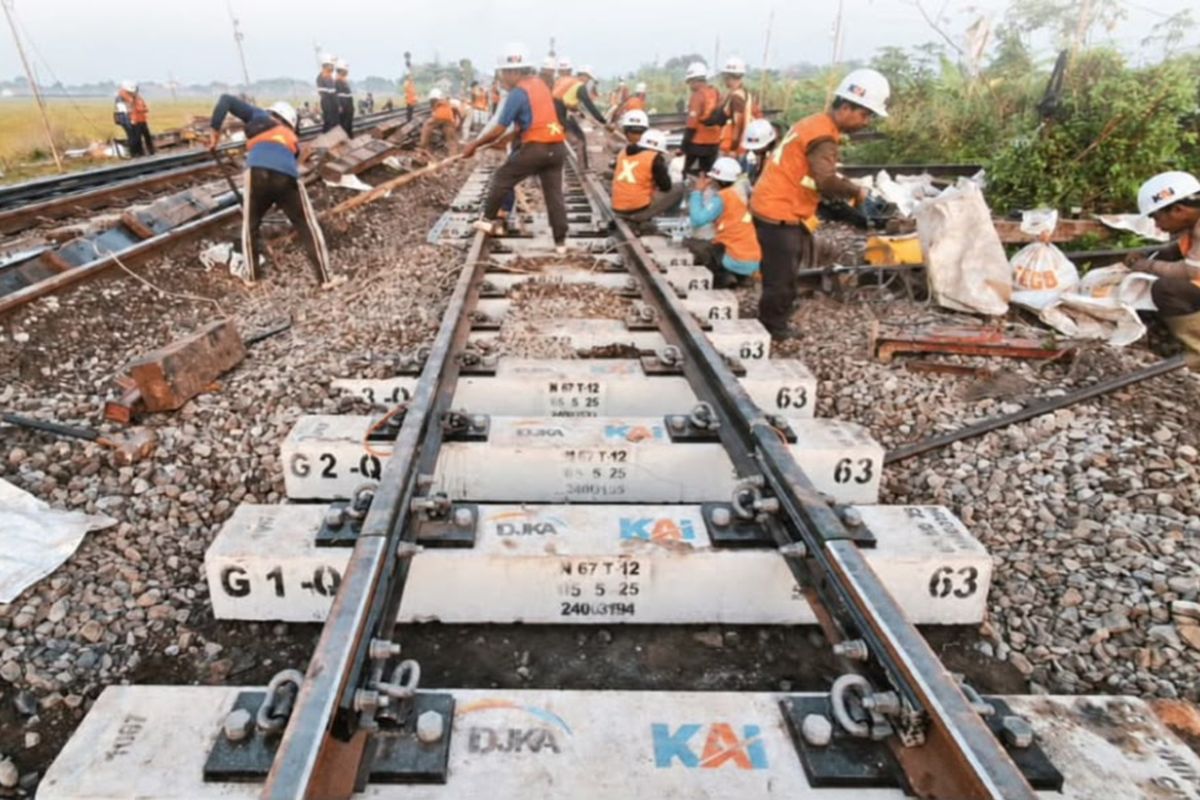
State-owned railway operator PT Kereta Api Indonesia (Persero), or KAI, continues to maintain various infrastructure components, including sleepers, which keep rails in position and transfer train loads to the underlying structure. KAI maintained 20,581 sleepers over the course of this year: 17,025 concrete sleepers and 3,556 synthetic sleepers.
Sleeper maintenance forms part of ongoing track upkeep. Rails, sleepers, switches, bridges and drainage channels also need to be checked based on field inspections to support track stability and anticipate potential operational disruptions.
KAI Vice-President of Corporate Communications Anne Purba said infrastructure maintenance was planned with consideration for the condition of each railway line and the work required in each area.
“Every component of the track plays a role in ensuring safe journeys. Inspections and maintenance are therefore carried out regularly so that infrastructure remains in line with operational standards,” Anne said.
Alongside concrete sleepers, KAI uses synthetic sleepers made from Fiber Reinforced Foamed Urethane in certain structures, including steel bridges. The material can withstand environmental conditions and may have a longer technical lifespan than wooden sleepers, making it one alternative for infrastructure maintenance.
KAI recorded procurement of 68,501 synthetic sleepers between 2022 and 2026. Their use also helps reduce the need to replace wooden sleepers in structures suited to the material.
Preparing railway lines for changing weather also requires attention to soil, slopes and drainage systems around the tracks. Inspections and remedial work are carried out according to actual conditions on the ground so that potential disruptions can be identified and addressed as needed.
“Infrastructure maintenance is ongoing work that needs to be adapted to the conditions of each line. We continue to consider inspection findings and maintenance requirements to support safe and reliable journeys,” Anne said.
KAI urged passengers to follow travel updates through its official channels and heed staff instructions if operational arrangements change.
“Through planned maintenance and the use of materials suited to specific needs, KAI continues to safeguard infrastructure quality to support train journeys in all kinds of weather,” Anne concluded.