
KAI: Manggarai Station being prepared to strengthen Jakarta's transport connectivity
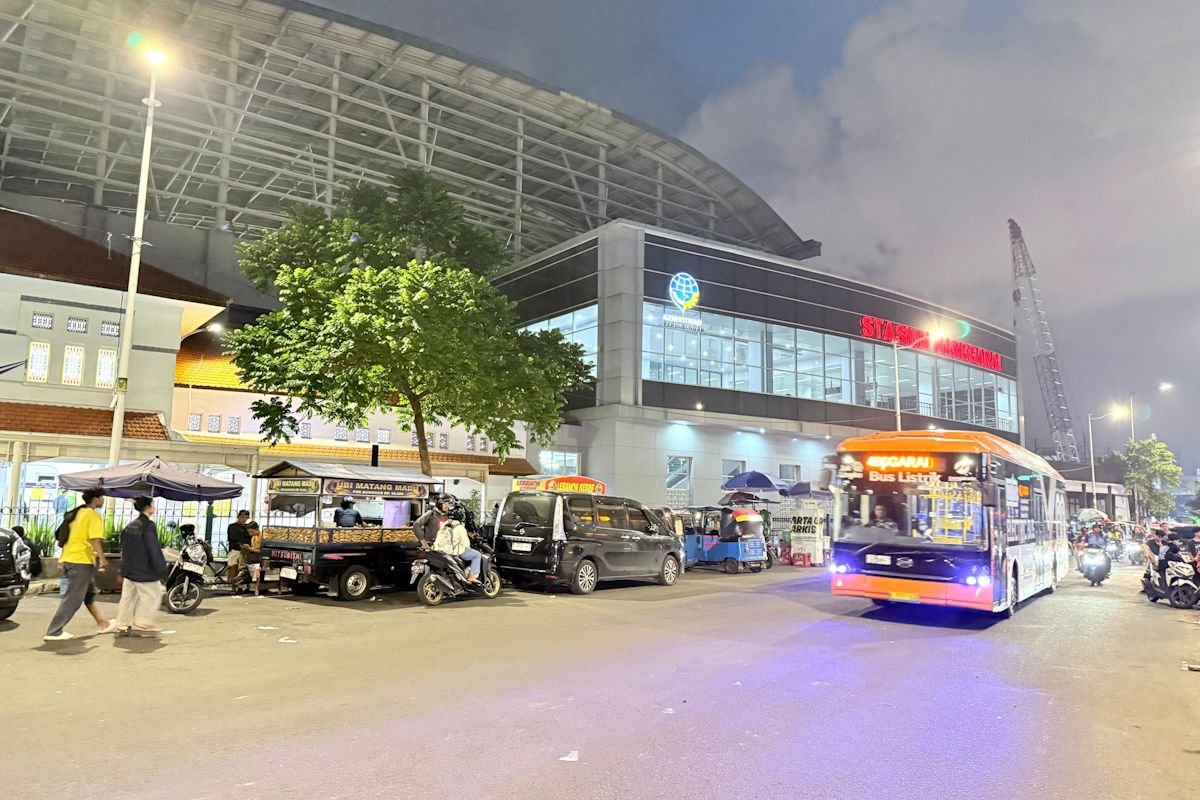
State-owned railway company PT Kereta Api Indonesia (KAI) is preparing Manggarai Station to strengthen Jakarta’s transport connectivity, driven by the need to serve approximately 162,000 passenger movements daily through the integration of various public transport modes. “KAI views Manggarai Station as having a strategic role in the development of Jakarta’s public transport system,” said KAI Vice President of Corporate Communication Anne Purba in a statement in Jakarta on Monday. Currently, activity at Manggarai Station reaches around 162,000 passenger movements per day, with approximately 700–750 train journeys daily. This high level of mobility forms an important basis for strengthening connectivity and the future planning of the Manggarai area. Anne stated that the high volume of public movement makes Manggarai more than just a transit location. The area has the potential to develop into a meeting point for various increasingly connected public transport services. “Manggarai is in a very strategic position for the journeys of people in Jakarta and the agglomeration area. The future focus is on how transfers between services can become easier, journeys more efficient, and access to the areas around the station improved,” said Anne. KAI recorded that the number of electric train (KRL) passengers tapping in at Manggarai Station reached 5,142,739 in 2023, rising to 5,575,711 in 2024, and then to 5,456,309 in 2025. Throughout January–June 2026, the figure has reached 2,716,932 passengers. These numbers demonstrate the significant travel activity centred on Manggarai from year to year. Manggarai’s role has also expanded with the presence of the Airport Commuter Line. Overall, the service handled 1,970,531 passengers in 2023, increasing to 2,242,536 in 2024, and then reaching 2,346,934 in 2025. Specifically at Manggarai Station, 230,314 Airport Commuter Line passengers were recorded from January to June 2026. Looking ahead, connectivity in the area is set to strengthen further with the development of LRT Jakarta Phase 1B Velodrome–Manggarai. According to information from the DKI Jakarta Provincial Government, the line spans approximately 6.4 kilometres with five stations. The provincial government also conducted an operational readiness review for the line in July 2026 as part of preparations for the operation of Phase 1B. With this development, Manggarai is being directed to become an area that integrates KRL Commuter Line, Airport Commuter Line, TransJakarta, Manggarai Terminal, and the LRT. “The easier it is for the public to transfer from one mode to another, the greater the benefits of public transport for the city. Manggarai has the opportunity to develop into an area that is more connected, easily accessible, and close to community activities,” Anne said.