
KAI Logistik Transports 1.19 Million Tonnes of Goods by Container Train, Equivalent to 60,000 Trucks on the Road
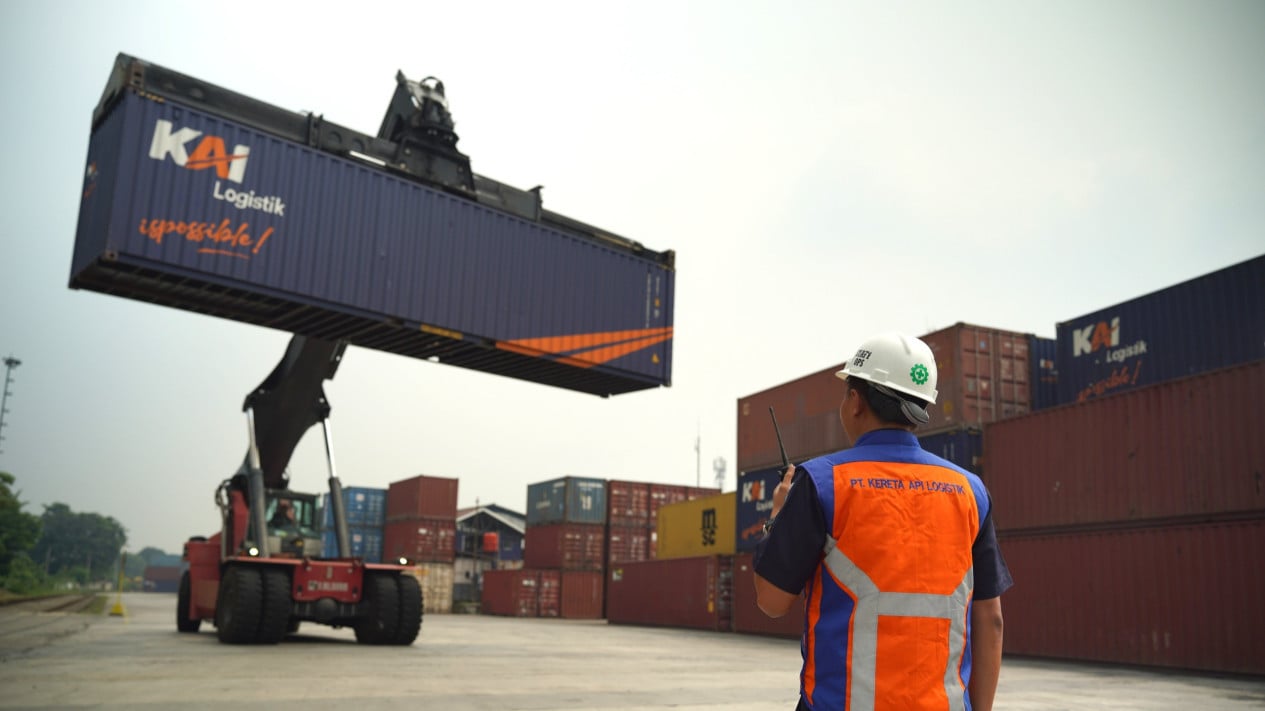
KAI Logistik recorded an overall freight transport volume of 1,658,310 tonnes in May 2026, a 10% increase compared to the previous month. This performance was partly driven by the consistent growth of its container train service.
President Director of KAI Logistik, Yuskal Setiawan, stated that from January to May 2026, the container train service transported 1,193,688 tonnes of goods, equivalent to nearly 60,000 truck journeys, reflecting the increasing use of rail as an efficient and sustainable logistics solution.
“The container train service recorded an 8% year-on-year increase in 2025 compared to 2024, continuing a positive growth trend as one of our flagship services. In 2026, we are targeting further growth by strengthening services and container train capacity,” Yuskal said in a statement on 11 June 2026. “This step is part of the company’s effort to provide logistics solutions that are not only efficient but also support industrial competitiveness and sustainable logistics development.”
The upward volume trend became more pronounced entering the second quarter of 2026, with the highest achievement in May reaching 267,310 tonnes, a 20% increase compared to the beginning of 2026. To accommodate this growing demand, the company is accelerating capacity by adding two new container train sets.
Yuskal added that the transformation of the national logistics system is determined not only by increased distribution capacity but also by the ability to provide efficient, low-emission, and sustainable transport modes. In this context, rail holds a strategic position as the backbone of large-capacity freight transport, supporting inter-regional connectivity while enhancing national industrial competitiveness.
“Going forward, the logistics challenge is not just about delivery speed, but also about responsibility towards the environment and infrastructure. Shifting a portion of freight transport to rail is a long-term investment for the national economy, as it increases supply chain efficiency, reduces external costs from congestion and road damage, and supports the achievement of Indonesia’s low-carbon development targets,” Yuskal said.