
KAI Launches 'People's Economic Rail' Programme with KA Cikuray in Garut
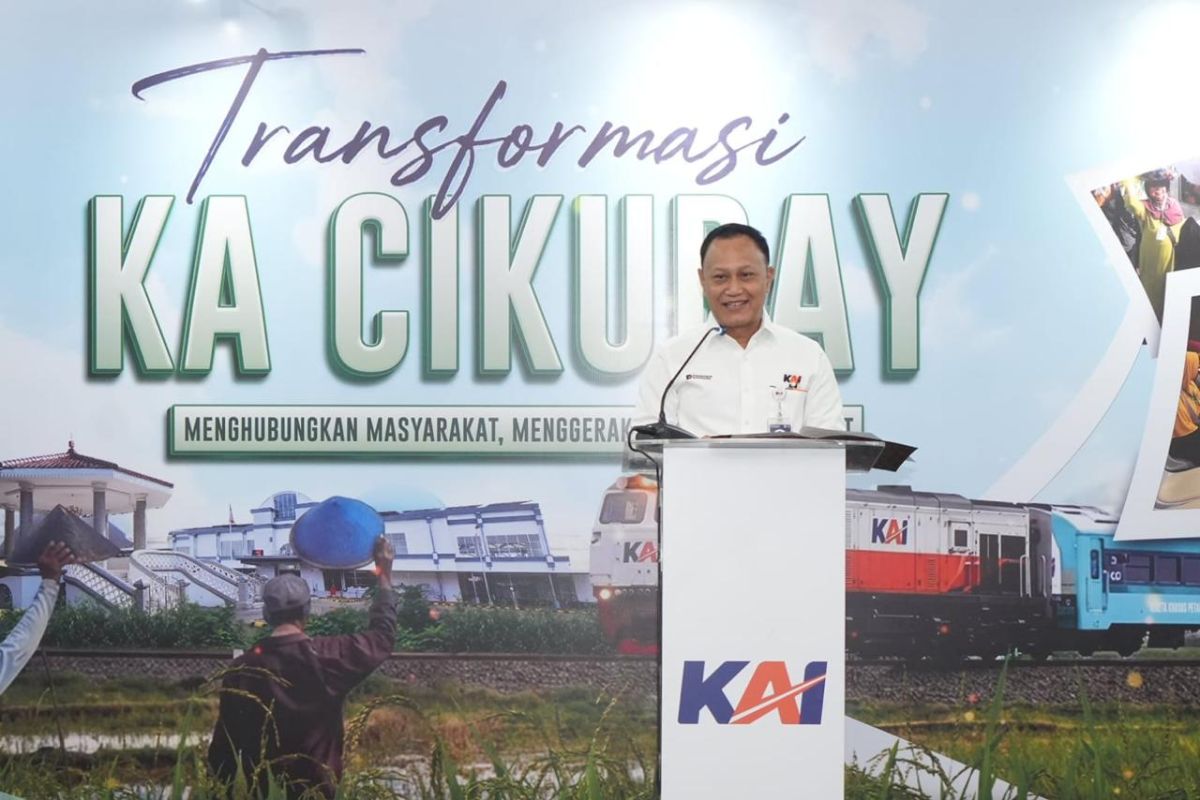
PT Kereta Api Indonesia (Persero), alongside the Directorate General of Railways of the Ministry of Transportation and the Garut Regency Government, has launched the ‘People’s Economic Rails’ programme through the operation of the People’s Economic Train and the Farmer-Trader Train on the Cikuray train service at Garut Station on Thursday (11/6). This programme introduces services that support community mobility while strengthening connectivity between agricultural centres, trade hubs, SMEs, industrial areas, and national economic centres connected via the Cikuray route.
The launch is part of the service development for the Cikuray train, which has long served various community travel needs. The route, which connects regions with diverse economic characteristics, plays a vital role in supporting productive community activities and strengthening inter-regional connectivity.
KAI’s Director of Business and Business Development, Rafli Yandra, stated that the operation of the People’s Economic Train and the Farmer-Trader Train on the Cikuray service is part of KAI’s commitment to providing safe, comfortable, and affordable transport accessible to all levels of society.
“Through this service, we hope the mobility of the community, farmers, traders, and SME players can improve further. The presence of these trains is expected to provide broader benefits to the public while supporting regional economic activities growing along the Cikray route,” said Rafli.
In its operation, the Cikuray train uses a consist of six People’s Economic carriages and one Farmer-Trader carriage. Seating capacity in the People’s Economic carriages has increased from 80 to 93 seats per carriage, while the Farmer-Trader carriage has a capacity of 73 seats. This infrastructure development, carried out by KAI personnel at the Manggarai and Surabaya Gubeng maintenance depots, is designed to support mobility needs and provide better space for farmers, traders, and SMEs travelling by rail.
Acting Director of Railway Traffic and Transport at the Directorate General of Railways, Aditya Karsa, noted that this programme expands access to affordable public transport while supporting community economic activities.
“The presence of this service is expected to ease the mobility of farmers, traders, and small-scale entrepreneurs. In addition to supporting the distribution of agricultural products, this service also contributes to the smooth running of the food supply chain, which is a vital part of the regional economy,” said Aditya.
The Regent of Garut, Abdusy Syakur Amin, welcomed the programme’s launch. He noted that Garut Regency possesses great potential in the agriculture, SME, and tourism sectors, which can develop more optimally with reliable transport connectivity.
“Garut has many flagship products born from the hard work of its people. This service opens wider opportunities to introduce regional potential, strengthen market access, and support community economic activities,” said Abdusy Syakur Amin. He added that Garut being chosen as the first location for this programme launch in West Java is a significant momentum for regional economic development.
KAI’s Vice President of Corporate Communication, Anne Purba, explained that the development of the Cikuray service is being carried out in line with the increasing mobility needs on the Garut–Pasar Senen route.
KAI data shows that the number of Cikuray train passengers has continued to increase year on year. In 2022, the service served 293,265 passengers. This number rose to 514,767 in 2023, reached 591,089 in 2024, and grew to 615,723 in 2025. For the period of January to May 2026, the Cikuray train has already served 266,993 passengers.
Cumulatively, the Cikuray train has served over 2.2 million passengers since it began operations. This growth demonstrates the increasing public demand for transport services that connect various economic and social activity centres along the route.
“Every region traversed by the Cikuray train has a different economic character. There are agricultural centres, trade hubs, educational zones, industrial areas, and national economic centres. The People’s Economic Rails are here to strengthen the connectivity of these activities through affordable, safe, and comfortable transport,” said Anne.
As a Public Service Obligation (PSO) railway service supported by the government through the Directorate General of Railways, the Cikuray train offers a fare for the longest route, Garut–Pasar Senen, of Rp45,000, making it accessible to people from various backgrounds.
The Cikuray train serves 12 stations: Garut, Cibatu, Leles, Kiaracondong, Bandung, Cimahi, Purwakarta, Cikampek, Karawang, Cikarang, Bekasi, and Pasar Senen. The route connects regions with complementary economic characters, ranging from agricultural and horticultural centres in Garut, trade and education hubs in Greater Bandung, industrial zones in Purwakarta, Karawang, and Cikarang, to the national economic centre in Jakarta.
This network forms a single economic corridor that brings together production centres, distribution hubs, industrial zones, and consumer markets in one journey. Such connectivity is one of the strengths of railway transport in supporting community mobility and inter-regional economic activities.
Source: jawawa.id (https://jawawa.id/newsitem/kai-launches-peoples-economic-rail-programme-with-ka-cikuray-in-garut-1781168529)
Originally published by Antara (Indonesian) (https://www.antaranews.com/berita/5603816/kai-luncurkan-rel-ekonomi-rakyat-melalui-ka-cikuray-di-garut), translated from Indonesian