
KAI Jember Educates Public on Dangers of Placing Objects on Railway Tracks
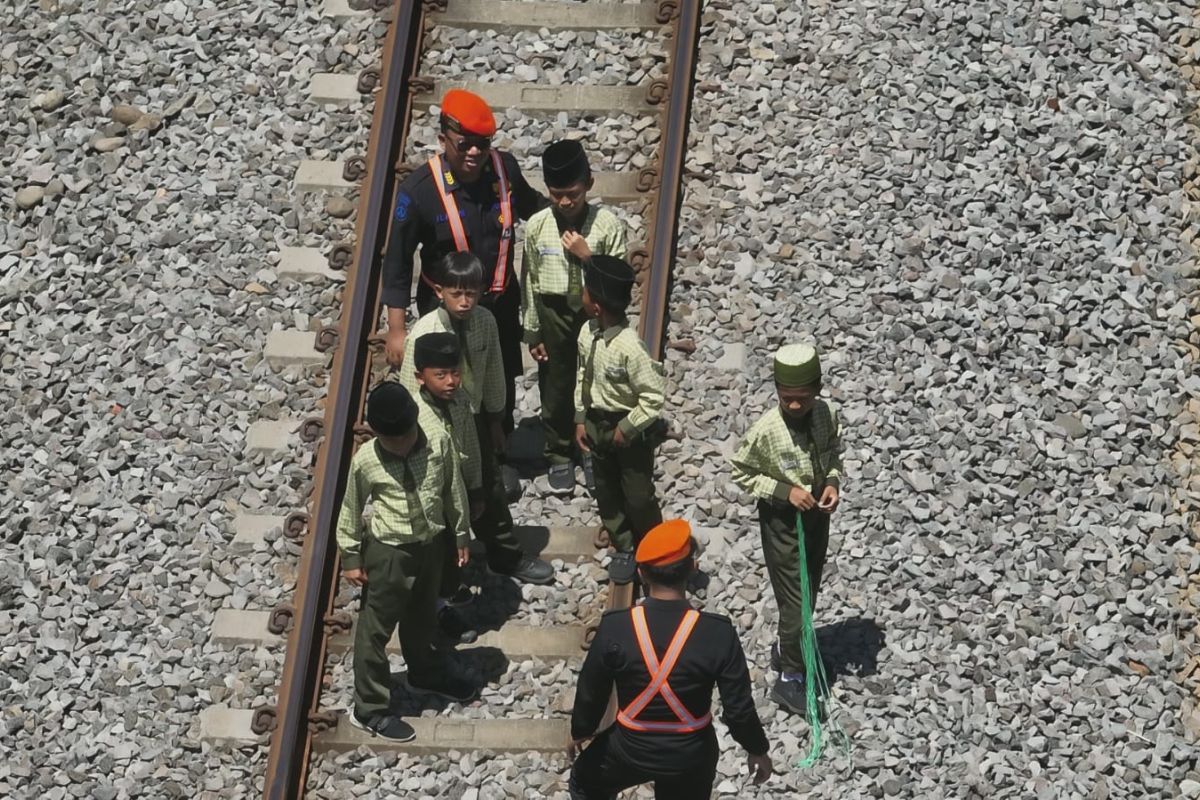
PT Kereta Api Indonesia Operational Region (Daop) 9 Jember is educating the public, particularly children, about the dangers of placing objects on railway tracks, as this can disrupt train journeys and endanger safety.
“Arranging stones or placing objects on railway tracks may appear to be a simple prank. However, such actions can disrupt journeys and endanger the safety of passengers, staff, and the surrounding community,” said Cahyo Widiantoro, Legal and Public Relations Manager of KAI Daop 9, in Jember on Tuesday.
Based on data from Daop 9 Jember, 13 incidents of stone arrangement or object placement on railway tracks were recorded throughout 2025, followed by six incidents from January to July 2026, with three occurring in Probolinggo and one each in Pasuruan, Lumajang, and Jember.
“Our target is not merely to reduce the number of incidents, but to prevent them from happening again, because placing stones or any objects on the tracks can endanger train journeys,” he said.
Furthermore, trains require a certain distance to come to a stop, so even the smallest object on the tracks can pose a potential safety hazard.
“Do not consider a small object on the tracks as trivial, because its impact can endanger train journeys and the safety of many people,” he said.
He also reminded the public not to be present or carry out activities within the railway right-of-way, as this is regulated under Law No. 23 of 2007 on Railways.
In simple terms, Article 181 paragraph (1) prohibits the public from being within the railway right-of-way or placing or moving objects on the tracks without authorisation.
“Furthermore, Article 178 prohibits the placement of objects that could endanger train journeys, while Article 180 prohibits actions that damage or cause railway facilities and infrastructure to malfunction,” he said.
According to him, violations of these provisions may be subject to sanctions in accordance with applicable regulations, and he urged the public not to play on the tracks because railway lines are not playgrounds.
KAI is also collaborating with local authorities, including security forces and regional governments, to strengthen supervision and support the creation of safe railway line conditions.
In addition, safety education and outreach continue to be carried out for communities living or working near railway lines.
“We urge parents to remind their children not to play around railway lines because safety is a shared responsibility. Do not wait for an accident to occur before realising the danger; let us work together to keep railway lines safe and clear,” he said.