
KAI Jakarta Records 1.05 Million Passengers During 2026 Eid Transport Period
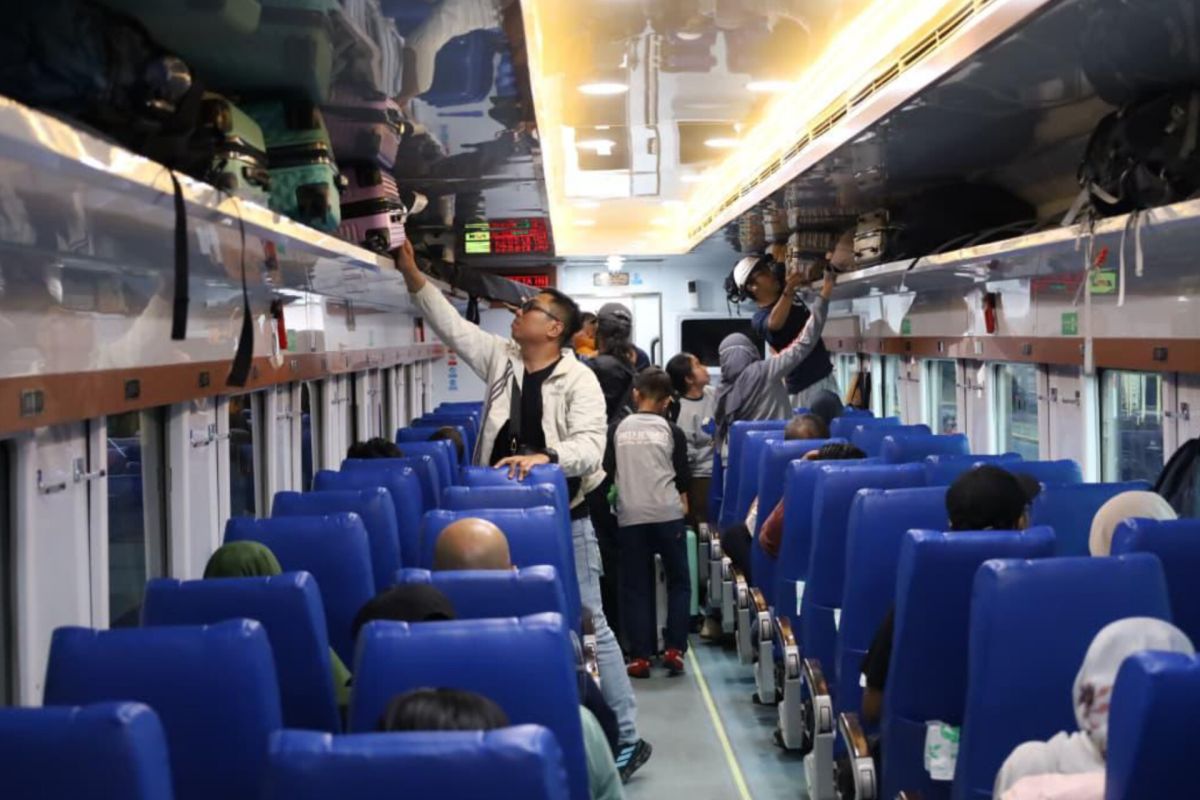
Jakarta (ANTARA) - PT Kereta Api Indonesia (Persero) Daerah Operasi 1 Jakarta recorded 1,052,403 people using trains from Jakarta to destinations on Java Island during the 2026 Eid transport period.
This comprised 934,831 long-distance train passengers and 117,572 local train passengers during the 2026 Eid transport period,” said Manager of Public Relations for KAI Daop 1 Jakarta, Franoto Wibowo, in Jakarta on Wednesday.
During the period from 11 March to 1 April 2026, KAI Daop 1 Jakarta provided a total capacity of 1,083,674 seats for long-distance train journeys, achieving an occupancy rate of 86 per cent.
This, he said, indicates the high utilisation of train services by the public during the Eid transport period.
In terms of trends, passenger volume has shown an increase over the past three years. During the 2024 Eid transport, the number of train passengers was recorded at 915,466 people, then rising to 1,016,977 passengers in 2025.
“Cumulatively, this figure grew 15 per cent compared to 2024 and still recorded a growth of 3.5 per cent compared to 2025,” said Franoto.
Of the total train passengers this year, 277,572 people took advantage of the 30 per cent discount promotion for commercial economy class trains, applicable for travel periods from 14 to 29 March 2026.
Meanwhile, 48,081 passengers utilised the Silaturahmi promotion offering a 20 per cent discount for executive class, applicable for travel periods from 25 March to 1 April 2026.
From an operational perspective, KAI Daop 1 Jakarta operated 2,213 train journeys, consisting of 1,496 regular long-distance trains, 281 additional trains from Gambir, 138 additional trains from Pasar Senen, 56 Free Motor Trains (Motis), and 242 urban trains.
Meanwhile, in terms of on-time departure performance or On Time Performance (OTP), it reached 99.44 per cent, and OTP for arrivals was 98.08 per cent.
“The success of this year’s Eid transport is inseparable from KAI’s preparedness in terms of facilities, infrastructure, and human resources. Strong collaboration between KAI, the government, security forces, and all stakeholders is the main key in maintaining operational smoothness,” said Franoto.