
KAI: Inactive Rail Lines in West Sumatra Have Potential for Reactivation
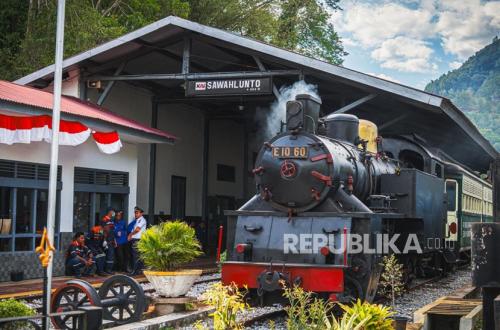
PT Kereta Api Indonesia (KAI) has stated that inactive rail lines in West Sumatra have the potential to be reactivated to support regional connectivity, strengthen logistics distribution, and open access to tourism areas and economic growth centres.
Vice President Corporate Communication KAI, Anne Purba, said West Sumatra holds a strategic position in the development of railway connectivity on Sumatra Island. In addition to having a long railway history, the province is also supported by still extensive infrastructure assets.
According to Anne, the rail network in West Sumatra has from the outset played a role in connecting mining areas, ports, cities, and communities. To this day, the presence of railways remains an important part of public mobility and goods distribution.
“West Sumatra demonstrates how the railway has been an economic connector, linking cities, ports, and communities from the very beginning. That legacy remains relevant for understanding Sumatra’s connectivity needs today,” Anne said in a statement.
Based on data from Regional Division II West Sumatra, the area has a rail network spanning approximately 312.2 kilometres. Of that total length, around 110.9 kilometres are active lines, while approximately 201.3 kilometres remain inactive.
Current railway services in West Sumatra include the Pariaman Ekspres, Minangkabau Ekspres, Lembah Anai, and the Mak Itam tourist train. In addition to passenger services, KAI also operates freight services to support the distribution of cement and clinker.
The performance of railway services in the region shows a positive trend. From January to May 2026, passenger train services in Regional Division II West Sumatra served 913,674 customers. Meanwhile, freight volume reached 492,220 tonnes.
Over the past five years, the number of railway passengers in West Sumatra has also continued to increase. In 2025, passenger volume reached 1.98 million people, an increase of approximately 81 percent compared to 2021, which recorded around 1.09 million passengers.
Anne explained that the close alignment of railway services with community needs is one of the factors driving this growth. The railway not only serves daily travel but also supports access to airports, tourism areas, educational centres, and goods distribution activities.
“The railway in West Sumatra is close to people’s lives. It serves daily travel, airport access, tourism, while simultaneously supporting goods distribution,” she said.
The potential for railway development in West Sumatra is also supported by the existence of several inactive lines that still have opportunities for reactivation. Some of these include the Naras-Sungai Limau, Kayu Tanam-Padang Panjang-Bukittinggi-Limbanang, Muarokalaban-Sawahlunto, Padang Panjang-Batubual, Batubual-Solok, and Solok-Muarokalaban routes.
One route considered to have strong prospects is the Kayu Tanam-Padang Panjang-Bukittinggi-Payakumbuh line. This route has the potential to strengthen inter-regional connectivity, support the tourism sector, and facilitate public mobility and goods distribution.
KAI assesses that the development of the rail network in West Sumatra aligns with efforts to strengthen Sumatra Island’s connectivity. The presence of rail-based transport is seen as helping to reduce logistics costs, expand public access, and support sustainable regional economic growth.
“The history of West Sumatra’s railways provides an important lesson that connectivity is not merely about tracks, but also about access, regional growth, and more equitable opportunities for the community,” Anne concluded.