
KAI Implements B50, Strengthening Energy Transformation and Reducing Rail Travel Carbon Footprint
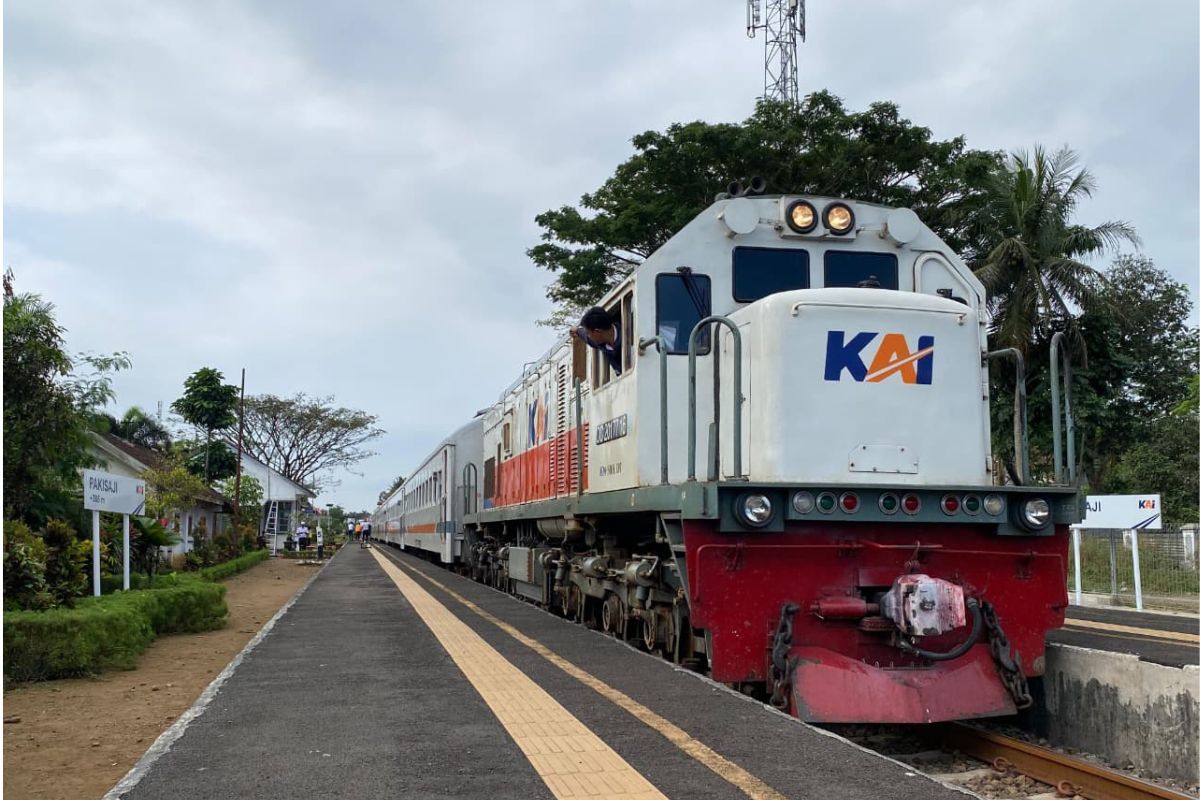
Energy transformation is an important part of developing the transport of the future. As a rail-based transport operator, PT Kereta Api Indonesia (Persero) continues to strengthen energy efficiency through operational innovation and the use of fuel with an increasingly high biodiesel content.
All diesel-powered locomotives and generator cars managed by KAI have used a B40 biodiesel blend since January 2026. Furthermore, from 1 July 2026, KAI is implementing the use of B50 across all diesel-powered locomotives and generator cars for long-distance and local train operations managed by KAI.
Vice President Corporate Communication KAI Anne Purba said the implementation of B50 is part of KAI’s strategy to improve operational energy efficiency while supporting the reduction of carbon emissions from rail travel.
“Future transport requires increasingly efficient and measurable energy management. Through the implementation of B50, KAI continues to optimise energy use with a higher biodiesel content to support increasingly sustainable rail operations,” said Anne.
Based on fuel consumption data for the period 1 January–24 August 2026, KAI has used approximately 172,228,585 litres of fuel for train operations managed by the company. This consumption covers the needs of diesel-powered locomotives and generator cars on KAI’s long-distance and local train services.
During the 55 days of B50 implementation, namely the period 1 July–24 August 2026, the increase in the biodiesel blend from B40 to B50 provided additional carbon emission reduction benefits. Based on estimated KAI operational fuel consumption during that period, fuel demand is projected to reach around 40 million litres.
The 10 percent increase in biodiesel content compared with the use of B40 is estimated to result in additional biodiesel utilisation of around 4 million litres. Using the emission reduction benefit approach of the Ministry of Energy and Mineral Resources’ biodiesel programme, the implementation of B50 during that period is projected to deliver emission reductions of around ±9 thousand tonnes of CO2e compared with the B40 scenario.
The calculation is an estimate focused on KAI’s long-distance and local train operations. Each transport mode has different energy characteristics and carbon footprint calculation methods, so emission calculations for electricity-based services and other modes use separate approaches.
In terms of public service, KAI’s long-distance and local train services from January to July 2026 served around 29.86 million passengers. Using this estimation approach, the emission reduction benefit from implementing B50 over 55 days is equivalent to around 0.3 kg of CO2e per passenger on KAI’s long-distance and local train services.
Anne explained that energy efficiency is one part of strengthening KAI’s operational performance. In addition to implementing biodiesel, KAI continues to develop various efforts through optimising the use of rolling stock, utilising renewable energy, and managing energy consumption based on data.
“Rail has the characteristic of being a mass transport mode capable of serving large numbers of people in a single journey. Therefore, improving energy efficiency in rail operations contributes to the development of increasingly effective and sustainable transport,” said Anne.
The implementation of B50 strengthens KAI’s steps in supporting the national energy transformation while delivering rail transport services that are increasingly efficient, modern, and oriented towards sustainability.