
KAI Group's Airport Rail Services Continue to Grow, Strengthening Connectivity and National Tourism
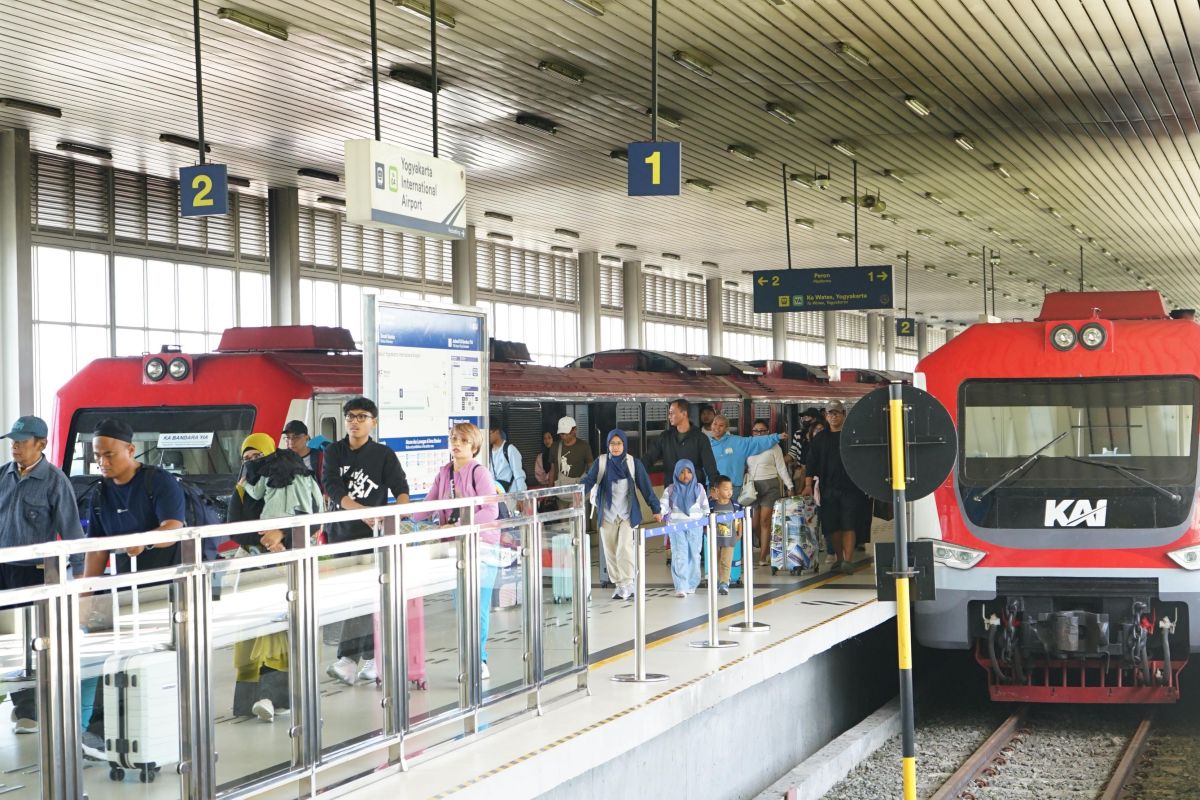
Jakarta (ANTARA) - Public mobility to airports is increasingly reliant on fast, connected, and reliable transportation. Amidst increasingly dynamic urban activity, airport rail services are becoming an important part of people’s travel patterns, for business, education, tourism, and intercity travel.
This shift in travel patterns is evident in the increasing use of rail-based transportation in various regions. People are considering not only the distance of travel but also time efficiency, intermodal integration, and ease of access from city centers to airports and vice versa.
PT Kereta Api Indonesia (Persero) recorded that KAI Group’s airport rail services served 3,246,711 passengers between January and April 2026. This figure comes from services such as the Soekarno-Hatta Airport Commuter Line, the YIA Airport Train, the Srilelawangsa train in Medan, the Minangkabau Express in Padang, and integrated rail transportation services such as the South Sumatra LRT and the BIAS train, which connect to airport areas and community activity centers in various regions.
The growth in the use of these services shows that rail-based connectivity is increasingly needed to support the movement of modern society. The presence of airport rail services not only makes access to airports easier but also strengthens the connection between urban areas, economic centers, and national tourist destinations.
For the Soekarno-Hatta Airport Commuter Line, the number of passengers between January and April 2026 reached 837,778 passengers, an increase of 18.69 percent compared to the same period last year, which was 705,859 passengers. This growth shows the increasing need of the Greater Jakarta area for transportation to Soekarno-Hatta Airport with reliable travel times in the face of high urban traffic congestion.
In Yogyakarta, the YIA Airport Train also continues to strengthen connectivity between the airport, the city center, educational areas, and tourist destinations. Between January and April 2026, the YIA Regular Airport Train served 619,498 passengers and the YIA Xpress served 301,400 passengers, for a total of 920,898 passengers, an increase compared to the same period in 2025, which was 888,653 passengers. This growth shows that integrated transportation access is increasingly becoming an important part of supporting the tourism sector and community mobility in Yogyakarta and its surroundings.
Connectivity to the airport is also continuing to develop in North Sumatra through the Srilelawangsa train service, connecting Medan–Kualanamu and Medan–Binjai. Between January and April 2026, the total number of passengers reached 1,414,031 passengers, an increase compared to the same period last year, which was 1,379,178 passengers. This route is an important link between the urban area of Medan, the surrounding areas, and Kualanamu Airport as one of the main gateways for community movement in northern Sumatra.
In West Sumatra, the Minangkabau Express train service also continues to make it easier for people to connect to Minangkabau International Airport. During January–April 2026, this service served 74,004 passengers on the Pulau Aie–Padang–Tabing–Duku–Minangkabau International Airport route, with a travel time of approximately 45 to 50 minutes. The presence of this service helps people and tourists gain more efficient, affordable, and direct access to transportation to the airport and the city center of Padang.
For West Sumatra, which is known as one of the leading national tourist destinations, connectivity to the airport is an important factor in supporting the movement of tourists. Easy access from the city center of Padang to Minangkabau International Airport supports tourism activities, business travel, education, and the daily mobility of people in the area.
The strengthening of rail-based connectivity is also evident in Solo through the Adi Soemarmo Airport Train or BIAS, which has now been extended to Madiun. The presence of this service expands access for people from the Solo Raya area, Sragen, Ngawi, Magetan, to Madiun to the airport without having to rely solely on road travel. In addition to making it easier for people to travel, this connectivity also opens up opportunities for economic and tourism growth between regions that are increasingly connected.
In Palembang, the South Sumatra LRT also continues to play a strategic role in supporting access to Sultan Mahmud Badaruddin II Airport and the mobility of the community. During January–April 2026, this service served 1,441,069 passengers through 13 stops connecting the airport area, the city center, and Jakabaring. The presence of the South Sumatra LRT shows how rail-based public transportation is becoming part of the daily mobility of urban communities.
The momentum of long holidays and increased tourism travel in recent years also shows the increasing importance of integrated connectivity to airports with public transportation. Easy access from the airport to the city center and tourist areas is one of the factors that increasingly influences the travel experience of domestic and foreign tourists when visiting an area.
Vice President of Corporate Communication KAI, Anne Purba, said that the growth in passengers of airport rail services shows that people are increasingly in need of an interconnected and efficient transportation system.
“Transportation connectivity is now an important part of people’s travel patterns. The presence of rail-based services helps make travel more reliable, efficient, and directly connected to community activity centers,” said Anne.
Anne added that strengthening public transportation connectivity also has a broader impact on
Source: jawawa.id (https://jawawa.id/newsitem/kai-groups-airport-rail-services-continue-to-grow-strengthening-connectivity-and-national-tourism-1780572904)
Originally published by Antara (Indonesian) (https://www.antaranews.com/berita/5568823/layanan-kereta-api-bandara-kai-group-kian-tumbuh-perkuat-konektivitas-dan-pariwisata-nasional), translated from Indonesian