
KAI Group Strengthens Low-Emission Urban Mobility with Electric-Based Services
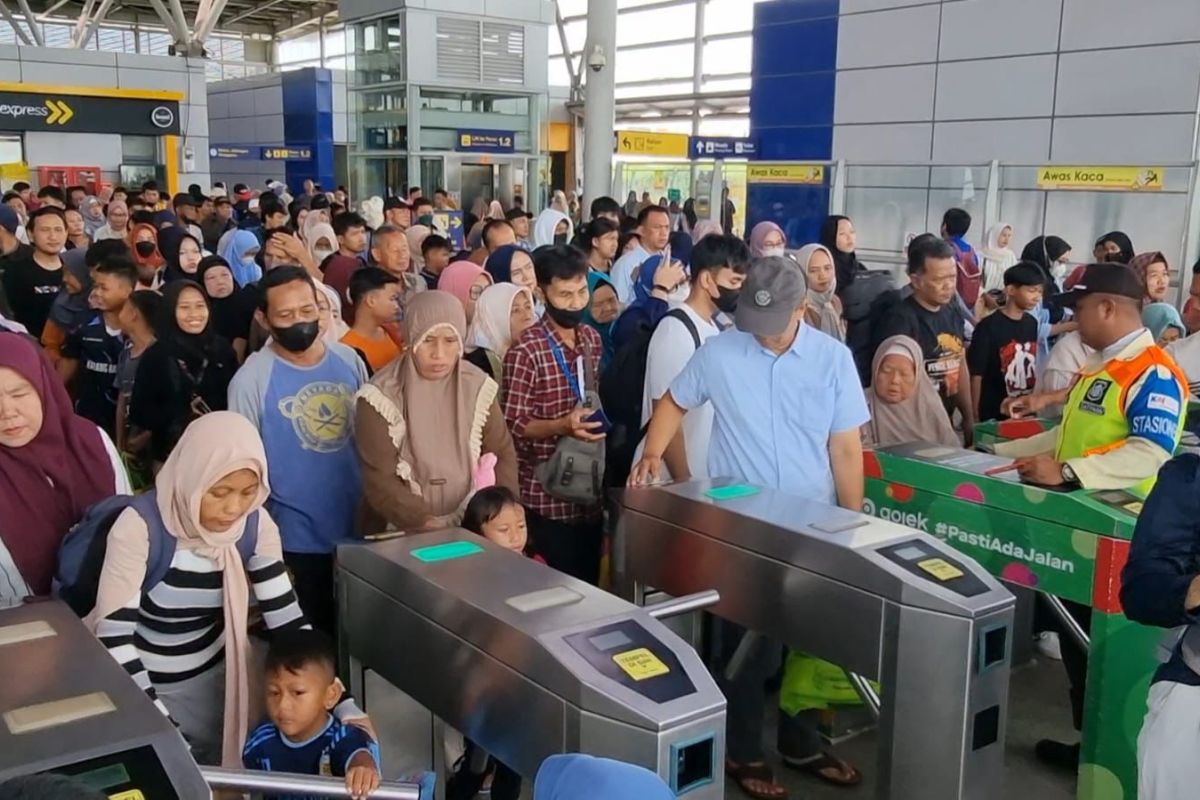
Urban mobility continues to rise alongside the increasing density of community activities in metropolitan areas. Travel to workplaces, schools, business centres, educational zones, airports, and public spaces requires transportation that is high-capacity, scheduled, and more environmentally friendly.
In this context, KAI Group’s electric-based urban services have become a vital component of modern urban mobility. Between January and May 2026, the LRT Jabodebek, Jabodetabek Commuter Line, Soekarno-Hatta Airport Commuter Line, Yogyakarta Commuter Line, and LRT Sumsel served a total of 166,154,342 passengers.
KAI Vice President of Corporate Communication, Anne Purba, stated that electric-based services play an essential role in meeting the demand for efficient, integrated, and low-emission urban transportation.
“Electric urban trains provide direct benefits to the community. Travel becomes more predictable, service capacity is large, and the emissions generated per passenger are much lower compared to private vehicles,” said Anne.
In modern urban services, LRT Jabodebek served 13,211,856 passengers from January to May 2026. This figure represents a 23.16 per cent increase compared to the same period in 2025, which saw 10,727,798 passengers.
From an environmental perspective, LRT Jabodebek produces approximately 15 grams of CO2e per passenger per kilometre. This is lower than motorcycles, which reach approximately 37 grams of CO2e per passenger per kilometre. Consequently, motorcycle emissions are about 146.67 per cent higher than LRT Jabodebek, meaning the LRT produces approximately 59.46 per cent fewer emissions than motorcycles.
The largest contribution to KAI Group’s electric-based urban services comes from the Jabodetabek Commuter Line, which served 146,259,555 passengers between January and May 2026. This is a 5.81 per cent increase compared to January–May 2025, which recorded 138,227,725 passengers.
The Commuter Line serves as the backbone of daily mobility in the Jabodetabek area, transporting people from residential areas to economic activity centres. With large service capacities and intensive schedules, the Commuter Line helps reduce dependence on private vehicles in the agglomeration area.
According to research by the National Research and Innovation Agency (BRIN), the Commuter Line produces approximately 34.03 grams of CO2 per passenger-kilometre. This figure is lower than cars, which produce approximately 42 grams of CO2 per passenger-kilometre, assuming four people per car.
Beyond Jabodetabek, the Soekarno-Hatta Airport Commuter Line also plays a role in strengthening connectivity to air transport hubs. Between January and May 2026, the Soekarno-Hatta Airport Commuter Line served 1,013,574 passengers, a 14.78 per cent increase compared to the same period in 2025, which saw 883,065 passengers.
In the Special Region of Yogyakarta and Central Java, the Yogyakarta Commuter Line served 3,854,340 passengers during January to May 2026. This is a 7.88 per cent increase compared to January–May 2025, which recorded 3,572,727 passengers. This service supports movement along the Yogyakarta–Solo route, connecting educational, commercial, and tourism zones with daily activity centres.
Meanwhile, LRT Sumsel served 1,815,017 passengers throughout January to May 2026. As the first urban rail system in Sumatra, LRT Sumsel serves to connect various activity centres in Palembang City, ranging from residential areas, business districts, and offices to universities, the Jakabaring sports complex, and Sultan Mahmud Badaruddin II International Airport.
LRT Sumsel utilises electricity via a third rail system with a 750 V DC voltage supplied from substations. This system ensures that LRT Sumsel operations are free from direct exhaust emissions during travel, as the vehicles are powered by electric motors.
Based on simple calculations, if every passenger of KAI Group’s electric-based urban services travels an average of 10 kilometres, the LRT Jabodebek, Commuter Line, and LRT Sumsel services between January and May 2026 could help reduce emissions by approximately 15,350 tonnes of CO2e compared to the use of private vehicles. This calculation uses passenger data and available transport emission factors.
Anne added that strengthening electric-based urban transport is part of KAI Group’s efforts to support low-emission mobility in urban areas.
“Every passenger who switches to electric-based public transport helps to reduce the daily transport emission burden. Therefore, KAI Group continues to strengthen urban services to ensure they are increasingly accessible, comfortable to use, and relevant to the needs of urban communities,” Anne concluded.