
KAI Group Strengthens Integrated Waste Management Transformation at Gambir Station
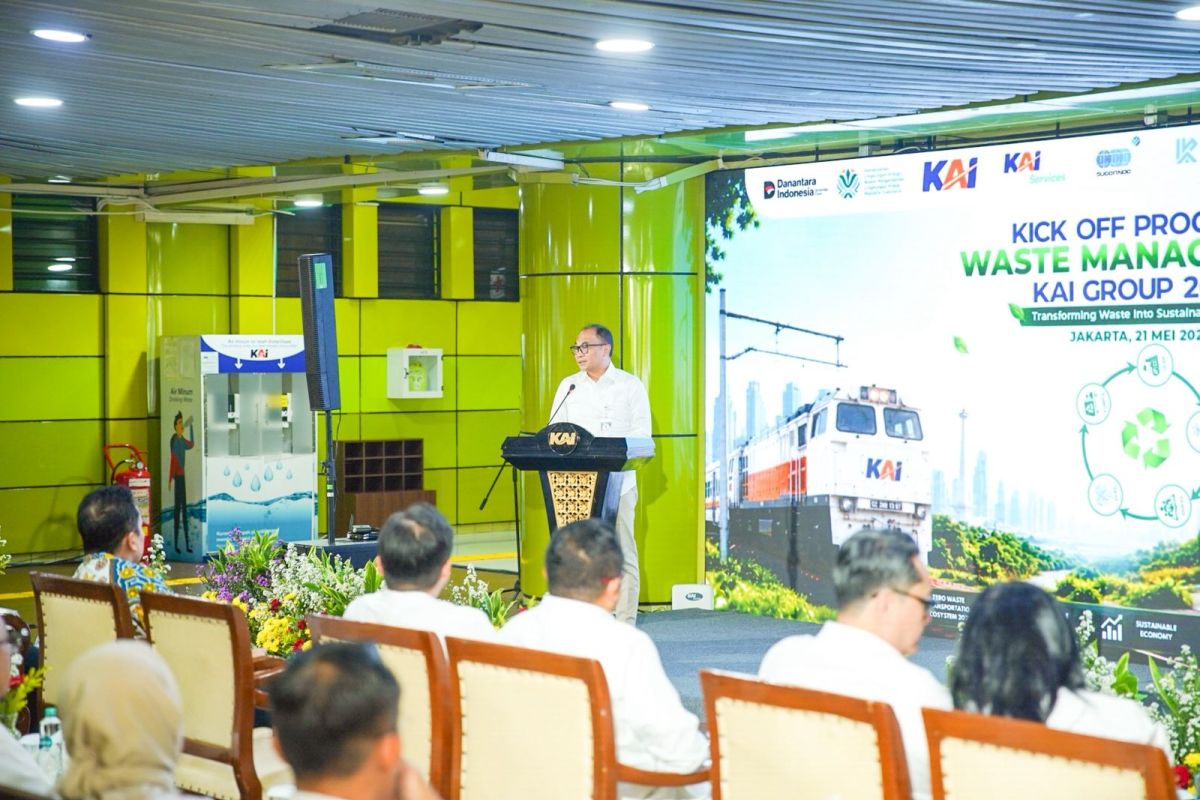
A circular-economy-based waste management pilot project has begun to support cleaner, more modern, and more sustainable public transport.
Jakarta — KAI Group is strengthening its sustainability commitment with the launch of the Integrated Waste Management programme, initiated in the Gambir Station Hall, Jakarta on Thursday, 21 May. The programme represents a strategic step in building a more modern, measurable, and integrated waste management system within railway operational environments.
Director of Portfolio Management and Information Technology at KAI, I Gede Darmayusa, said that the high mobility of rail passengers correlates with increasing challenges in waste management in station areas and railway operations.
“Rail passenger mobility continues to rise day by day. Behind this growth lie substantial challenges that must be managed collectively, including waste management in public service areas. Therefore, KAI Group sees waste management as something that must be performed more holistically, from sorting and collection to processing and reuse to deliver a better environmental impact,” said I Gede.
He added that strengthening waste management is a key component in supporting the transformation of public transport that increasingly prioritises environmental friendliness and sustainability.
As the initial phase of implementation, Gambir Station was chosen as the pilot site because it is one of the main transport hubs with high passenger mobility. Every day, the station area generates waste from passenger activities, tenants, train operations, and other public service areas.
Overall, total waste generation within the KAI Group’s environment currently reaches around 1,854 tonnes per year, or more than 4.3 tonnes per day. This condition underscores the need for a more modern, measurable waste management system capable of reducing dependence on landfills (TPA).
Through this programme, KAI Group together with KAI Services will develop an integrated circular-economy-based waste management system through the construction of a modern TPS3R facility, strengthening waste sorting, processing of organic and inorganic waste, and exploring the potential to convert waste into environmentally friendly energy.
Chief Executive of KAI Services Krisna Arianto said the waste management transformation forms part of strengthening public transport services that increasingly pay attention to environmental and sustainability aspects.
“We have prepared this Integrated Waste Management programme to build a waste management system that is more effective, measurable, and sustainable. We aim to create cleaner and more comfortable station environments while also fostering a culture of environmental care in public transport areas,” said Krisna.
The programme will also be supported by utilising digital technology to monitor waste tonnage, sorting processes, collection, and processing in a more accurate and transparent manner.
The programme is being implemented through collaboration between KAI Group, KAI Services, the Ministry of Environment, the Environmental Service Office, environmental management partners such as Enviro, Kepul.id, PT Anak Bangsa Juara, and the participation of the public and railway customers.
KAI Group targets a phased programme development road map from 2026 to 2029 through the implementation of an integrated waste management system at major stations and other strategically important operational areas.
Through this transformation, KAI Group hopes the waste management in public transport areas can deliver a more positive environmental impact, support carbon emission reductions, improve service quality, and strengthen Indonesia’s public transport ecosystem to be greener and more sustainable.