
KAI Group Serves 442.53 Million Passengers, with Public Feedback Guiding Service Development
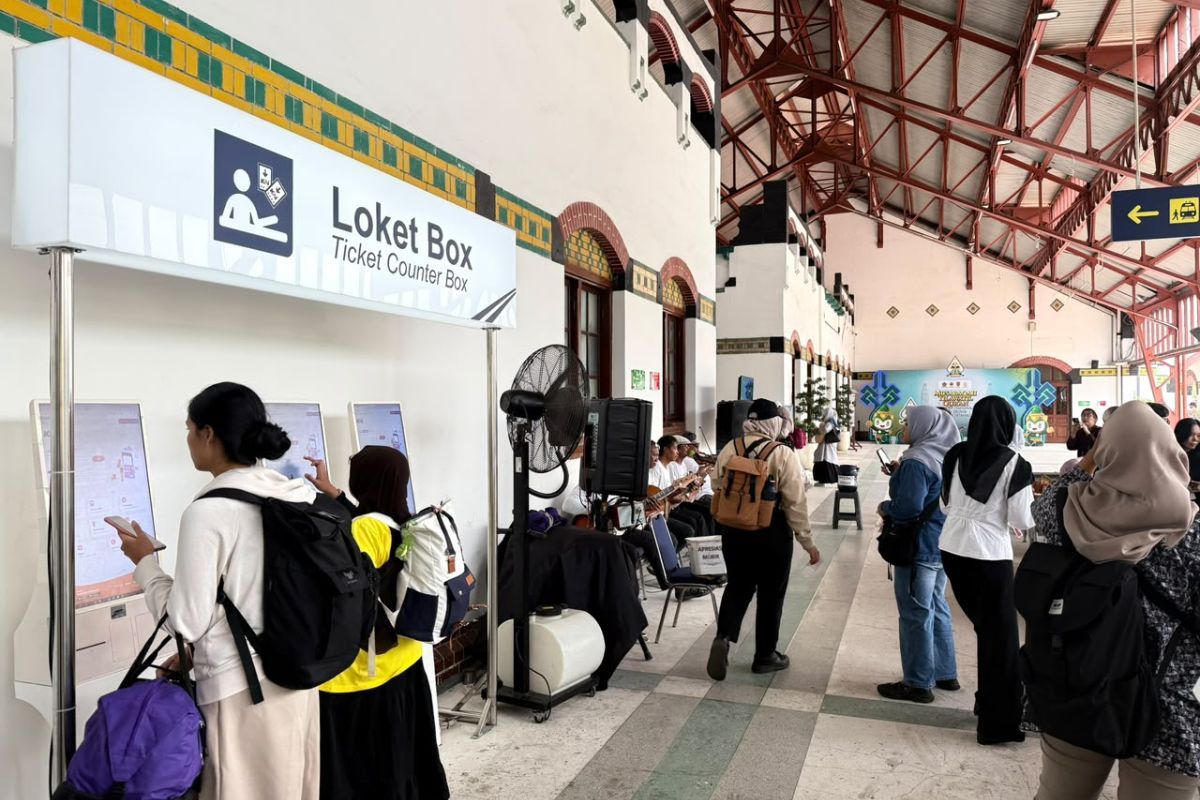
Jakarta (ANTARA) — The number of people travelling by rail continues to grow. From January to October 2026, state-owned railway operator PT Kereta Api Indonesia (Persero), together with all KAI Group entities, served 442,529,105 passengers, an increase of 6.86% from 414,116,947 in the same period in 2025.
This represents an additional 28,412,158 passenger journeys in the first ten months of 2026. Growth was recorded across several service segments, from intercity travel and urban rail to tourism services.
KAI Vice President of Corporate Communications Anne Purba said the increase was one indicator of the increasingly diverse demand for rail transport.
“Trains are increasingly becoming part of people’s daily lives, whether for work, education, visiting family or tourism. Passenger growth gives us an indication of changing mobility needs, which must be met with services that are more accessible and comfortable,” Anne said.
KAI’s intercity and local train services carried 49,932,766 passengers from January to October 2026, up 8.99% from 45,814,275 in the same period a year earlier.
KAI Commuter recorded 350,124,196 passengers, an increase of 6.21% from 329,667,551. Meanwhile, LRT Jabodebek served 27,693,123 passengers, up 17.59% from 23,549,818.
Tourism services also saw growth. KAI Wisata recorded 258,381 passengers, an increase of 34.75% from 191,745 in January–October 2025. Whoosh carried 5,123,375 passengers, up 1.38% from 5,053,740.
In South Sulawesi, the Makassar–Parepare railway carried 290,380 passengers, an increase of 13.01% from 256,942 in the same period a year earlier.
“Each service has different passenger needs. Urban journeys are closely linked to daily activities, while intercity and tourism travel have more varied demand patterns. These figures help KAI determine how to develop services in line with the characteristics of each region,” Anne said.
Rising mobility is also addressed in KAI’s 2026–2030 Long-Term Corporate Plan (RJPP).
Under the plan’s projections, passenger numbers across intercity, local and LRT services are expected to rise from 84.6 million in the 2025 baseline year to 141.3 million in 2030, an increase of about 67%.
The projection is one of the references the company uses to plan capacity, rolling stock and services to meet transport needs in the coming years.
One near-term measure is the introduction of the 2026 Train Travel Graph (GAPEKA), which will take effect on 1 December 2026.
Under the revised timetable, daily capacity on intercity trains in Java will increase from 132,680 to 137,846 seats, while capacity in Sumatra will rise from 35,636 to 38,936 seats.
KAI is also preparing additional services and more stops on several routes to give people more travel options.
“Service planning needs to take account of today’s needs as well as how people’s travel patterns may develop in the future. That is why KAI continues to use mobility data and passenger feedback to set development priorities,” Anne said.
Alongside travel growth data, passenger experience is another focus in KAI’s service development.
From 2020 to September 2026, Contact Centre 121 handled more than 18.9 million customer interactions through various channels, including telephone, email, social media and in-app chat.
The interactions covered requests for information, questions, suggestions and passenger experiences using railway services.
According to the Customer Satisfaction Index (CSI), satisfaction at corporate level stood at 4.53, up 0.01 points. The CSI for train services reached 4.60, an increase of 0.05 points. Meanwhile, the station CSI was 4.46, down 0.04 points.
The survey also identified five service-improvement priorities: fares and ticketing, train toilets, boarding areas, customer service spaces and station waiting areas.
Anne said survey findings and customer interactions were used to assess which aspects of service required attention.
“Customer feedback gives us an insight into people’s direct experiences. Their needs include access to information, comfortable facilities and ease of using the services. All of these are taken into account as we determine improvements to be made in stages,” Anne said.
One decision that also took public feedback into account concerned the naming of trains under GAPEKA 2026.
KAI decided to retain the names of trains already familiar to the public. Plans to change some names were adjusted after the company considered customer feedback, including responses on social media.
The decision reflects the public’s attachment to names that have been in use for years, as well as the value of making it easier for passengers to find information and identify train services.
“Train names have become part of people’s travel experiences. Many passengers know a service by the name of the train they regularly use. We understand that connection and have taken it into account in adjusting GAPEKA 2026,” Anne said.
To improve comfort, KAI is also continuing to assess train facilities and seating based on passenger experience. The development of rolling stock through a programme to introduce 39 New Generation trainsets by early 2027 forms part of its service-improvement plans.
Anne added that the company would continue to monitor changing public needs as it determines development measures, including upgrading rolling stock, revising schedules, expanding access and improving customer service.
“Every passenger journey has different needs and stories. We want passenger growth to go hand in hand with a better travel experience. That is why mobility data and the public’s feedback will remain part of KAI’s decision-making, so that service development better meets people’s expectations,” Anne said.
Source: jawawa.id (https://jawawa.id/newsitem/kai-group-serves-442-53-million-passengers-with-public-feedback-guiding-service-development-1793714088)
Originally published by Antara (Indonesian) (https://www.antaranews.com/berita/5829651/kai-group-layani-44253-juta-pelanggan-masukan-masyarakat-jadi-arah-pengembangan-layanan), translated from Indonesian