
KAI Group Maps Out Integrated Railway Solutions as INKA Integration Strengthens National Industry
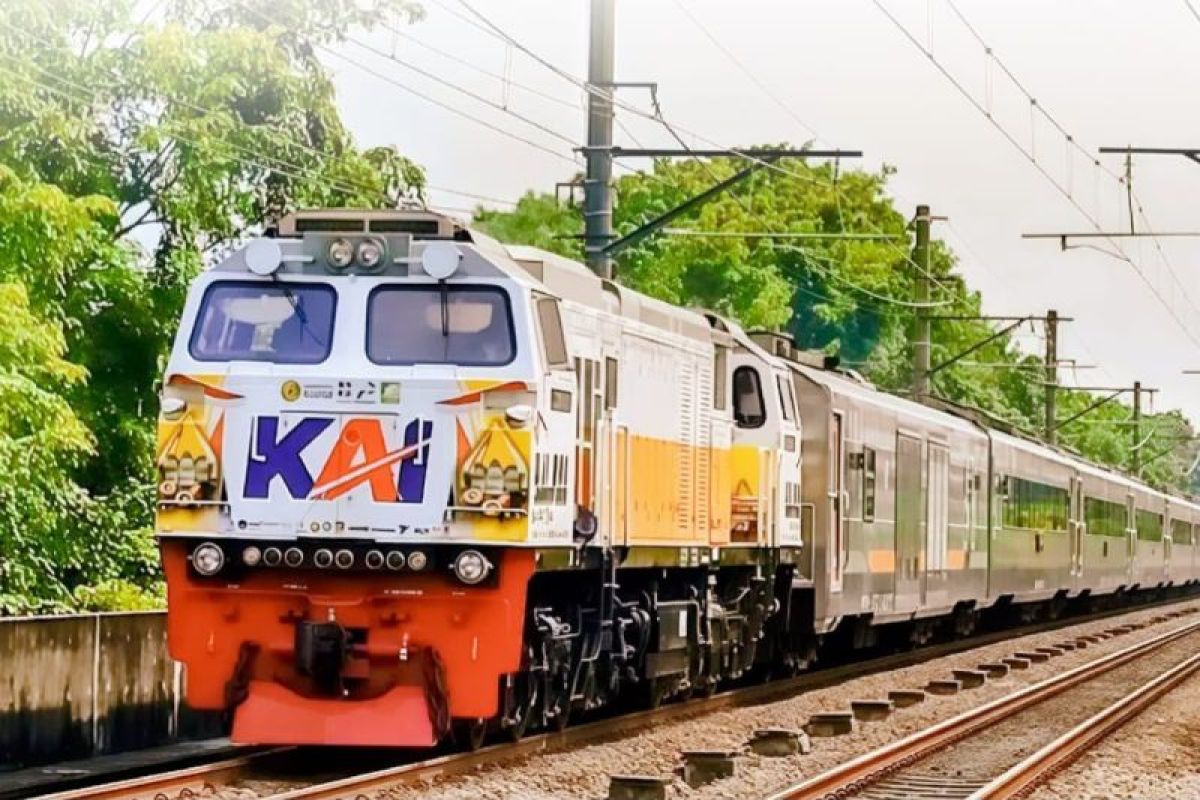
Jakarta (ANTARA) — PT Kereta Api Indonesia (Persero) has begun mapping capabilities scattered across KAI Group as the basis for developing integrated railway solutions for operators, regional governments, industrial estates and transport companies. This direction has gained momentum through the start of the strategic integration process between KAI and PT Industri Kereta Api (Persero).
The integration process began with the KAI–INKA Integration Kick-Off event at the Jakarta Railway Centre ballroom, Jakarta, on Tuesday (21/7/2026). The event was attended by officials from Danantara Asset Management, the boards of directors of KAI and INKA, the Project Management Office (PMO) team, consultants, and the leadership of both companies.
Vice President of Corporate Communication at KAI, Anne Purba, said the integration process opens the way to connecting KAI Group’s experience in managing operations and services with INKA’s capabilities in the design, engineering, production and development of rolling stock.
“This process is still at an early stage and is being carried out gradually through studies, governance, and competency mapping of both companies. Safety, reliability, product quality and customer needs remain the primary references,” said Anne.
KAI Group’s operational experience has been shaped by the broad scale of its services. Throughout the first semester of 2026, KAI Group served 258,993,359 customers, an increase of 7.55 per cent compared with the same period in 2025, when it served 240,805,920 customers. Over the same period, KAI’s freight services handled 32,498,043 tonnes.
These operations are supported by 627 stations and an active network of 7,765 kilometres of track across Java and Sumatra. As of June 2026, KAI also manages 12,858 pieces of rolling stock, comprising 551 locomotives, 1,064 electric multiple units (KRL), 2,238 passenger carriages, 8,907 freight wagons, and 96 electric and Indonesian diesel railcars.
According to Anne, this scale has built operational knowledge covering journey planning, rolling stock maintenance, spare parts management, safety control, workforce competency development, customer service, and the use of digital systems.
“Each type of rolling stock has different technology, operating characteristics, maintenance needs and usage cycles. Experience managing these various assets becomes a knowledge base that can be organised into more integrated railway capabilities,” she said.
KAI Group’s business activities are currently supported by six subsidiaries and a number of associated entities. Each company holds competencies that can complement one another within a single railway service chain.
KAI Bandara, for instance, has developed its Maintenance, Operation, Spare Parts and Services (MOSS) offering. Its scope covers rolling stock maintenance, operations, spare parts supply, training, signalling systems, and ticketing based on the Airport Railway Ticketing System (ARTS).
In infrastructure, KAI Properti runs construction, trading, and railway and bridge maintenance lines of business. KAI Services manages on-board services, security, parking, cleaning, labour supply, restaurants, catering and facility management.
KAI Logistik provides rail-based multimodal distribution supported by end-to-end services from origin to destination. KAI Commuter has experience in urban and regional services, while KAI Wisata develops rail-based travel services, MICE activities, and heritage destination management.
Anne explained that these capabilities currently sit within various business entities according to their respective fields. Mapping is needed to establish service standards, work scopes, competencies, resources, legal aspects, risk control and cooperation models before they are developed into inter-entity or business-to-business services.
“Development must be carried out carefully. Every service must have clear standards, adequate competencies, measurable division of responsibilities, and governance that complies with regulations,” she said.
The integration process with INKA provides room to complete these capabilities through a manufacturing element. Knowledge from operations can inform design processes, specification setting, production capacity readiness, testing, handover, maintenance, and spare parts availability.
At the kick-off event, KAI presented an initial projection of KRL needs of around 156 trainsets up to 2040. This projection does not yet include requirements for diesel railcars, long-distance rolling stock, locomotives, and freight rolling stock.
Anne stressed that these figures are still preliminary calculations. Rolling stock procurement decisions will continue to follow operational needs studies, funding sources, shareholder policy, government regulations, and production readiness.
“The needs projection gives a picture of the room for long-term industrial development. Fulfilling it requires planning that aligns operator needs, producer capacity, technological readiness, product quality, and maintenance support throughout the rolling stock’s service life,” she said.
The connection between operations and manufacturing can also accelerate the delivery of field evaluations to producers. Information on rolling stock performance, usage patterns, customer needs, ease of maintenance, component consumption and geographical conditions can inform the development of subsequent products.
In the long term, this arrangement of capabilities can be studied as a solution for transport operators and areas requiring operational services, rolling stock maintenance, signalling, training, ticketing systems, construction, railway and bridge maintenance, facility management, security, cleaning, and logistics distribution.
Strengthening this value chain also has the potential to support product standardisation, certainty of spare parts availability, improved workforce competencies, involvement of national suppliers, and cost management of rolling stock throughout its service life.
“KAI sees the integration process as an opportunity to build increasingly connected national railway capabilities. This direction is being developed gradually so that it can benefit industry whilst maintaining safe, reliable, comfortable and sustainable services for the public,” Anne concluded.