
KAI Group Manages Five Railway Technologies, from Diesel Locomotives to 350 km/h High-Speed Trains
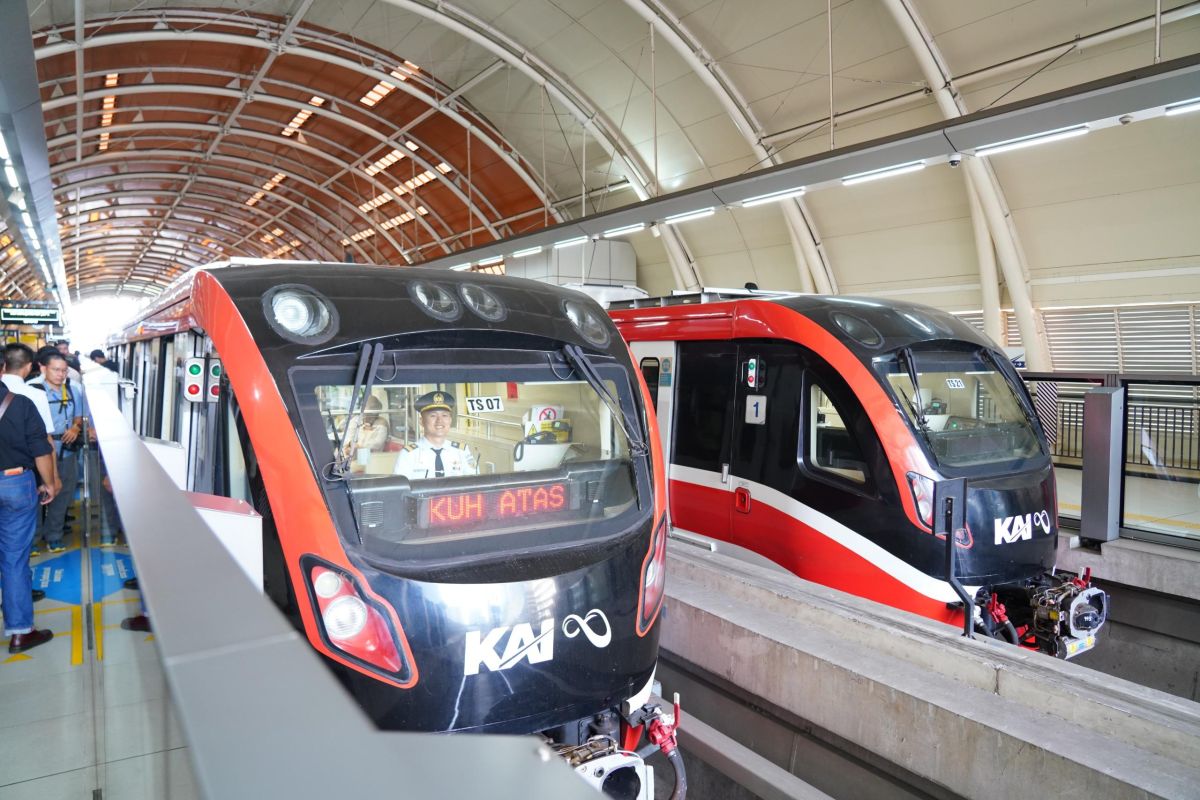
PT Kereta Api Indonesia (Persero) and its KAI Group ecosystem manage five types of railway technology, from diesel locomotives, electric and diesel-electric multiple units (KRL and KRDE/I), to the Light Rail Transit (LRT) with an automatic operating system and the Whoosh high-speed train with an operational speed of 350 kilometres per hour. This technological diversity supported KAI Group in serving 258,993,359 customers during the first half of 2026, a 7.55% increase from 240,805,920 customers in the same period of 2025. During the same period, KAI also transported 32.5 million tonnes of goods, consisting of 26.53 million tonnes of coal and 5.96 million tonnes of non-coal commodities.
As of June 2026, KAI’s fleet includes 551 locomotives, 1,064 electric multiple units (KRL), 2,238 passenger carriages, 8,907 freight wagons, and 96 diesel-electric multiple units (KRDE/I). The group also operates the Jabodebek LRT, while its ecosystem includes PT Kereta Cepat Indonesia China, which runs the Whoosh high-speed train. Vice President of Corporate Communication Anne Purba stated that each technology has distinct operational characteristics, power sources, control systems, and maintenance patterns. “These differences are managed through consistent safety standards, reliability, worker competence, and operational discipline,” she said, adding that the goal is to ensure every journey is safe, punctual, reliable, and comfortable.
Diesel locomotive technology remains the backbone for intercity, local, tourist, and freight train services. In the first half of 2026, long-distance and local train services carried 29.86 million passengers, an 8.72% increase from the previous year. Freight services transported 32.5 million tonnes of goods, supporting supply chains for energy, industry, plantations, containers, fuel oil, and cement. The tourism segment, managed by KAI Wisata, saw a 64.45% surge in customers to 164,743, driven by diverse travel options including panoramic and special trains.
For urban mobility, KRL technology supported KAI Commuter in serving 204.15 million passengers, a 6.58% increase, making it the largest volume contributor within the group across Greater Jakarta, Bandung, Yogyakarta–Solo, Surabaya, and Merak–Rangkasbitung. Meanwhile, KRDE/I technology supported regional and airport connectivity, with KAI Bandara serving 3.48 million passengers and the Makassar–Parepare line serving 172,011 passengers. The automated LRT Jabodebek, operating at Grade of Automation 3 (GoA3), served 16.02 million passengers, a 22.84% jump, while LRT Sumsel served 2.2 million passengers. The Whoosh high-speed train served 2.94 million passengers.
Anne Purba noted that each technology plays a role suited to different mobility characteristics. “Commuter customers need high capacity and frequency, intercity customers need comfort and punctuality, while regional, airport, tourism, and high-speed services have different operational needs,” she said. The reliability of these technologies is supported by maintenance facilities across Java and Sumatra, including six main workshops for heavy maintenance and overhauls, as well as a mechanical workshop in Cirebon for track maintenance machinery and a bridge workshop in Bandung, which has operated since 1921, for steel bridge production and infrastructure equipment. KAI has also strengthened its workforce competency, with the number of certified workers rising from 14,150 in 2022 to 16,186 in 2024.