
KAI Freight Transport Increases by 74.2%, Rail-Based Logistics Strengthening Promoted
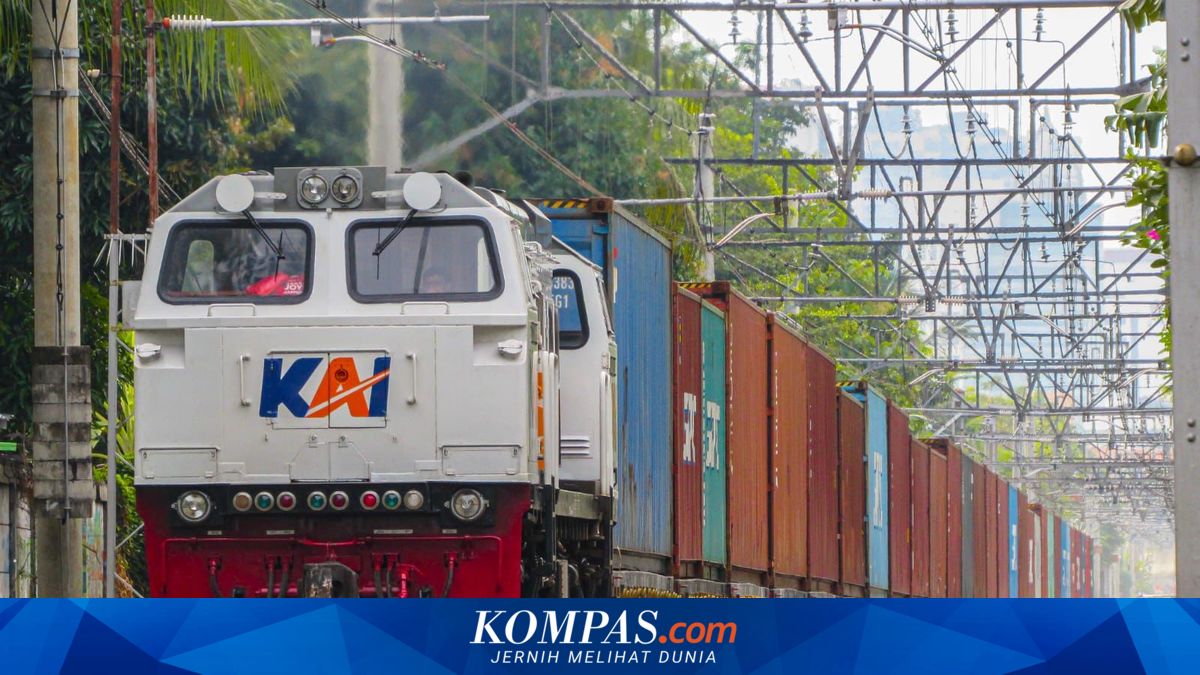
Over the last decade, freight transport by PT Kereta Api Indonesia (Persero) or KAI has increased by 74.2%, from 40,060,714 tonnes in 2017 to 69,791,691 tonnes in 2025. In the first quarter of 2026, KAI recorded freight transport services amounting to 14,948,442 tonnes. This data affirms the vital role of railways as the lifeline of distribution, connecting production areas with consumption centres, while also demonstrating the rising demand for rail-based distribution alongside national economic activities. KAI’s Vice President of Corporate Communication, Anne Purba, stated that the increase in freight volume indicates the need to strengthen rail-based logistics systems. Strengthening rail-based logistics systems is deemed crucial as it can reduce congestion and extend the lifespan of highways, given the railway’s large carrying capacity. For instance, one trainset for coal transport in southern Sumatra can carry 3,000 tonnes in a single trip, equivalent to about 120 trucks on the highway. Another example is that one wagon can carry 50–70 tonnes of goods, so a trainset consisting of dozens of wagons can transport up to around 4,200 tonnes in one journey. Strengthening rail-based logistics is also seen as able to lower national logistics costs. Currently, Indonesia’s logistics costs are in the range of 15-20% of gross domestic product (GDP), while the global standard is around 7–8%. About 60% of national logistics activities are on Java Island, with logistics costs estimated at Rp 2,400–2,500 trillion per year. Therefore, strengthening railway infrastructure in high-movement areas is one step that can drive large-scale distribution efficiency. Railway freight services also strengthen the distribution system thanks to operational punctuality. In the first quarter of 2026, the on-time performance for freight transport was recorded at 95.97% for departures and 91.77% for arrivals. Anne added that strengthening railway infrastructure will have a direct impact on goods distribution in various regions. “The development of networks and increased rail-based transport capacity will open up more equitable distribution opportunities. This will support smooth supply and contribute to price stability in society,” she said. With the continuously increasing growth trend and large carrying capacity, strengthening railway infrastructure is a strategic step in building a more efficient national logistics system. “This direction is expected to strengthen distribution connectivity, reduce logistics costs, and support Indonesia’s economic competitiveness,” Anne emphasised.