
KAI Forecasts 2026 Eid Holiday Passenger Volume to Reach 4.9 Million
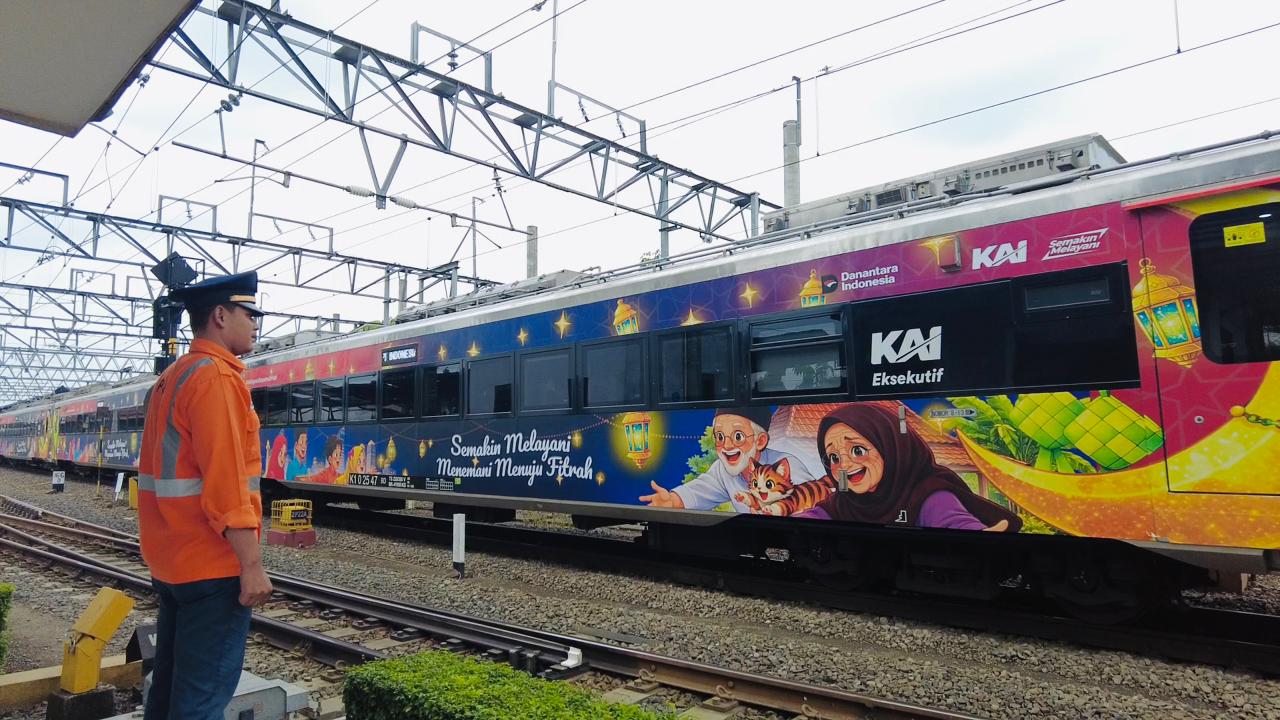
PT Kereta Api Indonesia (Persero) is projecting that train passenger volume during the 2026 Eid holiday period will reach 4.9 million passengers. Awan Hermawan Purwadinata, Director of Operations at PT KAI, stated that this figure encompasses total journeys on both long-distance and local trains across all KAI operational regions during the holiday exodus and return period.
Awan noted that the forecast remains subject to change, with the work-from-anywhere policy, public holidays, and the distribution of year-end bonuses (THR) likely to influence the departure schedules of holidaymakers.
“This is our estimate, just an estimate, and it can change with this work-from-anywhere policy there is a possibility it could change. The Eid transport volume in 2026 is estimated to reach 4.9 million passengers,” said Awan during the Denpasar Discussion Forum 12, held online on Wednesday (11 March).
From the total projection, KAI has identified two critical points of mass movement. The peak homebound exodus is estimated to fall on 18 March 2026 with an estimated 247,440 passengers in a single day. Meanwhile, the peak return journey is predicted to be busier, occurring on 24 March 2026 with an estimated 287,536 passengers.
By Wednesday (11 March) at 09.00 WIB, KAI had secured the sale of 2.5 million tickets from the total 3.5 million long-distance train seats provided. The most sought-after departure date fell on 23 March, with average ticket sales of 164,274 per day.
In contrast to long-distance trains, seat occupancy for local trains was monitored at 19.9 per cent of the total 926,936 seats.
“Local train occupancy is still low because many passengers are go-show or buy tickets directly on the day of departure. This differs from long-distance passengers who prepare their tickets well in advance to match their schedules,” explained Awan.
Furthermore, Awan noted that based on data from 11 March, Pasar Senen Station remained the busiest departure point with a total of 255,929 passengers, followed by Gambir Station, Yogyakarta, Surabaya Pasar Turi, and Bekasi.
The most popular travel routes include Gambir–Yogyakarta (return), Gambir–Semarang (return), and Lempuyangan–Pasar Senen. Meanwhile, the trains with the highest passenger volumes are led by KA Airlangga (Pasar Senen–Surabaya), followed by KA Joglosemarkerto and KA Pangrango.