
KAI: Farmer and Trader Train Serves 35,843 Customers
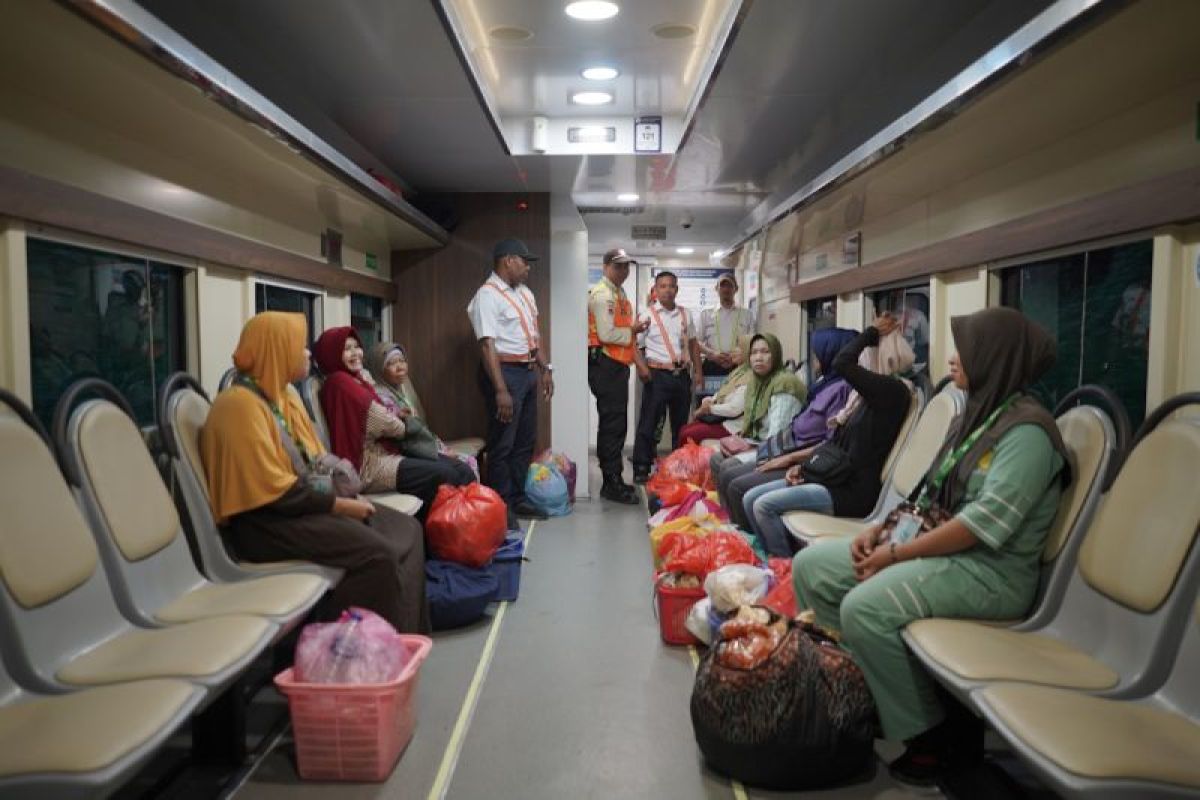
PT Kereta Api Indonesia (Persero) has recorded that its Farmer and Trader Train service has served 3t5,843 customers, aimed at supporting the mobility of farmers and traders and expanding economic access through subsidised transport.
Anne Purba, Vice President of Corporate Communication at KAI, stated that the company continues to provide services tailored to community needs via the Farmer and Trader Train on the Rangkasbitung–Merak route and the Cikuray Train connecting Garut and Pasar Senen.
Overall, the service has been utilised by 35,843 customers up to July 2026. This figure includes 35,661 customers on the Rangkasbitung–Merak route since its commencement on 1 December 2025 until 29 July 2026, and 182 customers on the Cikuray Train between 11 June and 26 July 2026. Specifically, between 1 January and 29 July 2026, the Rangkasbitung–Merak service alone served 31,546 customers.
Purba noted that the service assists the community in transporting agricultural yields, food supplies, home-based products, and merchandise to markets and economic hubs. The Rangkasbitung–Merak route offers a fare of Rp3,000 per trip, while the Cikuray Train route, which reaches as far as Garut–Pasar Senen, has a fare of Rp45,000.
These affordable rates are supported by the government through the Public Service Obligation (PSO) scheme. This policy ensures that the public can access safe, scheduled transport that aligns with their economic capabilities. KAI expressed appreciation for the government’s focus on the mobility needs of those engaged in daily economic activities. Through the PSO, public transport serves as a vital policy tool connecting people to markets, workplaces, and livelihoods.
On the Rangkasbitung–Merak line, the service connects residential areas, production centres, traditional markets, and economic hubs within the Banten region. Meanwhile, the provision of space for farmers and traders on the Cikuray Train extends these benefits from Garut through West Java to Jakarta.
The service also provides dedicated space for customers to place their goods according to regulations, ensuring a more orderly, safe, and comfortable journey for all passengers. For those transporting agricultural products, the certainty of the train schedule provides significant economic value, helping customers estimate arrival times at markets and maintain the quality of their commodities.
Using the train also reduces the need for multiple vehicle transfers, helping to lower additional costs, reduce physical labour, and minimise the risk of commodity damage during transit. Purba added that the benefits extend to the regions traversed, as passenger activity supports economic circulation around stations, including feeder transport, local stalls, and various community businesses. KAI remains committed to maintaining service quality to ensure these benefits remain widespread and relevant to customer needs.