
KAI Explains Why It Dropped Plans to Import 28-Year-Old Japanese Commuter Trains
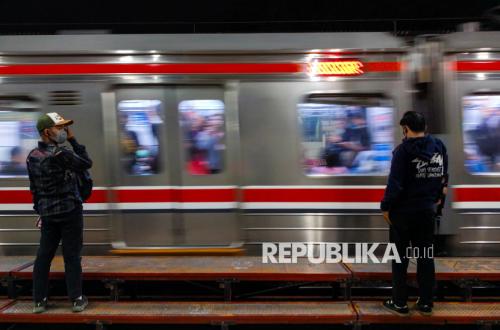
JAKARTA — State-owned railway company PT Kereta Api Indonesia (Persero), or KAI, has cited safety concerns as a key reason for cancelling plans to import second-hand electric multiple-unit (EMU) trains from Japan.
KAI President Director Bobby Rasyidin said that a month earlier the company had been considering several options. The first was to ramp up production at INKA, Indonesia’s state-owned train manufacturer. The second was to optimise existing trainsets or extend their service life. The third was to acquire a number of second-hand EMUs from Japan.
“The trains are 28 years old. Taking that age into account, as I said earlier, our priority is safety. We must not allow safety to be overlooked simply because we want to carry more passengers. That would be dangerous,” Bobby said in Jakarta on Tuesday (10 November 2026).
KAI sent a team to the trains’ country of origin to carry out detailed inspections. The findings showed that the trains were no longer young.
“We categorise trains that are 10 years old as young, those that are 20 years old as middle-aged, and those over 20 as old. These trains fall into the old category,” Bobby said.
He added that KAI had also considered the operational sustainability of second-hand trains that were already classed as old.
“Maintaining trains that are not new and are old is extremely hectic. A train has hundreds of components, unlike a car. There are a great many components, most of them electrical. Frankly, electrical components have short lifespans and short production runs. Imagine operating a 28-year-old train today: for how long can we ensure the sustainability of its operations?” he said.
Bobby said the third factor was the trains’ structure. As moving equipment used every day, trains inevitably experience material fatigue, and metal fatigue is difficult to predict accurately.
“The conclusion from these three factors is safety. So we discussed it again—not just management and finance staff, but also technical, operational and maintenance personnel. We decided not to pursue the second-hand train option because it involves safety risks. Those are the factors that ultimately led us to decide against importing second-hand trains,” he said.
Source: jawawa.id (https://jawawa.id/newsitem/kai-explains-why-it-dropped-plans-to-import-28-year-old-japanese-commuter-trains-1794307850)
Originally published by Republika (https://ekonomi.republika.co.id/berita/toa4ro423/kai-ungkap-alasan-tak-jadi-impor-krl-bekas-jepang-berusia-28-tahun), translated from Indonesian