
KAI Drives National Logistics Leap, Strengthens Rail Integration through Dry Port in Batang Industrial Special Economic Zone
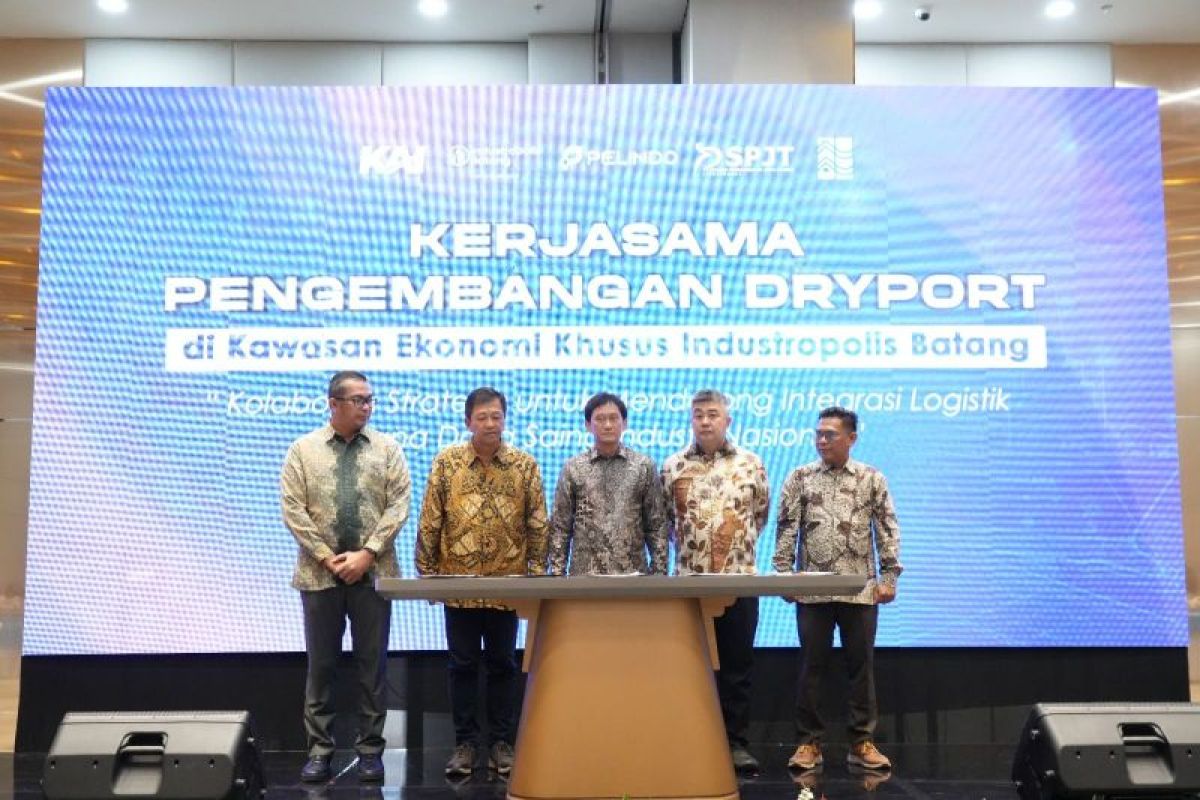
Batang (ANTARA) - PT Kereta Api Indonesia (Persero), together with PT Kawasan Industri Terpadu Batang, PT Pelabuhan Indonesia (Persero), PT Sarana Pembangunan Jawa Tengah (Perseroda), and Perumda Aneka Usaha Kabupaten Batang, signed a Memorandum of Understanding for the development of rail-based logistics at the Dry Port in the Batang Industrial Special Economic Zone (KEK), on Tuesday (21/4). This collaboration is aimed at building a more integrated logistics system, while addressing the challenge of high national logistics costs. With a rail-based approach, goods distribution is expected to become more efficient, measurable, and competitive. KAI President Director Bobby Rasyidin stated that the development of the dry port in Batang is part of the broader direction for building an integrated national logistics ecosystem from industrial zones to ports. “In Batang, an industrial zone connected to a self-sufficient city will grow. KAI will serve as the transporter from the dry port to the port, and at the end, Pelindo will ensure connectivity to global markets. With this integration, we aim to reduce logistics costs and make them more competitive,” said Bobby. He added that Indonesia’s current logistics costs are still in the range of 15% to over 20% of Gross Domestic Product (GDP), while the global standard is around 7–8%. This condition presents a significant opportunity for improving the competitiveness of the national industry. “If we can significantly reduce logistics costs, industrial production costs will also decrease. The impact will be directly felt on the competitiveness of Indonesian products in the global market,” Bobby continued. This effort is strengthened by a strategy to increase transport capacity. KAI currently operates wagons with an average capacity of 50 tonnes per wagon, which is being upgraded to 70 tonnes. With one train consisting of up to 60 wagons, the transport capacity can reach 4,200 tonnes per trip. In addition, KAI is preparing the development of direct routes to ports to reduce operational constraints. Currently, distribution to Tanjung Priok Port still utilises existing tracks with operational time limitations of around five hours per day. With direct routes, goods distribution will become more flexible and efficient. On the other hand, KAI also sees great potential in Java as the centre of national logistics movement. Approximately 60% of Indonesia’s logistics activity is on Java Island, with logistics costs estimated at Rp2,400–2,500 trillion per year. An efficiency of just 30% could generate savings of up to around Rp1,000 trillion. The development of the Dry Port in Batang Industrial SEZ is also directed as a logistics consolidation centre in Central Java. Based on internal studies, container movements in this region reach around 10 million per year and are projected to continue increasing along with the growth of the industrial zone. “We are pushing this dry port to become a logistics aggregator, not only serving the Batang area but also the wider Central Java region. With KAI’s network of more than 600 stations on Java Island, the potential for rail-based distribution is very large,” explained Bobby. This step is supported by KAI’s freight transport performance, which continues to show a positive trend. Throughout the first quarter of 2026, KAI handled 14,948,442 tonnes of freight, reflecting the strategic role of railways in supporting national distribution. In the same period, container transport reached 1,371,036 tonnes, an increase from 1,196,600 tonnes in the first quarter of 2025. This growth indicates a shift in transport modes towards more efficient rail-based options. From an operational perspective, punctuality performance has also improved. Freight departure punctuality was recorded at 95.97% and arrival at 91.77%, an increase compared to the previous year, which was 95.89% and 87.04% respectively. “Through the development of this rail-based dry port, KAI targets the formation of a more integrated, efficient national logistics system capable of reducing logistics costs. This effort is expected to serve as a foundation for enhancing Indonesia’s industrial competitiveness at the global level while strengthening connectivity between domestic zones,” Bobby concluded.
Source: jawawa.id (https://jawawa.id/newsitem/kai-drives-national-logistics-leap-strengthens-rail-integration-through-dry-port-in-batang-industrial-special-1776757888)
Originally published by Antara (Indonesian) (https://www.antaranews.com/berita/5535375/kai-dorong-lompatan-logistik-nasional-perkuat-integrasi-rel-melalui-dryport-kek-industropolis-batang), translated from Indonesian