
KAI Director: Gambir Development to Be Phased, Strengthen Long-Distance Train Access, KRL, and Monas Area
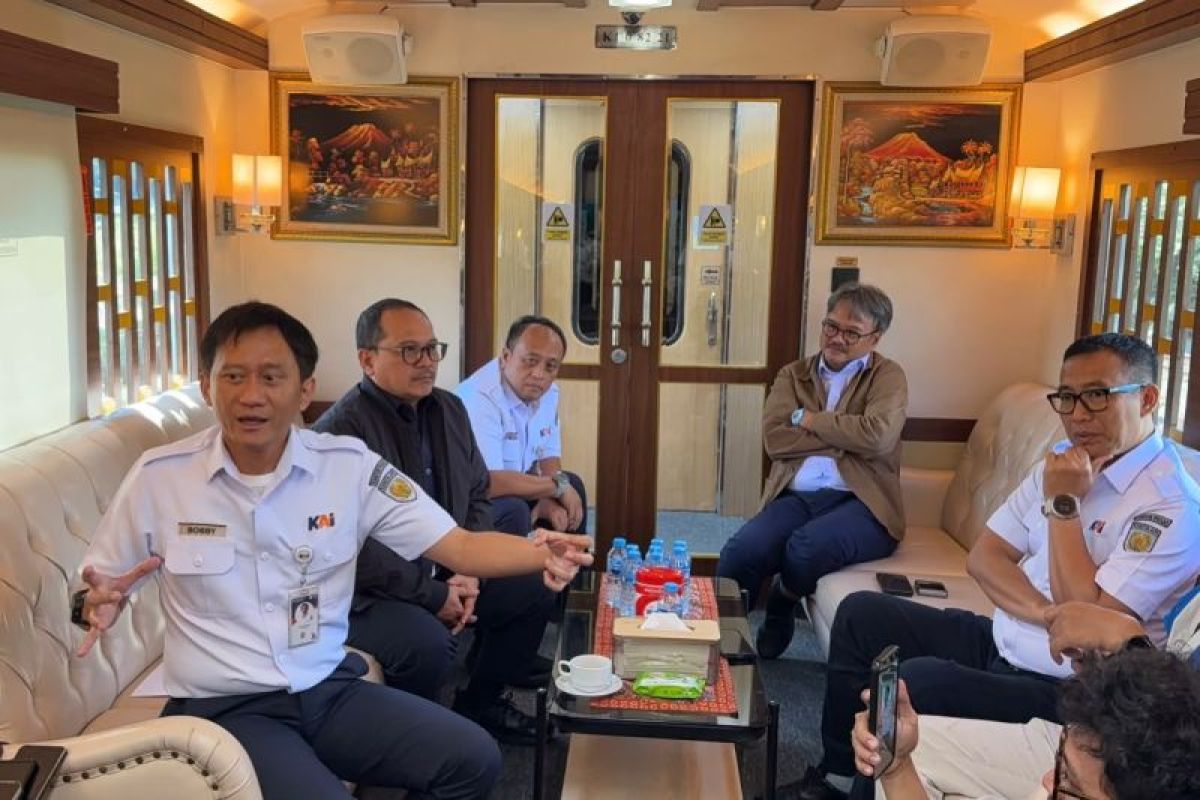
The development of Gambir Station is being prepared in stages as part of the arrangement of public transport services in central Jakarta, PT Kereta Api Indonesia (Persero) has confirmed. KAI President Director Bobby Rasyidin, accompanied by members of the Board of Directors including Director of Finance and General Affairs Indarto Pamoengkas, made the statement during an Extraordinary Train journey from Yogyakarta to Gambir on Wednesday.
Bobby explained that a perception regarding Gambir’s development needs to be corrected. According to him, Gambir is not being positioned in opposition to Manggarai. Both have different functions within a single Jabodetabek public transport system. “There has been a perception that needs straightening out regarding Gambir. We are not pitting Gambir against Manggarai. Manggarai remains the centre for inter-line transfers, while we are preparing Gambir as a gateway for Long-Distance Trains in the city centre, access to the Monas area, and part of Jakarta’s public transport integration,” Bobby stated.
Bobby noted that Gambir holds a strategic position as it is located in the heart of Jakarta, close to Monas, government districts, offices, hotels, public spaces, and connecting transport networks. With this position, Gambir’s development is directed so that customers have a more complete travel experience, from arriving at the station, waiting for departure, changing modes, to continuing activities in the city centre. Currently, Gambir Station serves 34 regular long-distance trains per day, or approximately 78 stops for boarding and alighting. Meanwhile, the elevated track at Gambir is traversed by 326 KRL Bogor Line journeys daily on the Jakarta Kota–Bogor and Jakarta Kota–Nambo round-trip routes.
KAI emphasised that at this stage, the Commuter Line passing through Gambir does not yet serve boarding and alighting at the station. Discussions regarding the potential for KRL services at Gambir are placed as a gradual process requiring readiness of infrastructure, track capacity, electricity, signalling, safety, operational patterns, and coordination with regulators. “Integration needs stages. Customers must get easier access, but safety and operational reliability remain number one. Therefore, the readiness of platforms, customer flow, electricity, signalling, track capacity, and connecting mode connections must be calculated correctly,” Bobby said.
According to Bobby, access to central Jakarta needs to be increasingly open via public transport. Communities from Bogor, Depok, Cibinong, Nambo, and other buffer areas need easier options to reach Monas, government areas, public spaces, hotels, offices, and Long-Distance Train services. “We want the Jabodetabek community to have easier access to the city centre. People from Depok, Bogor, Cibinong, Nambo, and other areas must have better public transport options to reach the Monas and Gambir areas. We don’t want access to the city centre to rely solely on private vehicles,” Bobby stated.
The need for integration is increasingly relevant as Jabodetabek KRL volume continues to rise. KRL volume increased from 217,964,892 journeys in 2022 to 344,621,825 journeys in 2025. Over three years, the increase reached 126,656,933 journeys or 58.11 per cent. The Bogor Line is the route with the largest number of passengers. In 2022, the Bogor Line served 102,054,022 passengers. This number rose to 133,040,885 passengers in 2023, then 145,920,264 passengers in 2024, and reached 155,009,997 passengers in 2025. From January to June 2026, the Bogor Line has served 78,077,679 passengers.
Bobby explained that increasing KRL capacity must also be done comprehensively. Adding train sets must be accompanied by the readiness of platforms, electricity, signalling, operational patterns, and customer flow. Therefore, KAI is also preparing the development of platforms 6, 7, and 8 at Bogor Station to support the operation of SF12 train sets on the Bogor Line. This programme is targeted for total completion by 15 July 2026. “Adding train sets cannot stand alone. Platforms must be ready, electricity must be ready, signalling must be ready, and the operational pattern must also be ready. If everything is organised, crowding can be managed better and customers receive more comfortable service,” Bobby said.
Bobby also stressed that KAI is a company whose primary base is operations. Therefore, strengthening operations, safety, and service is the main focus. Changes to the Board of Directors’ organisational structure are also directed at strengthening the areas of operations, infrastructure, safety, and fleet management. “KAI’s base is operations. So operations must be strong. Safety is non-negotiable, while hospitality must be maintained and improved. These two things go together: journeys must be safe, and customers must feel increasingly better service,” Bobby said.
Bobby added that Gambir’s development is also related to KAI’s direction in strengthening its revenue structure. Currently, around 96 per cent of KAI’s revenue still comes from train operations, especially passenger and freight services. Meanwhile, non-farebox revenue, or income outside of ticket sales, is still around 4 per cent. According to Bobby, this composition needs to be strengthened so that KAI has a more diversified revenue space. In various public transport operators worldwide, non-farebox revenue has become an important source through the utilisation of areas, property, hospitality, retail, and supporting services. “So far, around 96 per cent of KAI’s revenue comes from train operations. Non-farebox revenue is still around 4 per cent. Going forward, this needs to be strengthened. Operations remain the core, but station assets must also work more productively so that the benefits return to services and the community,” Bobby concluded.