
KAI Develops Net Zero Emission Strategy, Strengthening Rail's Role in Indonesia's Energy Transition
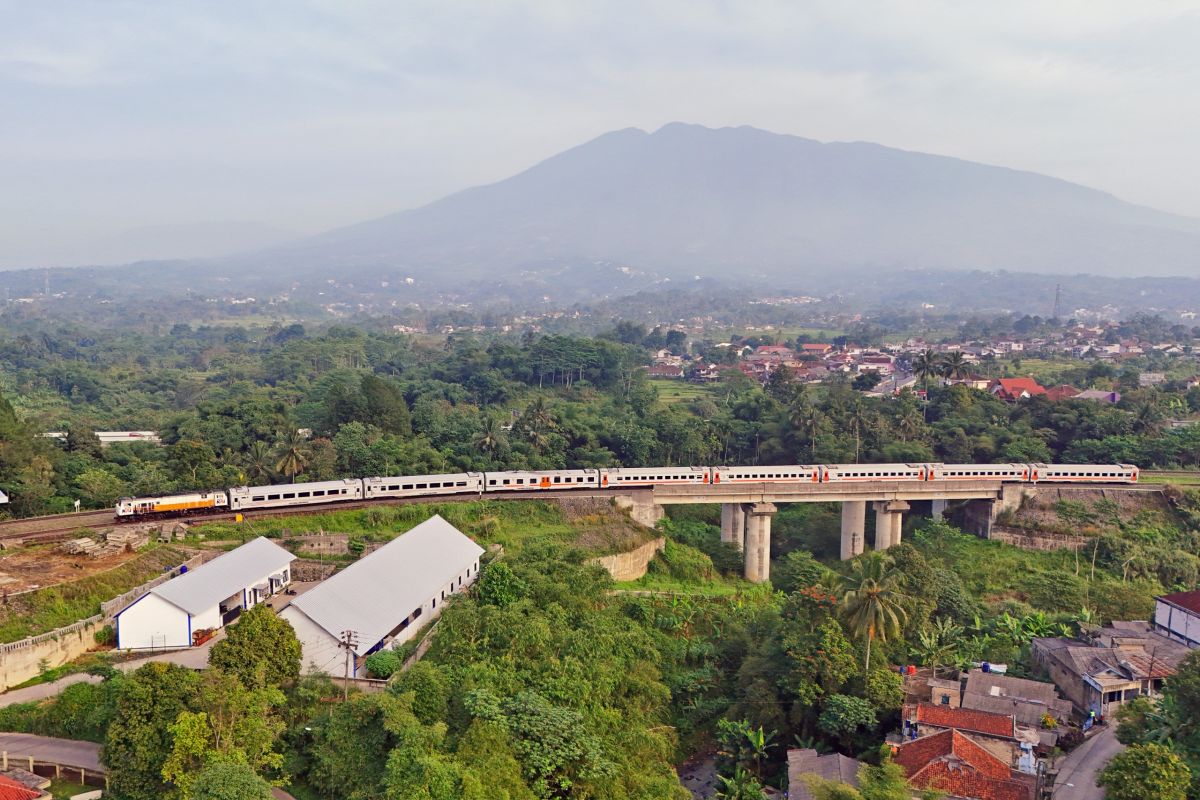
A decarbonisation strategy has been developed to support Indonesia’s 2060 Net Zero Emission target through electrification, operational efficiency, renewable energy, and carbon sequestration.
PT Kereta Api Indonesia (Persero) is formulating its Net Zero Emission strategy as a long-term measure to reduce emissions and support Indonesia’s national target. The strategy was presented during the ‘Towards a Green Rail Future: Delivering a Decarbonised Railway in Indonesia’ event in Jakarta, supported by the UK Government through the UK Partnering for Accelerated Climate Transition (UK PACT) programme.
The formulation of this strategy aligns with Presidential Regulation Number 110 of 2025 regarding climate change mitigation in the transport sector. Through this strategy, KAI has established four main directions for emission reduction: rail track electrification, increasing operational efficiency, utilising cleaner energy, and carbon sequestration through greening programmes.
This initiative stems from the position of railways as a transport mode with relatively low emission levels. According to studies presented at the event, railways contribute approximately 1 per cent of the total greenhouse gas emissions in the national transport sector, whereas road vehicles account for approximately 89 per cent.
KAI Vice President of Corporate Communication, Anne Purba, stated that rail-based transport plays a vital role in supporting the national energy transition agenda due to its ability to serve large-scale mobility with lower emissions. She noted that KAI is preparing long-term steps to ensure railway service development aligns with national energy transition targets and evolving public mobility needs.
One of KAI’s primary steps is expanding the use of electricity in railway services. Currently, electrified tracks reach 1,038.7 kilometres, covering the KRL Commuter Line, LRT Jabodebek, and the Whoosh high-speed rail.
Operationally, KAI is implementing various energy efficiency programmes and applying the Green Building EDGE certification to stations, depots, and offices. These efforts aim to reduce energy consumption while enhancing corporate operational efficiency.
Regarding energy, KAI continues to increase the use of environmentally friendly fuels. The use of biodiesel has progressed from B0 in 2017 to B40 in 2025, with plans to move towards B50 by 2026. Additionally, KAI utilises solar energy through the installation of solar panels with a total capacity of 3,435.5 kWp across 66 operational locations.
These emission reduction efforts are complemented by tree-planting programmes. Between 2021 and 2025, KAI has planted 107,757 trees across various operational areas as part of its carbon sequestration efforts.
Through this formulated strategy, KAI targets an emission reduction of 25.76 per cent, equivalent to 166,873 tonnes of CO2e by 2030, from a baseline of 647,785 tonnes of CO2e. This target is set to increase to 33.55 per cent by 2035 and 78.17 per cent by 2050. By 2060, KAI aims to achieve Net Zero Emissions with a total emission reduction of 1,093,311 tonnes of CO2e.
KAI Vice President of Sustainability, Tria Mutiari Melian, explained that KAI plays a crucial role in supporting the decarbonisation agenda of the national transport sector. She stated that as the backbone of national mass transport, KAI’s role is vital in supporting the transition to a low-carbon economy.
The study, conducted alongside UK PACT and Kynergy Consulting, also showed that rail-based modes have low emission levels. The LRT Jabodebek produces approximately 15 grams of CO2-eq per passenger-kilometre, Intercity Trains approximately 16.43 grams, and the KRL Commuter Line approximately 34.03 grams.
Support from UK PACT and Kynergy Consulting in formulating this strategy includes studies on B50 implementation, analysis of accelerating the transition from diesel multiple units (KRD) to electric multiple units (KRL), and the modernisation of signalling systems, as well as developing financing instruments to access international green finance.
Kynergy Consulting Project Director, Rekyan Eckersley, noted that strengthening railway services is a key part of reducing emissions in the transport sector. He expressed pride in assisting KAI in strengthening these strategic steps.
Anne concluded by adding that the success of the energy transition requires collaboration between various parties, including the government, the business world, financial institutions, and international development partners, to accelerate the development of low-carbon transport.