
KAI Develops 113 Solar Power Units Across 92 Locations, Strengthening Clean Energy Transition
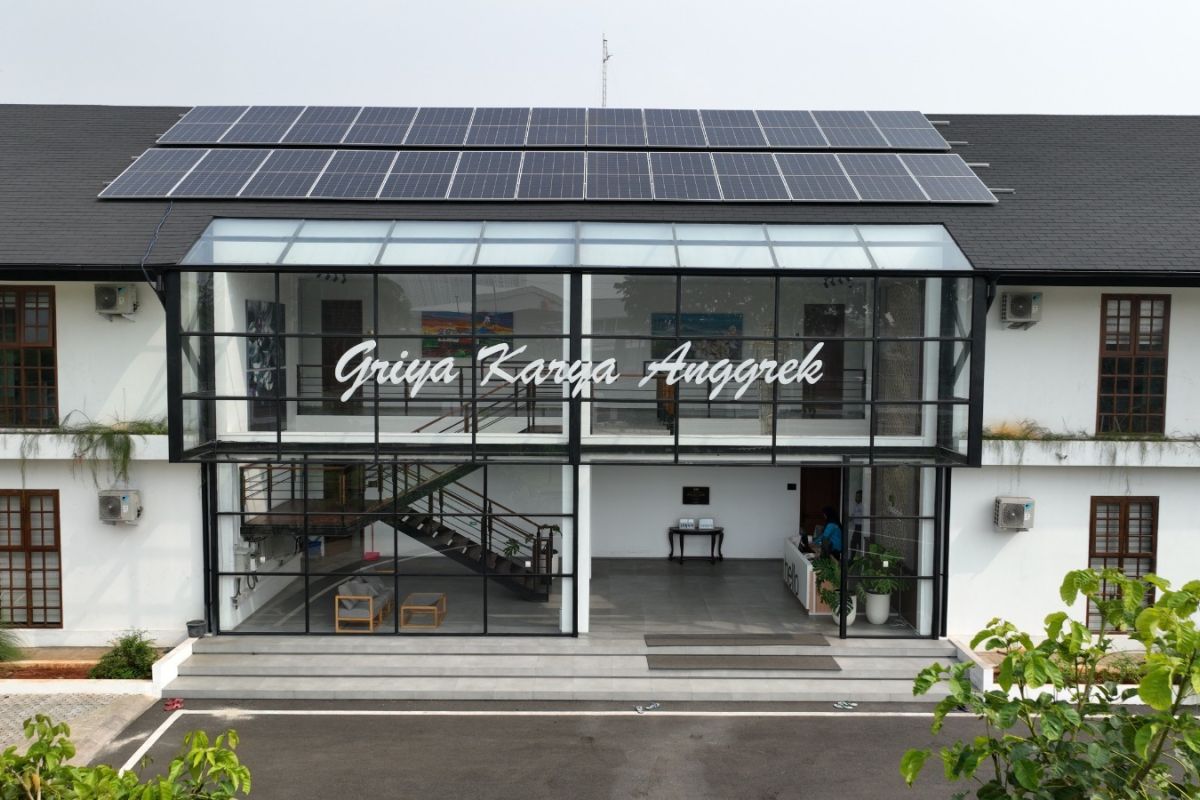
Amidst the increasing national energy demand, sustainability has become closely linked to how various companies conduct their operations. Energy is now viewed as both an operational necessity and a part of environmental responsibility. This perspective has driven PT Kereta Api Indonesia (Persero) to continuously expand the use of new and renewable energy through the development of Solar Power Plants (PLTS) across various company operational facilities.
This initiative began in 2022 and has grown alongside KAI’s commitment to supporting the national clean energy transition agenda. As of June 2024, KAI has developed 11ability 3 PLTS units with a total installed capacity of 4,430.65 kWp spread across 92 locations. These installations are situated in 62 stations, 10 workshops (balai yasa), 6 maintenance offices (griya karya), 3 depots, 1 office, and 1 record centre, supporting the company’s operational activities across various regions in Indonesia.
The utilisation of solar energy is part of a broader transformation occurring across various sectors, including transport. As a company managing large-scale public mobility, KAI views the use of more efficient and low-emission energy as a vital step in supporting corporate growth while strengthening its contribution to national environmental targets.
KAI Vice President of Corporate Communication, Anne Purba, stated that the development of PLTS is being carried out gradually, considering operational needs and the potential for solar energy utilisation across the company’s various assets. “The development of PLTS is part of KAI’s efforts to increase the use of clean energy in company operations. We continue to develop this programme incrementally in line with the company’s commitment to sustainability and energy efficiency,” said Anne.
According to various technical studies on PLTS utilisation in Indonesia, every 1 kWp of a solar system can produce an average of approximately 1,300 to 1,500 kWh of electricity per year, depending on sunlight levels and installation conditions. With an installed capacity of 4,430.65 kWp, the PLTS developed by KAI has the potential to generate approximately 5.8 million to 6.6 million kWh of clean electricity per year.
This energy production provides environmental benefits that can be quantified. The emission reduction calculation refers to the Decree of the Minister of Energy and Mineral Resources Number 163.K/HK.02/MEM.S/2021 regarding the Determination of Greenhouse Gas Emission Factors for the Electricity System, which serves as the national reference for calculating emissions in the electricity sector. Under this regulation, the emission factor for the Java-Madura-Bali (Jamali) interconnection system ranges from 0.84 to 0.87 tonnes of CO2 per MWh.
With an installed capacity of 4,430.65 kWp and a potential annual electricity production of around 5.8 million to 6.6 million kWh, the PLTS developed by KAI has the potential to reduce carbon emissions by approximately 5,100 to 5,800 tonnes of CO2 per year. This calculation is derived from the estimated annual electricity production of the PLTS multiplied by the Jamali electricity system emission factor as established by the Ministry of Energy and Mineral Resources.
These figures demonstrate that the use of solar energy provides a direct contribution to efforts to reduce greenhouse gas emissions. Every unit of electricity produced by the PLTS replaces a portion of the electricity demand sourced from fossil-fuel-based power plants, thereby supporting the low-carbon development agenda of the nation.
In addition to generating clean energy, the development of PLTS also strengthens the implementation of Environmental, Social, and Governance (ESG) principles practised by KAI. The use of solar energy supports energy efficiency, enhances energy resilience at operational facilities, and expands the use of renewable energy sources within the company’s environment.
Currently, the solar panels installed across various stations, workshops, depots, and other operational facilities have become part of the company’s daily activities. Their presence demonstrates how technological innovation can align with the needs of public service and long-term oriented environmental management.
“The transformation towards sustainable transport requires consistent steps. KAI will continue to develop various initiatives that support energy efficiency, emission reduction, and the creation of sustainable value for society and the environment,” Anne concluded.