
KAI Daop 7 Permanently Closes Illegal Level Crossing in Kediri
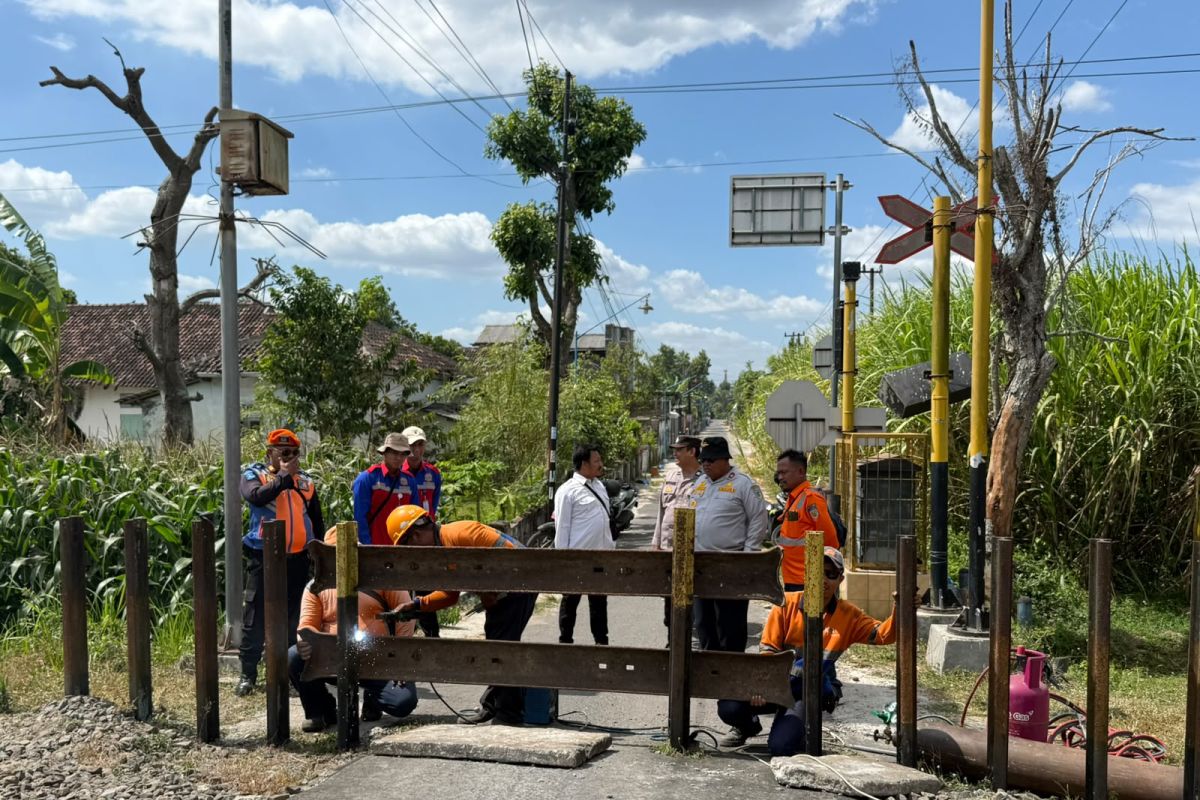
The closure of illegal crossings is a concrete step to prevent accidents and keep the railway line clear.
Kediri (ANTARA) - PT Kereta Api Indonesia (Persero) Operational Region (Daop) 7 Madiun, East Java, has permanently closed unregistered level crossings, known as illegal crossings, in Kediri Regency.
Public Relations Manager of PT KAI Daop 7 Madiun, Tohari, said the closures were carried out to prevent accidents and improve the safety of train journeys.
“Safety is KAI’s top priority. Closing illegal crossings is a concrete step to prevent accidents, keep the track clear, and ensure train journeys run safely, smoothly and on time,” he said in a statement in Kediri on Wednesday.
He added that the closure was carried out after an incident several days earlier in which Train 406, the Dhoho Commuter Line, struck a motorcycle at KM 172+5 on the Kras-Ngadiluwih section in Kediri Regency.
The closure was carried out by the Security Unit (PAM) and Railway Track Unit (JR) 7.13 Kediri, which fenced off the railway corridor using rails and installed closures made of iron sleepers so that the access can no longer be used by vehicles.
The closure activity also received support from the Class I Surabaya Railway Engineering Centre’s Kediri Satellite Unit, the Kediri Regency Transportation Office, the Kras Military Command, the Kras Police, and the Jambean Village Government in Kediri Regency.
KAI Daop 7 Madiun also reminded the public not to reopen crossings that have been closed or to create new illegal crossing points, as these can endanger the safety of train journeys and road users, and violate the provisions of laws and regulations.
In addition, KAI urged road users to be disciplined when crossing level crossings by stopping, looking left and right, and making sure no train is approaching before crossing.
The public is also asked to give way to trains, as crossing barriers are not the primary safety device but merely a supplementary safety aid.
“The safety of train journeys is a shared responsibility. Public compliance with the rules at crossings is the key to preventing accidents,” said Tohari.