
KAI Daop 1 Jakarta Transports 588,000 Passengers During Long Holiday Period
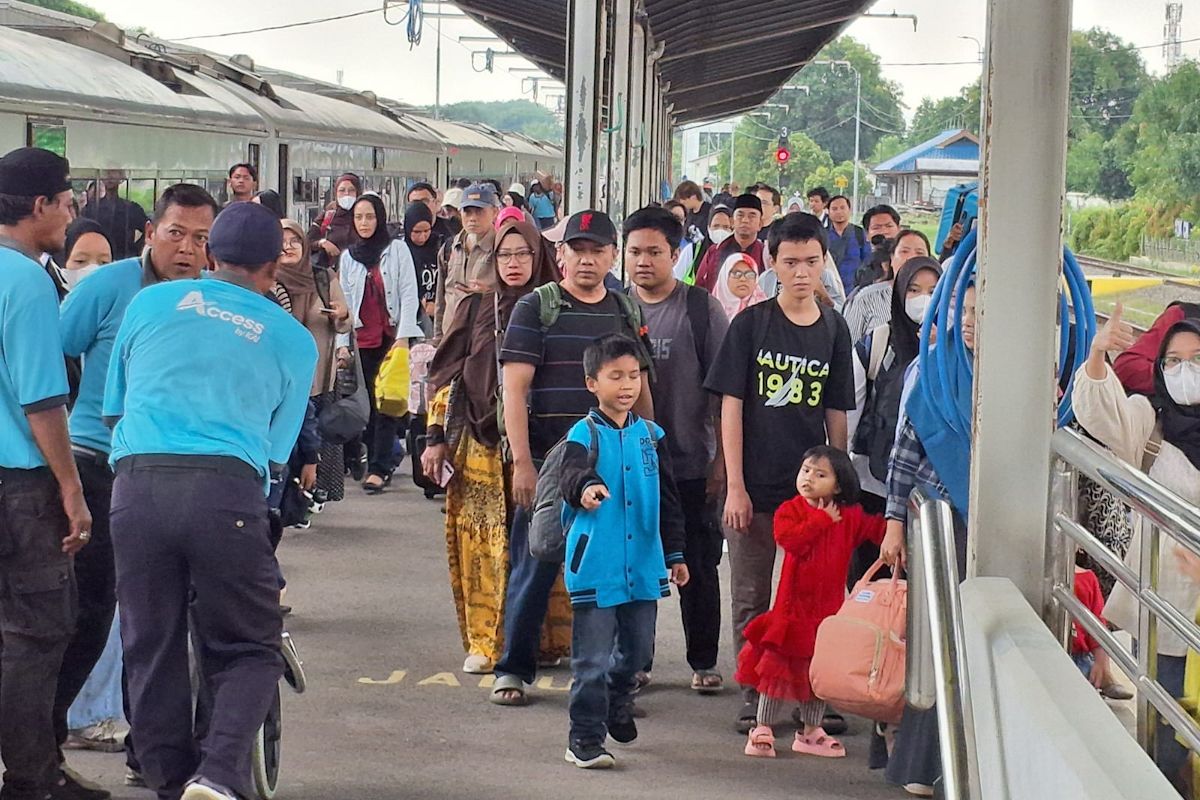
PT Kereta Api Indonesia (Persero) Daop 1 Jakarta transported 588,000 long-distance train passengers during the long holiday period encompassing Eid al-Adha 1447 Hijriah, Vesak, and Pancasila Day 2026. Between 25 May and 2 June 2026, the volume of long-distance train passengers served by KAI Daop 1 Jakarta exceeded 588,000, according to KAI Daop 1 Jakarta Public Relations Manager, Franoto Wibowo.
During this period, departures for long-distance passengers were recorded at 300,742, while arrivals reached 288,113. The high level of public mobility during the holidays indicates that trains remain the primary choice for intercity travel. KAI remains committed to providing safe, comfortable, punctual, and reliable services to support passenger mobility needs.
In terms of departures, Pasar Senen Station recorded the highest passenger volume with 114,017 passengers, followed by Gambir Station with 97,570 passengers. Other significant stations included Bekasi (43,695), Jatinegara (19,956), Cikarang (14,018), Karawang (5,822), and Cikampek (5,664). Regarding arrivals, Pasar Senen was the busiest destination with 97,265 passengers, followed by Gambir (92,727), Bekasi (39,906), Jatinegara (34,323), Cikarang (12,007), Cikampek (6,213), and Karawang (5,672).
In addition to long-distance services, KAI Daop 1 Jakarta also noted high mobility in local train services. During the same period, local train departures reached 47,432 passengers, while arrivals were recorded at 47,229. Sukabumi Station saw the highest volume for local trains, with 23,396 departures and 23,253 arrivals, followed by Bogor Paledang Station with 15,734 departures and 15,531 arrivals.
Overall, from 25 May to 2 June 2026, KAI Daop 1 Jakarta served 348,174 departures and 335,342 arrivals, comprising both long-distance and local train passengers. Occupancy rates for long-distance services were also positive; out of 357,320 available seats, KAI Daop 1 Jakarta transported 295,465 passengers, achieving an average occupancy rate of 82.7 per cent. Specifically, Commercial Economy class saw 90.4 per cent occupancy (136,727 passengers), Executive class saw 71.4 per cent (123,759 passengers), and PSO Economy service reached 106.9 per cent (34,979 passengers). For the Pangrango and Siliwangi local train services, the overall occupancy rate reached 94.3 per cent, serving 47,440 passengers out of 50,292 available seats.
Franoto stated that public trust in rail transport continues to show a positive trend. The high passenger volume and occupancy rates during this holiday period serve as motivation for KAI to continuously improve service quality, safety, security, and travel comfort. KAI expressed its appreciation to all passengers and encouraged the public to plan journeys well, arrive at stations early, and utilise available digital services for a smoother travel experience.