
KAI Cuts Energy Intensity by 22% as Operational Efficiency Rises Amid Service Growth
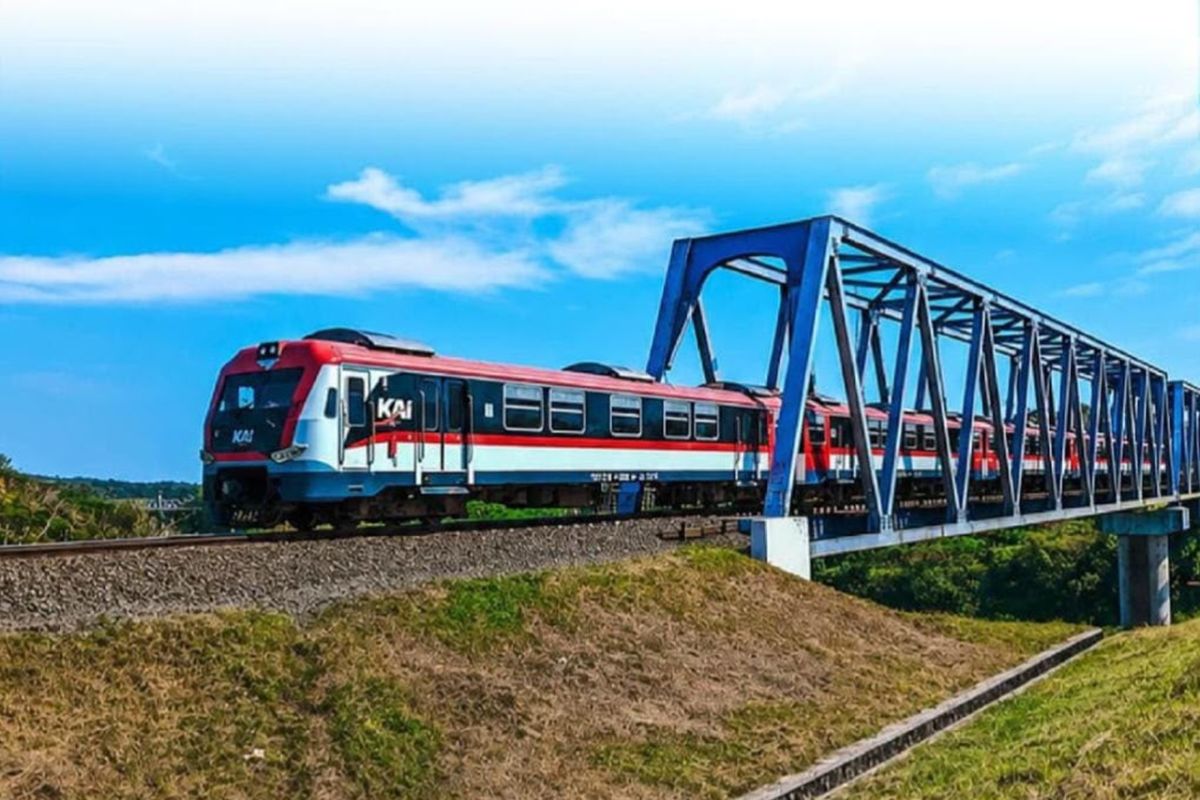
PT Kereta Api Indonesia (Persero) has recorded improved energy efficiency in supporting its operational activities. Throughout 2025, KAI’s total energy consumption stood at 10,107,302 gigajoules (GJ), down 15.39% compared with 2024’s 11,945,467 GJ.
The decline occurred while the company’s service scale continued to grow. In 2025, the number of customers used as the basis for calculating energy intensity reached 492,657,571, an increase of 8.67% compared with 2024’s 453,343,189 customers. Freight volume also rose from 69,201,670 tonnes in 2024 to 69,571,601 tonnes in 2025.
KAI Vice President Corporate Communication Anne Purba said improving energy productivity is an important part of maintaining the sustainability of rail services. Energy management is carried out through consumption measurement, regular monitoring, strengthened governance, and evaluation across all of KAI’s operational regions.
“Energy is one of the key elements in running train journeys, maintaining rolling stock and infrastructure, and supporting service facilities. KAI continues to manage it in a measured way so that service improvements can proceed with increasingly efficient energy consumption,” said Anne.
According to KAI’s 2025 Sustainability Report, energy intensity per customer fell from 0.0263 GJ per customer in 2024 to 0.0205 GJ per customer in 2025. The decrease of around 22.05% shows that the energy used to serve each customer is increasingly low.
Efficiency was also evident in freight services. Energy intensity per tonne of goods fell 15.82%, from 0.1726 GJ per tonne in 2024 to 0.1453 GJ per tonne in 2025. Meanwhile, energy intensity relative to revenue fell 14.57%, from 0.3308 GJ per Rp billion to 0.2826 GJ per Rp billion.
“Intensity data provides a picture of the relationship between the energy used and the scale of services produced. The lower the intensity, the more efficient the energy needed to serve customers, manage freight services, and support the company’s business activities,” said Anne.
In terms of energy sources, KAI’s consumption in 2025 was dominated by B40/B35 biodiesel at 255,047.87 kilolitres, equivalent to 9,666,314.31 GJ. That figure declined from 2024’s 305,585.40 kilolitres, or 11,581,686.81 GJ.
Diesel usage was recorded at 318.78 kilolitres, or 12,081.92 GJ, in 2025. In 2024, diesel use reached 211.28 kilolitres, or 8,007.52 GJ, while in 2023 it was 229.31 kilolitres, or 8,690.72 GJ.
KAI also utilises renewable energy from solar power plants as well as electricity supplied by PLN. Energy consumption calculations cover work units across all of KAI’s operational regions, including railway activities and supporting facilities.
In 2025, KAI implemented the use of B40 fuel in train operations. Trials were conducted on locomotives serving the Jakarta–Surabaya freight route and on the generator engine of the Bogowonto train on the Lempuyangan–Pasar Senen route.
To support the testing, KAI built B40 blending and fuelling facilities at five locations: Cipinang, Arjawinangun, Lempuyangan, Cepu, and Pasar Turi. By the end of 2025, KAI had also begun preparing B50 trials, which have been phased in since July 2026.
Anne explained that the energy efficiency achievements are increasingly relevant given the growth in KAI Group’s customer numbers. Throughout the first half of 2026, KAI Group served 258,993,359 customers, up 7.55% compared with the same period in 2025, which totalled 240,805,920 customers.
The growth came from various KAI Group services. Long-distance and local train services managed by KAI served 29,858,267 customers, up 8.72% from 27,463,555 customers in the first half of 2025.
KAI Commuter served 204,151,200 customers, up 6.58% from 191,540,583 in the same period in 2025. LRT Jabodebek served 16,018,911 customers, an increase of 22.84% from 13,040,403 customers.
The Makassar–Parepare railway also recorded 172,015 customers, up 15.44% from 149,014 in the first half of 2025. Meanwhile, KAI Wisata served 164,743 customers, an increase of 64.45% compared with the same period the previous year.
In freight services, KAI handled 32,498,043 tonnes throughout the first half of 2026. This comprised 26,534,095 tonnes of coal and 5,963,948 tonnes of non-coal commodities.
“Customer growth and the large volume of goods need to be balanced with increasingly sound resource management. KAI is directing its energy efficiency efforts so that journeys remain reliable, service capacity is maintained, and environmental impacts can be managed gradually,” said Anne.
KAI has also organised energy management training to improve workers’ understanding of conservation and efficiency. This competency development supports the company’s efforts to build more energy-conscious work habits in both operations and supporting facilities.
In reading the development of energy intensity, KAI noted refinements to the calculation methodology and validation of energy consumption data in 2025. These refinements were made so that measurements are more relevant, accurate, and accountable.
“Energy efficiency will continue to be part of KAI’s operational evaluation. With an ever-growing service scale, energy management must be carried out in a disciplined, data-driven manner, connected to the company’s sustainability agenda,” Anne concluded.