
KAI Cuts Energy Consumption by 15.39%, Energy Use per Customer Becomes 22% More Efficient
Jakarta (ANTARA) - PT Kereta Api Indonesia (Persero) has continued to improve energy efficiency in its operational and service activities. According to the company’s 2025 Sustainability Report, total energy consumption fell from 11,945,467 gigajoules (GJ) in 2024 to 10,107,302 GJ in 2025. This represents a reduction of 1,838,165 GJ, or 15.39%, in a single year. The decrease occurred while the company served 503,549,820 passengers and transported 69,571,800 tonnes of goods throughout 2025.
Vice President of Corporate Communication at KAI, Anne Purba, explained that gigajoules are used because the company’s energy comes from various sources with different units of measurement. Electricity from PLN and solar panels is initially recorded in kilowatt-hours (kWh), while petrol, diesel, and biodiesel are recorded in litres. To allow for aggregation and comparison, each source is converted into a single unit, the gigajoule, in accordance with the Global Reporting Initiative (GRI) sustainability reporting standards. “The simple way to think about it is like converting kilograms, quintals, and tonnes into a single unit before adding them up. Because electricity and fuel start with different measurements, everything is first converted into gigajoules. This way, KAI can determine the total energy actually used and compare efficiency levels from year to year,” Anne said. In this calculation, one litre of petrol is equivalent to 0.0342 GJ, one litre of diesel or biodiesel is equivalent to 0.0379 GJ, and one kWh of electricity is equivalent to 0.0036 GJ. The fuel conversion refers to the national greenhouse gas inventory guidelines, while the electricity conversion uses references from the electricity sector and international energy standards.
The reduction in total energy consumption was accompanied by improved service efficiency. For passenger services, the average energy requirement fell from 0.0263 GJ per customer in 2024 to 0.0205 GJ per customer in 2025, meaning the energy needed to serve one customer became 22.05% more efficient year-on-year. “This figure does not mean each customer directly uses 0.0205 GJ. The value is obtained by dividing the total energy used by KAI over the year by the number of customers served. The lower the number, the more efficient the energy used to deliver the service,” Anne stated. A similar efficiency gain was recorded in freight services, where the energy requirement dropped from 0.1726 GJ per tonne in 2024 to 0.1453 GJ per tonne in 2025, making the energy needed to serve one tonne of goods 15.82% more efficient. Energy intensity relative to revenue also improved, falling from 0.3308 GJ per billion rupiah in 2024 to 0.2826 GJ per billion rupiah in 2025, a 14.57% improvement. The data shows that while KAI’s energy consumption decreased, the energy used to deliver customer service, distribute goods, and conduct business activities became more efficient. The total energy use and intensity data are detailed in the Energy Aspect section of KAI’s 2025 Sustainability Report.
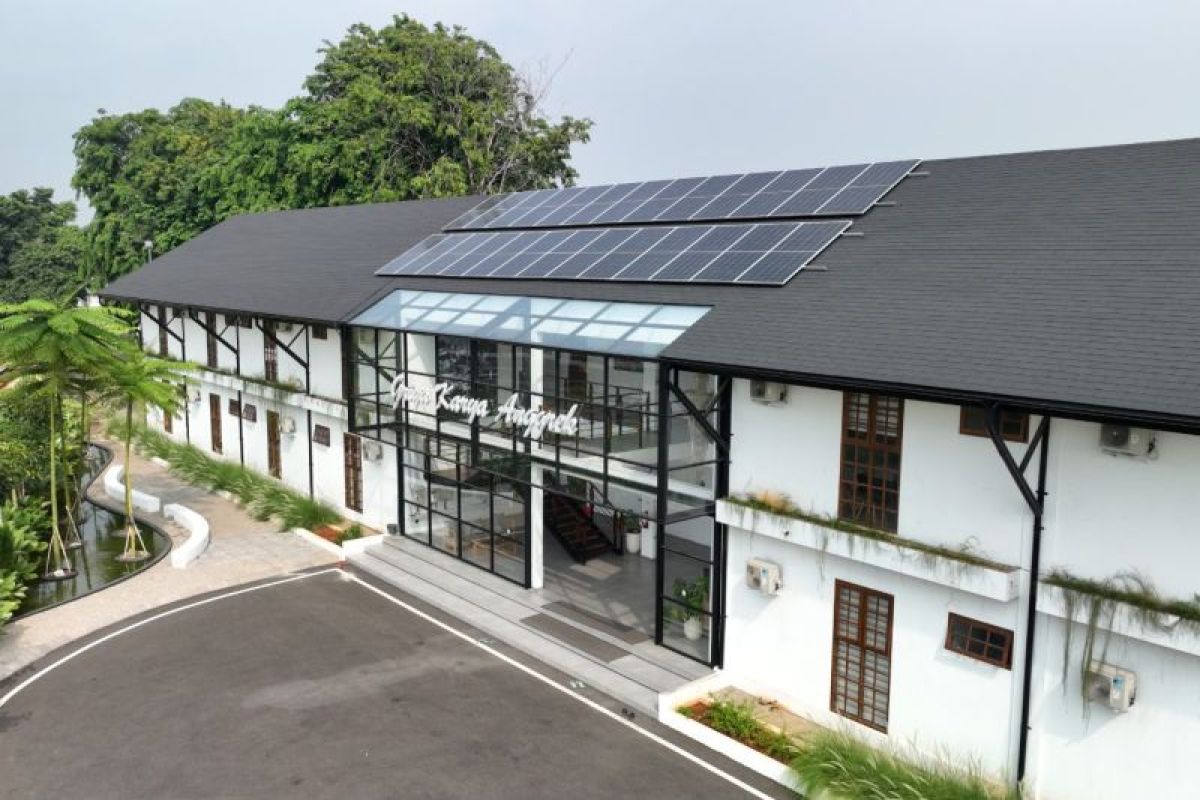
Entering the first half of 2026, the scale of KAI Group’s services continued to grow. The group served 258,993,359 passengers, an increase of 7.55% compared to 240,805,920 passengers in the same period of 2025. During the same period, KAI’s freight services handled approximately 32.50 million tonnes. “Increasing service capacity must be accompanied by disciplined energy management. KAI’s focus is to ensure that the growth in passenger numbers and freight volume can be served with increasingly efficient energy use, without compromising safety and operational reliability,” Anne said. Energy efficiency is being strengthened through the use of renewable energy. KAI has operated 113 solar power generation units across 92 locations, comprising 62 stations, 10 railway workshops, 10 offices, six work complexes, three depots, and one record centre. The total installed solar capacity reaches 4,430.65 kilowatt-peak, or approximately 4.43 megawatt-peak, with the potential to reduce carbon emissions by more than 5,000 tonnes per year. The electricity generated by the solar panels is used to help meet the needs of various KAI facilities, such as lighting, electronic equipment, service areas, offices, and operational support facilities, thereby partially fulfilling electricity requirements that were previously entirely supplied by the conventional grid.
Since 1 July 2026, KAI has also been conducting a three-month trial of B50 biodiesel, a fuel blend consisting of 50% plant-based biodiesel and 50% diesel. The trial is being carried out to study the effects of B50 on engine performance, fuel consumption, filtration systems, maintenance, and the reliability of rolling stock under various operating conditions. “B50 has a higher biodiesel content than the previously used B40. Therefore, its application must go through technical testing and evaluation to ensure it meets safety requirements, fleet readiness, and train travel reliability,” Anne said. Energy management is also linked to the development of rail-based freight services. Trains can carry large volumes of cargo in a single scheduled journey, reducing the need for road vehicles and trips. The 2025 Sustainability Report illustrates that a single freight train can carry approximately 3,050 tonnes of cargo, equivalent to the capacity of about 144 trailer trucks on the road. This comparison highlights the advantage of rail in consolidating large loads into a single train, offering benefits in fuel efficiency and reduced road congestion.