
KAI Container Transport Grows by 19 Per Cent, Supporting Logistics Efficiency and National Industrial Connectivity
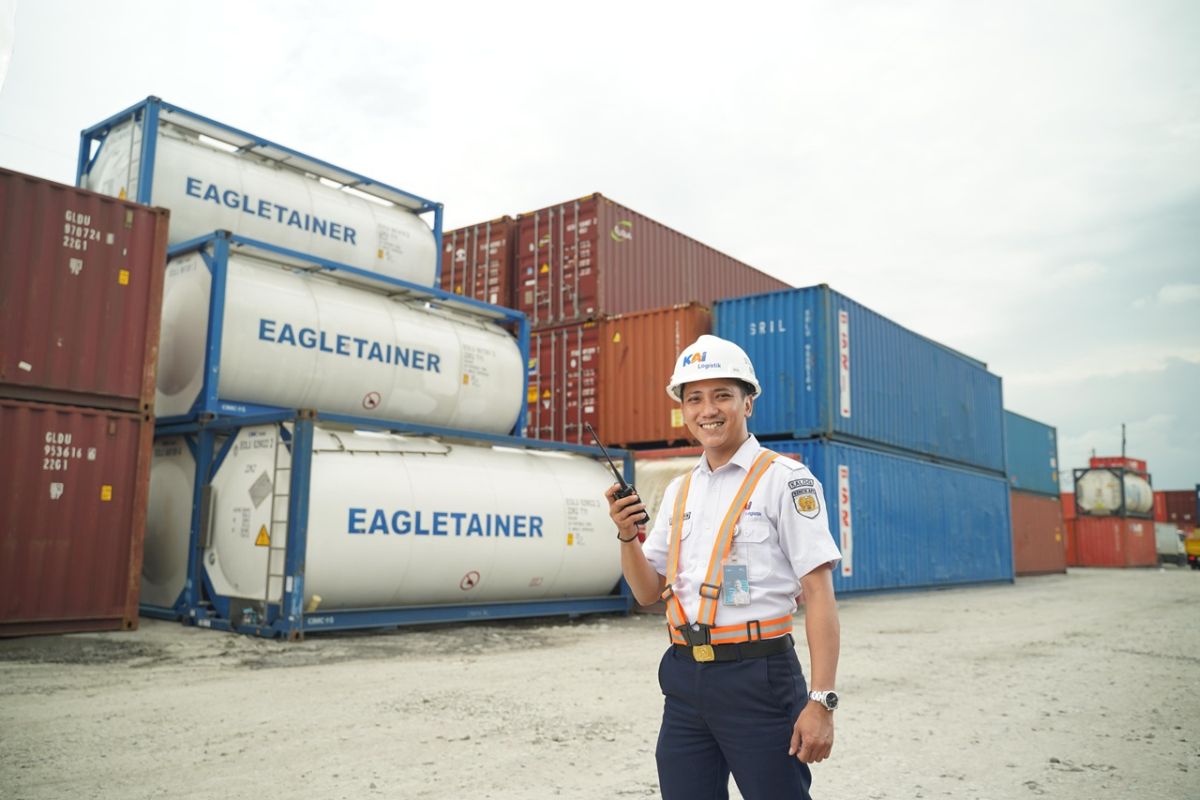
PT Kereta Api Indonesia (Persero) continues to develop rail-based freight services to support national industrial needs and logistics distribution. One of the services experiencing positive growth is container transport, which saw an increase in volume between January and August 2026.
KAI data shows that container transport from January to August 2026 reached 3,928,221 tonnes, a 19.24 per cent increase compared to the same period in 2025, which stood at 3,294,255 tonnes. This increase represents an additional volume of 633,966 tonnes.
KAI Vice President of Corporate Communication, Anne Purba, stated that the growth in container transport demonstrates the widening use of rail-based transport to support large-capacity goods distribution, scheduled journeys, and inter-regional connectivity.
“The 19.24 per cent growth in container transport up to August 2026 shows that the demand for efficient logistics services continues to evolve. KAI provides freight services that support industrial activities through a railway network connecting various production, distribution, and trade hubs,” said Anne.
According to Anne, the smoothness of logistics distribution is linked to industrial competitiveness, as transport costs are a key component in the supply chain. Rail transport offers large shipping capacities with regular schedules, making it a viable option for industrial customers managing distribution needs.
“Through the development of container transport, KAI supports companies in obtaining transport mode options that offer journey certainty and the ability to handle large volumes of goods,” Anne added.
The growth in container transport aligns with the development of new industrial zones and logistics hubs in Indonesia. One such example is the Batang Integrated Industrial Estate (KITB), which is being developed as an integrated logistics ecosystem through the interconnection of dry ports, seaports, railways, warehouses, trucking, container yards, and hinterland distribution networks.
In developing KITB connectivity, railways are being studied as a mode to support the movement of goods to several major logistics hubs, such as Tanjung Priok, Kalimas/Tanjung Perak Surabaya, and Patimban. These studies consider factors such as distance, cargo volume, origin and destination, commodity characteristics, and intermodal logistics cost efficiency.
The development of the KITB dry port is designed as part of an integrated logistics system connecting industrial activities, storage, distribution, and multi-modal transport. According to the development roadmap, the KITB dry port is targeted to enter its initial operational phase around 2028, providing container handling, rail services, trucking, warehousing, and empty depots to support the consolidation of goods flow from the industrial area and surrounding regions.
Anne stated that KAI will continue to develop its freight services by optimising freight train journeys, increasing cooperation with industrial customers, and integrating services with various logistics stakeholders.
“Moving forward, KAI will continue to improve the quality of container transport services through network development, increased operational capacity, and collaboration with various parties to support national logistics needs,” said Anne.
With a 19.24 per cent growth in container transport volume and the development of various strategic logistics hubs, KAI continues to provide rail-based freight services that support industrial distribution, trade, and inter-regional connectivity.