
KAI Container Transport Grows 19.35 Percent, Supporting Logistics Efficiency and National Economic Connectivity
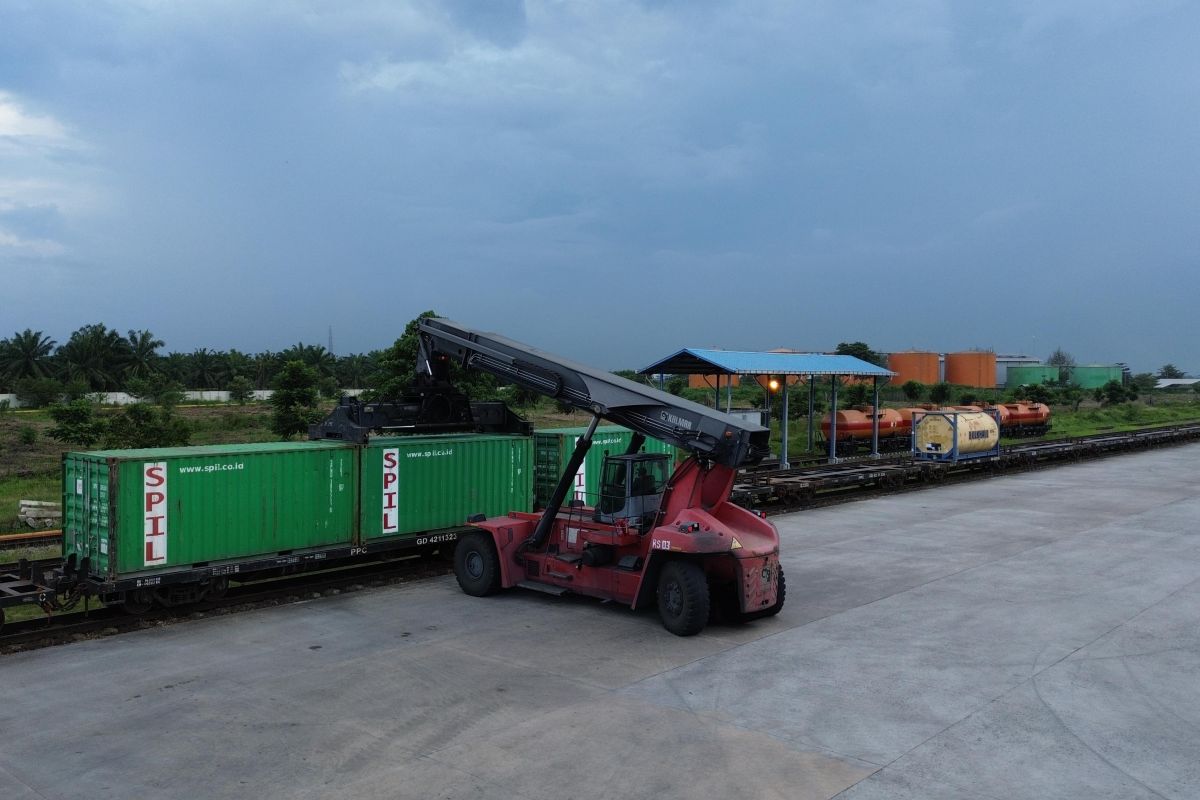
Jakarta (ANTARA) - A nation’s economic activity can be observed through the smoothness of goods moving from production centres to industrial zones, ports, distribution centres, and ultimately to consumers. In the first five months of 2026, PT Kereta Api Indonesia (Persero) recorded positive growth in its container transport services, which serve as a backbone for national goods distribution.
From January to May 2026, KAI handled 2,428,471 tonnes of containers, an increase of 393,720 tonnes or 19.35 per cent compared to the same period in 2025, which reached 2,034,751 tonnes. This growth demonstrates the increasing utilisation of rail-based transport in supporting supply chains and economic activities across various regions of Indonesia.
KAI Vice President of Corporate Communication, Anne Purba, stated that the increase in container volume reflects the high demand for goods distribution following developments in industry, trade, and public consumption.
“The growth in container transport indicates rising goods distribution activities across various sectors. Railways are present to ensure that logistics flows are scheduled, efficient, and capable of supporting the needs of both the business world and the public,” said Anne.
This growth is particularly relevant when considering national logistics challenges. According to studies by the Ministry of National Development Planning/Bappenas, Indonesia’s logistics costs currently stand at approximately 14.29 per cent of Gross Domestic Product (GDP). The government aims to reduce this figure to 8 per cent of GDP by 2045. Efficient goods distribution is a crucial factor in enhancing national economic competitiveness and strengthening Indonesia’s position in the global supply chain.
Meanwhile, Indonesia’s economy grew by 5.12 per cent in 2025. Compared to that figure, KAI’s container volume growth of 19.35 per cent represents a rate nearly four times higher. This condition indicates increasing production, trade, distribution, and logistics needs utilising rail-based transport.
In a global context, the role of containers is highly strategic. World Bank data shows that more than 80 per cent of world trade is transported via sea routes, while approximately 35 per cent of global trade volume and over 60 per cent of global trade value is transported using containers. These figures demonstrate that the smooth movement of containers is a vital indicator in supporting economic growth and international trade.
For Indonesia, the increase in container volume via rail provides a broader impact than mere goods movement. Every container passing through carries raw materials for industry, manufactured products to markets, export commodities to ports, and various public necessities that must be available on time. Smooth distribution contributes to logistics cost efficiency, maintains goods supply, and supports economic productivity in various regions.
In addition to supporting distribution efficiency, rail-based container transport also helps increase the capacity of the national transport system. With the ability to transport large volumes of goods in a single journey, railways support more effective distribution while strengthening connectivity between industrial zones, logistics centres, and ports.
“Strong logistics will strengthen the economy. Therefore, KAI continues to develop container services to support the connectivity of industrial areas, distribution centres, and ports, which are vital nodes for national economic growth,” Anne concluded.