
KAI Container Freight Rises 20.28 Percent, Strengthening Rail–Port Connectivity for National Logistics
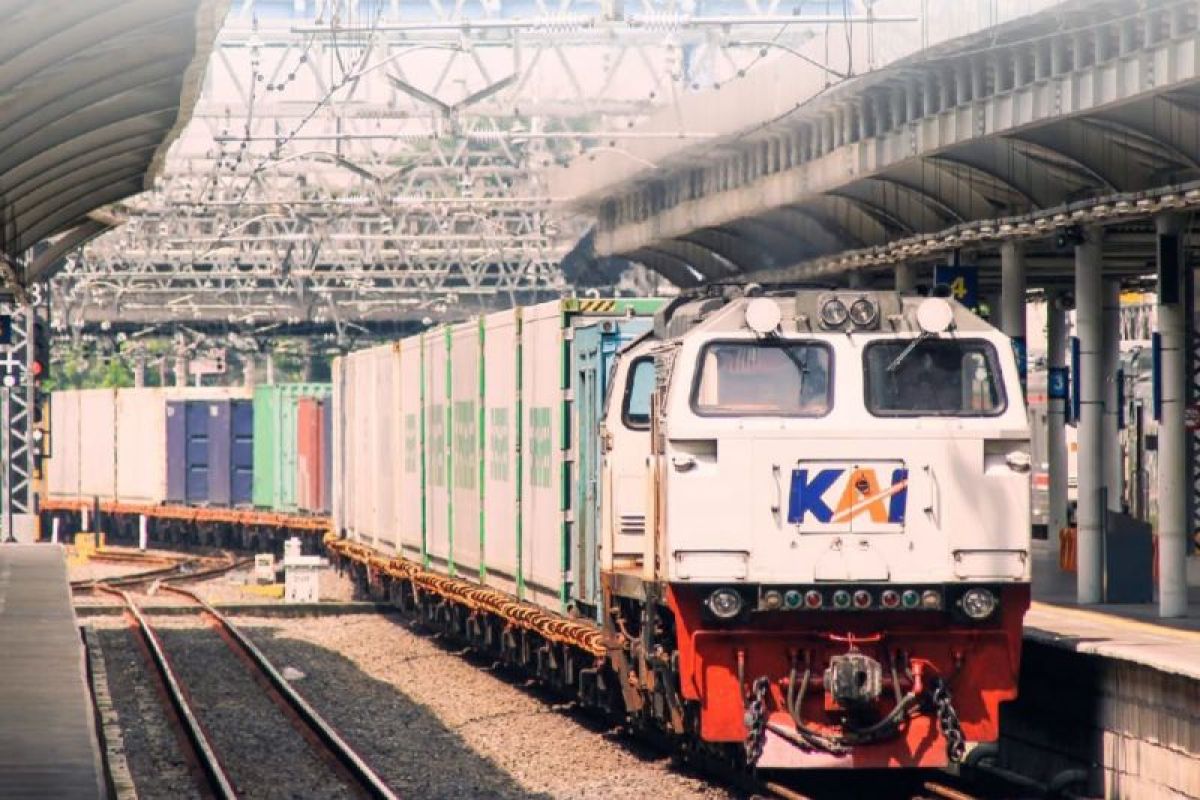
PT Kereta Api Indonesia (Persero) handled 3,437,795 tonnes of container freight from January to July 2026, a 20.28 percent increase compared to 2,858,244 tonnes in the same period last year. The growth reflects rising demand from businesses for high-capacity, scheduled transport connected to industrial estates, container terminals, warehouses, and ports. In July 2026 alone, container volume reached 521,892 tonnes, up 22.80 percent from 424,999 tonnes in July 2025.
Vice President Corporate Communication KAI Anne Purba stated that container transport plays a strategic role in maintaining the smooth flow of goods from production centres to ports, distribution hubs, and market areas. “The volume growth shows more businesses are utilising railways in their supply chains. KAI continues to strengthen connectivity between industrial zones, container terminals, and ports so that the distribution of manufactured products becomes more efficient, scheduled, and reliable,” she said.
For the manufacturing sector, logistics continuity is critical to production. Delays in raw materials can disrupt factory schedules, while delays in finished goods can hamper market distribution. Rail-based container transport offers a solution by moving large volumes on planned schedules, supporting the industry’s need for time certainty, efficient use of facilities, and consistent delivery of raw materials and finished products.
The strategic role of rail is amplified when services are integrated with ports. Containers from industrial areas can travel by rail to terminals and ports, then continue by ship to various parts of Indonesia. Conversely, raw materials and commodities arriving by sea can be forwarded by train to industrial zones, warehouses, and distribution centres. “Rail–port connectivity helps build a more orderly flow of goods. Manufactured products can be moved in large volumes from industrial areas to ports, then shipped across the islands,” Anne added.
This integration can reduce long-haul truck journeys, ease road congestion, speed up cargo transfers, and provide schedule certainty for industry. These benefits are strengthened by adequate rail access to ports, sufficient container terminals, loading and unloading facilities, warehousing, and digitalisation of documents and services. KAI is therefore pursuing integrated infrastructure improvements, including expanding freight lines and terminals alongside port development, industrial estates, distribution centres, shipping services, and onward transport to make the entire container journey more efficient.
KAI is also working to create more balanced two-way cargo flows. Currently, containers from Java largely carry manufactured goods and consumer products to other regions, but return loads are often insufficient. Empty return trips increase distribution costs. Consolidating regional commodities, strengthening local production centres, and opening market access for local products are essential to improving trip productivity. Containers departing with manufactured goods could return carrying agricultural produce, plantation products, fisheries, handicrafts, and SME goods from destination regions. Utilising two-way loads can help reduce distribution costs while expanding markets for regional products.
Indonesia faces significant logistics challenges because production centres and consumer demand are spread across a vast archipelago. Most industrial, manufacturing, and warehousing activities remain concentrated in Java, while goods must reach Sumatra, Kalimantan, Sulawesi, Maluku, Papua, and other islands. This geographic reality makes distribution costs a key factor influencing consumer prices. The farther a region is from production centres, the longer the journey, the more modal transfers required, and the higher the loading, unloading, and storage costs. Ultimately, these burdens can feed into the prices paid by consumers. Clothing, building materials, medicines, household goods, and educational supplies can become more expensive after long journeys to their destinations. For families with limited incomes, a price difference of tens of thousands of rupiah is significant, potentially affecting choices between buying school uniforms, completing children’s books, meeting kitchen needs, or postponing other household expenses. This situation is a matter of equitable distribution.
Source: jawawa.id (https://jawawa.id/newsitem/kai-container-freight-rises-20-28-percent-strengthening-rail-port-connectivity-for-national-logistics-1785808337)
Originally published by Antara (Indonesian) (https://www.antaranews.com/berita/5678640/angkutan-petikemas-kai-naik-2028-persen-perkuat-konektivitas-rel-pelabuhan-bagi-logistik-nasional), translated from Indonesian