
KAI Commissioner: Human Capability Becomes Increasingly Vital in the Era of AI Development
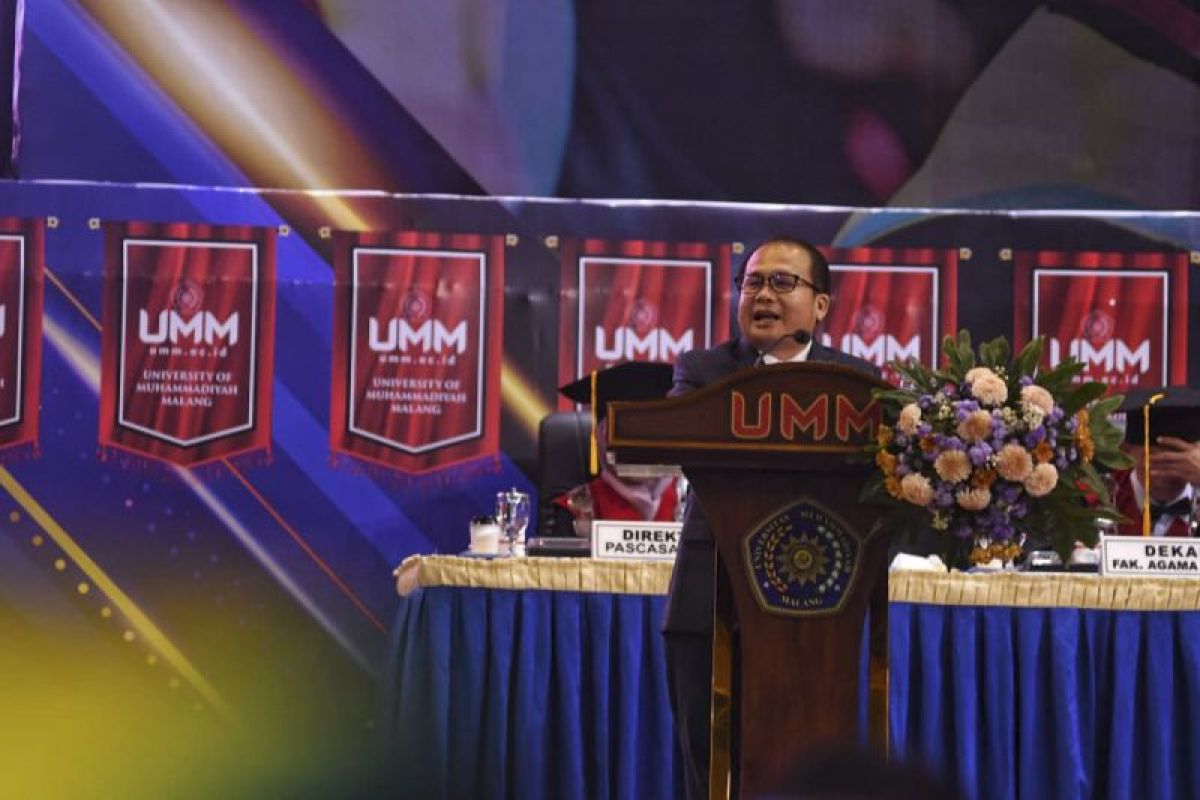
No matter how advanced technology becomes or how good the systems we build are, ultimately, it is humans who determine the quality of service.
Jakarta (ANTARA) - The Independent Commissioner of PT Kereta Api Indonesia (Persero), or KAI, Endang Tirtana, revealed that human capability is becoming increasingly important amidst the rapid development of sophisticated Artificial Intelligence (AI). He emphasised that technology must not displace humans as the centre of service.
“The way tickets are purchased changes, the way information is obtained changes, and the way we interact with customers changes. But amidst all these changes, one thing must remain constant: the human element. Because no matter how advanced the technology or how good the systems we build, ultimately, it is humans who determine the quality of service,” Endang stated in Jakarta on Tuesday.
Endang Tirtana stressed the importance of adaptability, competence, empathy, and humanity in the midst of AI advancements. He shared these views during a scientific oration at the Graduation Ceremony for Diploma, Undergraduate, and Postgraduate Programmes at the University of Muhammadiyah Malang (UMM) for the 123rd Period of 2026.
In his oration, titled “Preparing a Transformative Generation that is Competent, Adaptive, and Impactful in the Era of Artificial Intelligence,” Endang used KAI’s transformation journey as an example of organisational change in the digital era. According to him, KAI’s transformation is marked not only by the digitalisation of services but also by a shift in how the company serves its customers. He cited the use of the Access by KAI application, which recorded 17 million transactions for long-distance and local train ticket sales in the first half of 2026.
“All these changes are part of the KAI transformation we see today. From merely operating trains, KAI has evolved into a company increasingly oriented towards customer experience, building an integrated transport ecosystem that connects railways, commuter lines, LRT, MRT, high-speed rail, logistics trains, airport trains, digital services, and various other supporting modes and services,” he said.
He noted that the measure of transformation success is not solely technological sophistication. In the first half of 2026, KAI’s Customer Satisfaction Index reached 4.53 out of 5, with over 2.2 million customer interactions through various service channels. “Therefore, for me, service is not just a procedure. Service is about how we humanise humans,” he added.
Endang reminded graduates that AI has entered both daily life and the professional world. He cited Goldman Sachs Research data from April 2026, which estimated that AI has reduced US payroll growth by approximately 16,000 jobs per month over the past year. Meanwhile, the World Economic Forum’s Future of Jobs Report 2025 predicts that by 2030, approximately 170 million new jobs will emerge, while around 92 million jobs will be affected by displacement.
Consequently, he argued, the challenge for the younger generation is not merely to face AI, but to ensure their competencies remain relevant. “The world of work is changing, and therefore we must change with it,” he asserted.
He assessed that human skills related to creativity, communication, collaboration, decision-making, empathy, and the ability to understand context will become increasingly important as routine tasks are increasingly assisted by technology. Endang also urged graduates not to view AI solely as a threat. Technology, he argued, must be mastered and utilised to strengthen human capabilities without losing sense, empathy, faith, and humanity. “The smarter the technology becomes, the wiser humans must become,” he concluded.