
KAI Chief Outlines Reasons for Requesting Permission to Import Used Commuter Trains
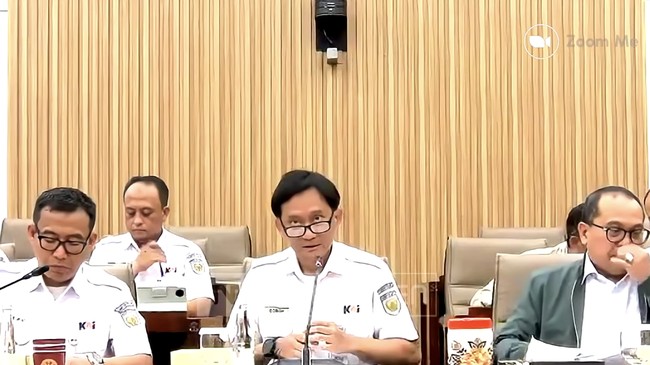
PT Kereta Api Indonesia (Persero), known as KAI, is facing various pressures in operating the Jabodetabek Commuter Line. Passenger numbers continue to surge, reaching an average of 1.1 million people per day, while much of the available fleet is ageing.
This situation is one of the primary considerations for KAI’s request to import used KRL (Commuter Line) trains from Japan as a temporary solution. The need for additional rolling stock is deemed increasingly urgent because passenger growth has far exceeded previous estimates, while domestic new train procurement capabilities have not yet been able to keep pace with demand.
KAI President Director Bobby Rasyidin revealed that the number of KRL passengers in the first half of 2026 grew by 11.5% compared to the same period last year. This growth is significantly higher than the previous projection, which was only around 3%-4%.
“This is an anomaly when we compare 2025 to 2026; it is 11.5%. This is for the first semester of the year, it is 11.5%. Whereas the average daily passengers were below 1 million, they have now reached 1.1 million,” Bobby stated during a hearing with Commission VI of the Indonesian House of Representatives (DPR RI) on Wednesday (23/09/2026).
The surge in passengers is evident not only in national figures but also at stations with high user volumes. At Bogor Station, for example, passenger numbers, which previously fluctuated below 100,000 per day, have now reached approximately 160,000 people. This indicates that more members of the public are relying on trains as a primary mode of transport for daily activities.
“This means that for commuter transport, the train is indeed becoming the main choice at this time,” he said.
The problem is that this increase in demand is occurring when the condition of the KRL fleet is no longer ideal. KAI noted that there are approximately 92 trainsets that are 40 years old and must be gradually decommissioned. In fact, some of the fleets currently operating date back to the 1970s.
“At this time, we have 92 trainsets that are 40 years old. These are the ones we will gradually decommission,” said Bobby.
The need to replace the fleet is also becoming more urgent because the age of the trains could lead to technical issues. KAI estimates that the situation will become even more severe in 2029 when several trainsets reach approximately 45 years of age. At that age, the availability of spare parts and the physical condition of the train materials become significant concerns.
“The most critical point will be in 2029, when our trainsets reach 45 years of age. At 45, we can no longer manage; spare parts will no longer be available. Secondly, in terms of metal, fatigue will begin to set in,” he explained.
Pressure on fleet availability is increasing because the requirement for trains in 2026 alone is estimated to reach 104 trainsets, assuming a conservative passenger figure of 1 million people per day. This requirement includes 89 trainsets to run 1,065 KRL trips per day, plus reserves and maintenance needs. Meanwhile, the number of available rolling stock at the beginning of 2026 reached only 102 trainsets.
Proposal for Used Train Import Receives DPR Support
Consequently, Bobby emphasised that the need for trainset replacement cannot be entirely delayed while waiting for domestic production capabilities to increase, and proposed the idea of importing used trains.
Importing used trains was chosen because the procurement time is relatively faster compared to new trains. Once approved, these used sets are expected to be brought in and utilised within approximately one to two months, whereas the procurement of new trains requires a much longer period.
“If we import new ones, it will disrupt domestic train production. These used ones are only for the transition,” he said.
KAI also plans to use these used KRL sets for a limited period. The imported fleet is targeted to serve as a bridge while the domestic industry improves its production capacity and meets the continuously increasing KML travel needs.
“The plan is to use them for 10 years, and we will implement this immediately because there have been many complaints from service users,” said Bobby.
This proposal has been met with support from Commission VI of the DPR RI. Importing used trains is viewed as a transitional solution, while the domestic railway industry continues to be encouraged to increase its production capacity.
“Meeting the capacity needs of railway transport, specifically the Jabodetabek KRL, by enhancing the local industry and conducting integrated and sustainable imports of non-new trainsets,” said the Vice Chairman of Commission VI of the DPR RI, Andre Rosiade, during the meeting.
Source: jawawa.id (https://jawawa.id/newsitem/kai-chief-outlines-reasons-for-requesting-permission-to-import-used-commuter-trains-1790207579)
Originally published by CNBC Indonesia (https://www.cnbcindonesia.com/news/20260924005521-4-770387/ini-pertimbangan-bos-kai-minta-izin-impor-krl-bekas), translated from Indonesian