
KAI Begins Technical Trials of B50 Biodiesel to Ensure Rail Operational Reliability
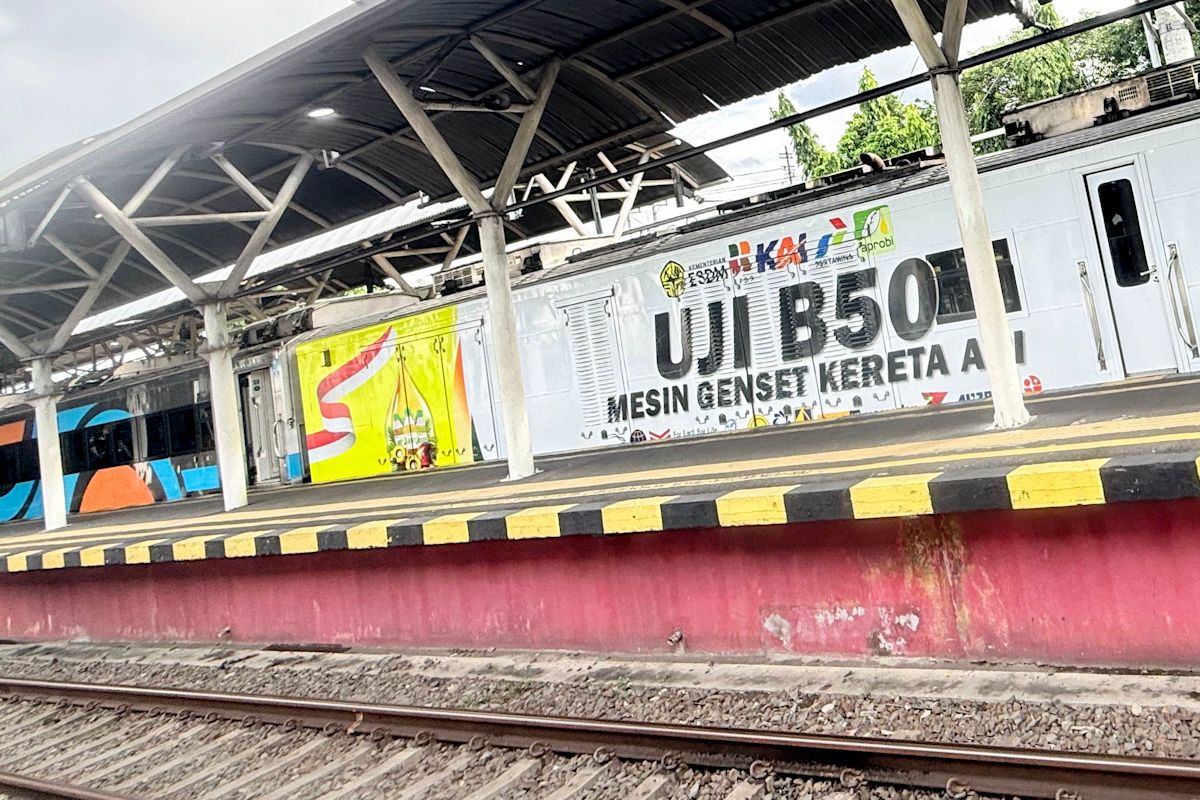
PT Kereta Api Indonesia (Persero) is focusing technical trials of B50 biodiesel on engine performance, fuel consumption, emissions, and rolling stock durability to ensure safety, operational reliability, and sustainable transport services. Vice President Corporate Communication KAI Anne Purba stated that the fuel transition is being carried out in stages with technical coordination involving the government and relevant institutions. “Each stage must be tested to match the operational characteristics of railways, which have high loads, long operating durations, and stringent reliability standards,” Anne said in a statement in Jakarta on Monday. KAI supports the government’s policy to expand the use of more environmentally friendly energy. “At the same time, we ensure that every stage of biodiesel adoption proceeds through technical testing and evaluation so that services to customers and the logistics sector remain safe and reliable,” she added. Anne explained that KAI, together with the Ministry of Energy and Mineral Resources, began the technical testing phase for B50 usage in the railway sector in April 2026. The tests cover locomotives and train gensets to assess performance, fuel consumption, emissions, and component durability under operational conditions. For locomotive testing, KAI prepared a CC206 locomotive with the Sembrani train set. The test started from Sidotopo Depot, comparing fuel consumption using B40 and B50. Meanwhile, genset testing was conducted on an MTU 2000 P02411 genset on the Bogowonto train, with the test location at Yogyakarta Train Depot. The genset test series includes performance tests, fuel consumption tests, emission tests with B40 and B50, and a static endurance test for six hours using maximum load bank capacity. Subsequently, a dynamic endurance test for the genset will continue for 2,400 hours starting 27 April 2026 at the Lempuyangan Workshop. By June 2026, KAI will be in the monitoring and technical evaluation phase of the test results before wider implementation of B50. Anne emphasised that the test results will form the basis of KAI’s evaluation, particularly regarding engine performance, fuel consumption, operational stability, filter conditions, emission aspects, and maintenance requirements. “Our principle is clear: the energy transition must proceed in line with safety and operational reliability,” she stated. She further noted that the transition to B50 is part of KAI’s 2025-2030 strategic decarbonisation programme. Under this programme, the shift from B35 to B50 is targeted to reduce emissions by 133,676 tonnes of CO2 equivalent. This programme is the largest contributor to KAI’s three main decarbonisation targets totalling 166,873 tonnes of CO2 equivalent, alongside conservation and carbon credits, and electricity efficiency. KAI is also strengthening its carbon footprint measurement through a data-driven approach. In a Life Cycle Assessment conducted with the National Research and Innovation Agency (BRIN), the carbon footprint of Jabodetabek electric rail services was measured at approximately 34.03 grams of CO2 equivalent per passenger-kilometre. “This measurement approach strengthens KAI’s transparency in monitoring the environmental impact of rail-based transport services,” Anne said. During the energy transition period, she added, this support helps KAI maintain operational continuity while gradually preparing for the use of lower-emission energy sources.