
KAI Asks Regional Leaders to Help Clear Buildings Along West Sumatra Railway
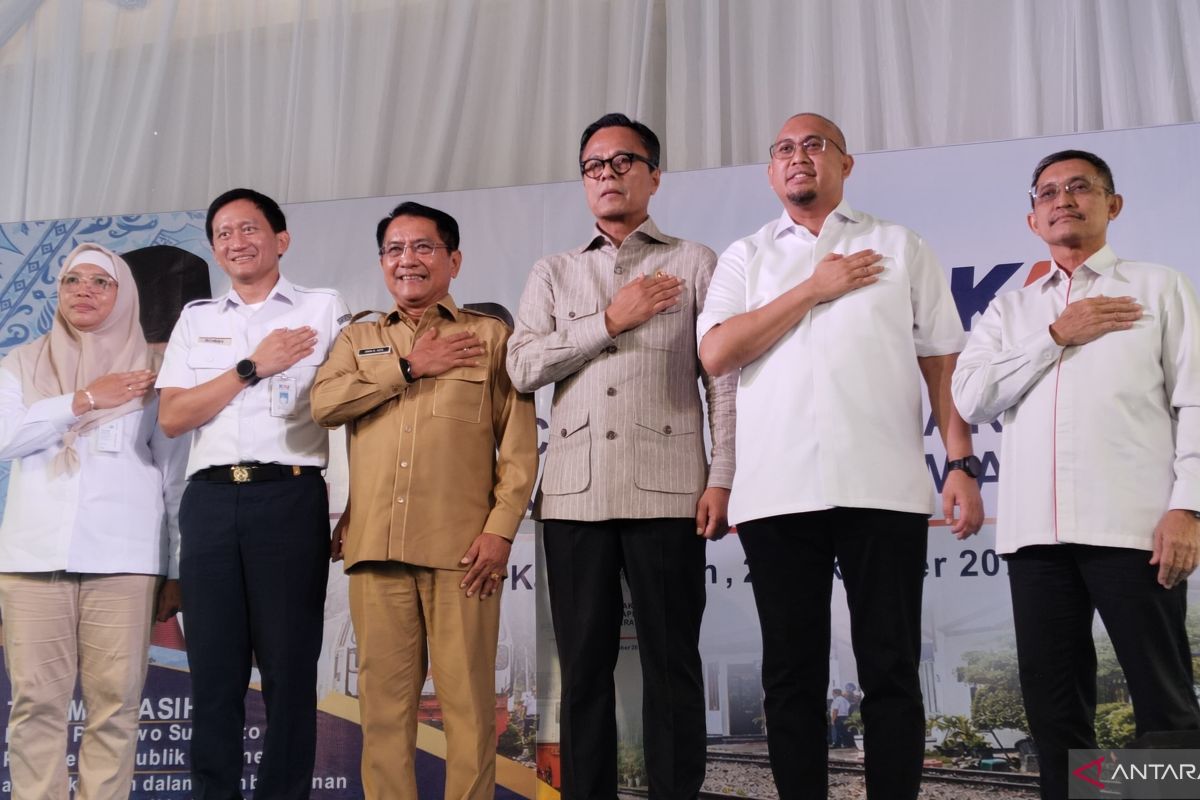
Pariaman (ANTARA) — State-owned railway operator PT Kereta Api Indonesia (Persero) has asked the Regional Leadership Communication Forum (Forkopimda) in West Sumatra to help inform residents about plans to clear around 6,800 buildings along the railway’s clearance zone in the province.
“We ask Forkopimda to help us raise awareness so that there are no buildings around the railway tracks,” KAI President Director Bobby Rasyidin said at the launch of the railway reactivation programme in West Sumatra, held at Kayu Tanam Railway Station in Padang Pariaman Regency on Tuesday.
He said buildings erected by residents on KAI-owned land were one of the challenges to reactivating railway lines in West Sumatra, alongside the province’s hilly terrain and the risk of natural disasters.
He said railway corridors must be kept clear for six metres on either side of the tracks, leaving a total clearance of 12 metres free of buildings.
“We have identified 6,800 buildings that could potentially encroach on the clearance zone,” he said.
KAI plans to reactivate the railway from Kayu Tanam to Padang Panjang, followed by extensions to Solok and Sawahlunto.
The first phase, he said, is planned for 2027 and will reactivate the 15.3-kilometre Kayu Tanam–Padang Panjang line.
“The track to be used is a special rack railway,” he said.
Meanwhile, Andre Rosiade, deputy chair of Commission VI of the House of Representatives (DPR), praised the government for prioritising the reactivation of railway lines in West Sumatra.
He also addressed the presence of residents’ buildings on KAI-owned land, which could pose a challenge to the railway reactivation programme.
“KAI and local governments will communicate and work together to explain this to the public. Moreover, this is KAI land, not customary land,” he said.
He said the land beneath the thousands of buildings belonged to KAI and was covered by certificates. In his view, the issue could be resolved more easily through constructive dialogue than the land acquisition required for a toll road.