
KAI and Ministry of Transport to Upgrade Power Supply and Signalling for Rangkasbitung Commuter Line
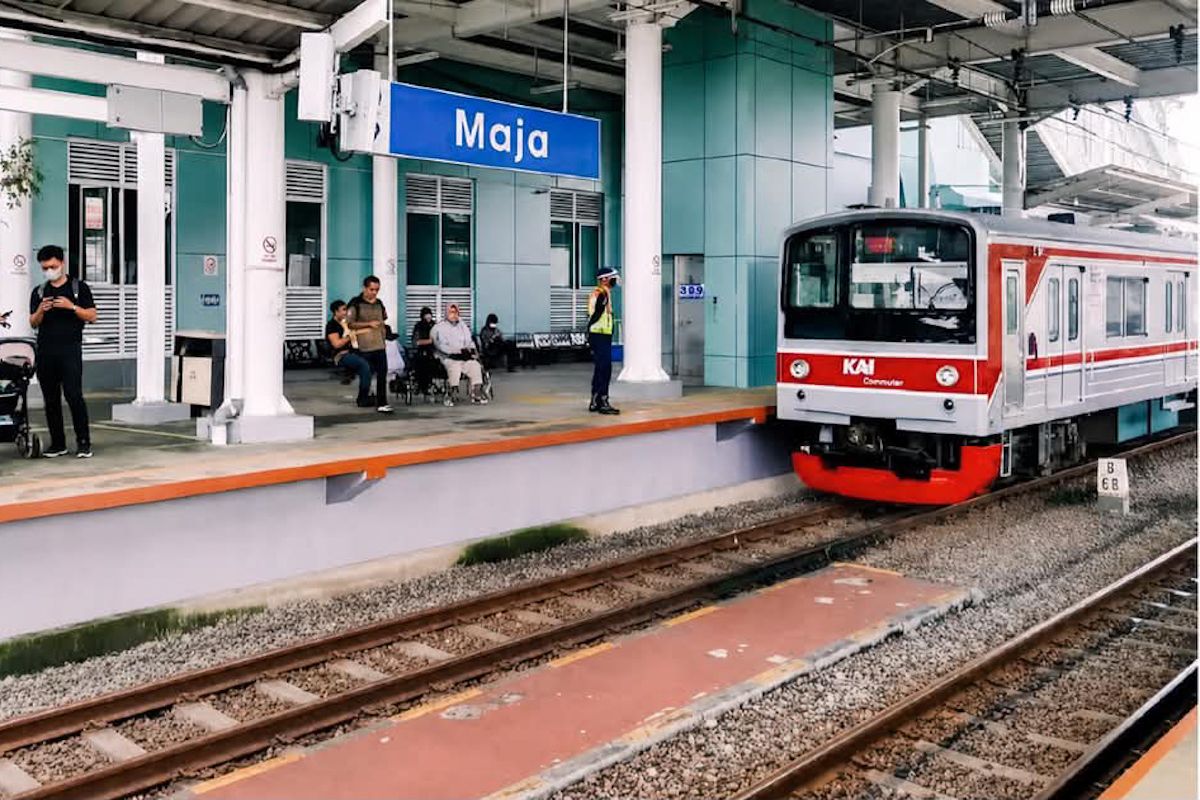
Jakarta (ANTARA) - PT Kereta Api Indonesia (Persero), known as KAI, and the Ministry of Transport are strengthening the service capacity of the Tanah Abbang–Rangkasbitung commuter line through power supply upgrades and signalling modernisation to meet growing public mobility demands.
KAI President Director Bobby Rasyidin stated that public demand for the Tanah Abang–Rangkasbitung Commuter Line service continues to rise, prompting KAI and the Ministry of Transport to work on increasing the capacity of available rolling stock and infrastructure. “The capacity increase aims to make passenger journeys more comfortable and provide more travel options,” Bobby said in a statement in Jakarta on Saturday.
The first step will involve strengthening the overhead line equipment (LAA) system on the Tanah Abang–Rangkasbitung route. Currently, the electrical power on this line is at 3,000 volts, whereas the Bogor and Bekasi lines are supported by 4,000 volts. This capacity difference means that train sets with a 12-car formation cannot yet be operated, leaving the carrying capacity reliant on 8 and 10-car sets.
To support the service capacity increase, KAI will add 11 traction substations to the Tanah Abang–Rangkasbitung line. This power supply reinforcement is a vital foundation for supporting the operation of 12-car train sets. With greater capacity, the number of passengers served per journey will increase, improving passenger movement during peak hours.
This capacity upgrade is being implemented through coordination and synergy between KAI and the Directorate General of Railways (DJKA) of the Ministry of Transport, acting as the national railway regulator. The collaboration includes planning for electrical system reinforcement, line capacity development, and the modernisation of operating systems required to address growing mobility needs in the Tanah Abang–Rangkasbitung corridor. Larger carrying capacity will create opportunities for more comfortable services, reduce overcrowding on certain trips, and support the evolving mobility needs in the western Jabodetabek area.
“In addition to strengthening the power supply, KAI and the Ministry of Transport’s DJKA will also modernise the signalling system,” said Bobby.
Currently, parts of the signalling system on the Rangkasbitung line still use a closed block pattern, which limits the number of train trips on a single operational line. In this system, one block covering several stations can only be traversed by one train at a time. This condition impacts the headway (time between trains), which currently stands at approximately 10 minutes. By comparison, the Bekasi and Bogor lines are capable of serving trips with headways of around 3 to 4 minutes.
Through signalling modernisation, line capacity will increase, allowing for higher train frequencies and shorter waiting times for passengers. Increased frequency will provide greater flexibility for the public in determining departure and return times. “Capacity enhancement must be carried out comprehensively, from rolling stock and power supply to signalling systems,” Bobby added.
KAI views the Rangkasbitung Line capacity upgrade as a long-term investment to support public mobility and regional growth. As residential centres, economic activities, and social activities expand along the route, the need for safe, reliable, and high-capacity mass transport will continue to rise. Through the collaboration between KAI and the Ministry of Transport’s DJKA, the reinforcement of the electrical system and signalling modernisation are expected to provide greater service capacity, denser trip frequencies, and a more comfortable travel experience.
The Tanah Abang–Rangkasbitung line is a major route connecting residential areas in western Jabodetabek with economic, educational, governmental, and public service hubs in Jakarta and its surroundings. KAI noted that the volume of KRL users on the Rangkasbitung line has risen steadily in recent years. In 2022, passenger numbers reached 43,317,716; this rose to 62,085,471 in 2023, 69,999,362 in 2024, and reached 77,552,716 in 2025. For the period of January to May 2026, passenger numbers have already reached 33,397,420.
This growth demonstrates the increasing role of the Rangkasbitung Commuter Line in supporting daily public activities. Every day, the service is utilised by workers, students, entrepreneurs, and the general public accessing various services across Jabodetabek. As passenger numbers increase, peak-hour occupancy also continues to rise. Currently, peak occupancy on the Rangkasbitung Line reaches approximately 161 per cent, the highest among other Commuter Line routes. For comparison, peak occupancy on the Bogor line is around 130 per cent, while the Bekasi/Cikarang line is approximately 140 per cent.
KAI Vice President of Corporate Communication, Anne Purba, stated that the Rangkasbitung Line capacity upgrade is part of a long-term effort to meet evolving public mobility needs. “The collaboration between KAI and the Ministry of Transport’s DJKA is a vital foundation for the development of the Rangkasbitung Commuter Line service,” said Anne.
Source: jawawa.id (https://jawawa.id/newsitem/kai-and-ministry-of-transport-to-upgrade-power-supply-and-signalling-for-rangkasbitung-commuter-line-1780797403)
Originally published by Antara (Indonesian) (https://www.antaranews.com/berita/5597404/kai-kemenhub-tingkatkan-daya-listrik-persinyalan-krl-rangkasbitung), translated from Indonesian