
KAI and INKA Set to Merge This Year, Reasons Revealed
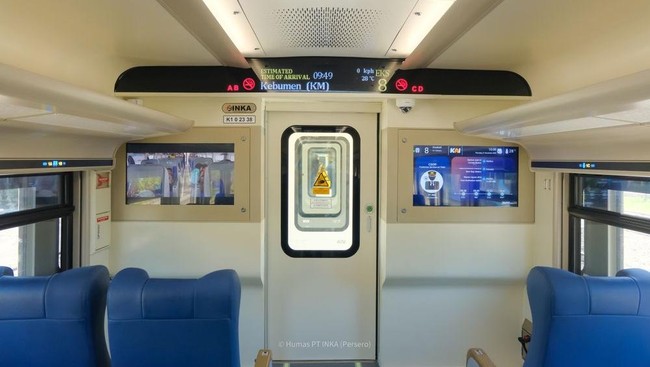
The planned integration of PT Kereta Api Indonesia (Persero) and PT Industri Kereta Api (Persero), known as INKA, is projected to have a significant impact on the national railway industry. In addition to guaranteeing the long-term supply of railway rolling stock, this move is expected to revitalise INKA’s business condition and strengthen the national railway industry’s supply chain from upstream to downstream.
KAI’s Director of Portfolio Management and Information Technology, I Gede Darmayusa, stated that the integration process between KAI and INKA has entered the study phase after both companies received a mandate from Danantara to conduct thorough due diligence.
“This KAI-INKA collaboration is not new; plans and studies have existed for several years. However, we are confident that KAI can execute this now because our shareholder, Danantara, issued a mandate on 18 May 2026 for both KAI and INKA to conduct comprehensive due diligence and studies to ensure supply certainty, operational efficiency, long-term synergy, and the fundamental business recovery of INKA,” Gede said during a Hearing with Commission VI of the House of Representatives (DPR RI) in Jakarta on Wednesday (3/6/2026).
Gede noted that a primary driver for the integration is KAI’s increasing demand for rolling stock over the next five years. KAI has mapped out requirements for approximately 2,166 bottom dump wagons, 1,208 flat wagons, 652 passenger carriages, and 30 Jabodetabek commuter train sets. These figures do not include new fleet requirements for service expansions in other cities.
He also revealed ongoing issues regarding delivery delays and rolling stock quality that need addressing. Since 2016, KAI has procured rolling stock from INKA worth over Rp18 trillion. However, more than half of these contracts experienced delivery delays, and all contracts faced technical issues. “100% of the contracts have technical issues, meaning there are quality and delivery delay issues that we must collectively resolve at INKA,” he added.
Consequently, the integration is seen as mutually beneficial. For KAI, the merger is expected to improve equipment reliability, ensure timely deliveries, and create cost efficiencies. For INKA, the move will provide long-term order certainty and a recurring revenue stream from Maintenance, Repair, and Overhaul (MRO) services. KAI estimates that order values secured for INKA over the next five years could reach approximately Rp18.9 trillion, while the potential MRO business is estimated at around Rp3 trillion per year, or Rp15 trillion over five years. “We hope that this certainty of orders and recurring income will serve as a strong foundation to stabilise INKA’s finances,” he said.
KAI noted that the integration of operators and manufacturers is not a new concept globally, citing benchmarks from Russia and Japan. In Russia, due to strict embargoes from the US and Europe, Russian Railways acquired a manufacturing holding company to rely on domestic industry. In Japan, railway operators such as JR East control manufacturing companies, like J-TREC, to align operational needs with technological development and fleet maintenance. KAI believes such models are proven to reduce procurement costs, clarify R&D direction, and create long-term investment certainty for the railway industry.