
KAI and INKA Integration to Strengthen National Railway Ecosystem, Says Coordinating Ministry
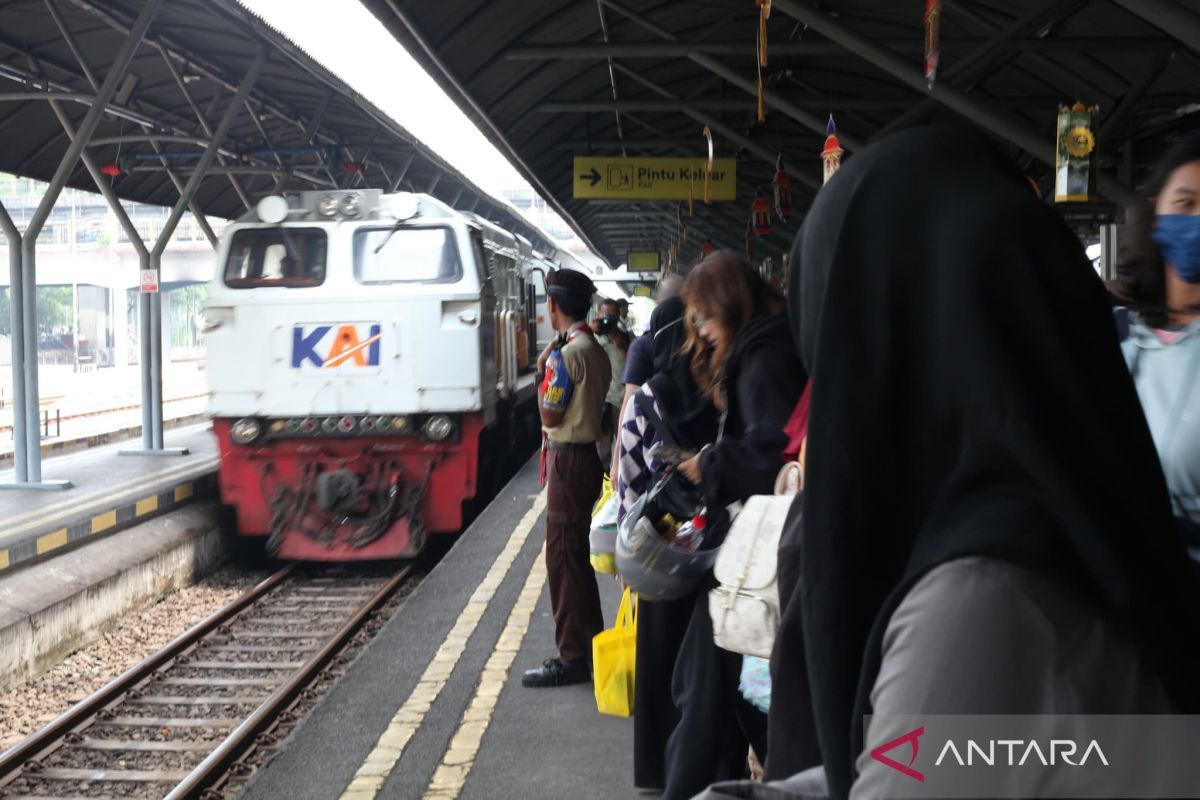
Jakarta (ANTARA) - The Coordinating Ministry for Infrastructure and Regional Development (Kemenko IPK) has stated that the strategic integration between PT Kereta Api Indonesia (Persero), or KAI, and PT Industri Kereta Api (Persero), or INKA, will strengthen the national railway ecosystem.
“Certainly (it will strengthen the railway ecosystem). The integration of KAI and INKA is part of the same ecosystem,” said Rustam Efendi, Secretary of the Deputy for Connectivity Coordination at Kemenko IPK, in a statement in Jakarta on Saturday.
According to him, Kemenko IPK coordinates the Ministry of Transport, which includes the Directorate General of Railways that has always been in charge of both INKA and KAI. Therefore, the ministry is certainly connected to their joint coordination.
“The hope is that it will be better for our railways,” he said.
For context, PT Kereta Api Indonesia (Persero) and PT Industri Kereta Api (Persero) have begun a strategic integration process. The integration is directed at aligning projected railway service requirements with the capacity of the national manufacturing industry.
Desty Arlaini, Senior Vice President for Business Performance & Asset Optimization, Logistics Cluster at Danantara Asset Management, said the integration process must begin with a shared vision among all leaders and personnel of both companies.
According to Desty, leadership, trust and work culture are key factors in the integration process. Every decision is directed at creating added value for railway users, the companies, shareholders and the state.
Meanwhile, KAI Chief Executive Bobby Rasyidin said the integration of KAI and INKA opens up major opportunities for the development of Indonesia’s railway manufacturing industry. Long-term rolling stock requirements call for increasingly connected planning between KAI as the operator and INKA as the producer.
One of the greatest potential sources is demand for electric rail trains (KRL). Based on KAI’s initial calculations, KRL requirements up to 2040 are projected to reach around 156 train sets.
Bambang Jatmika, Chief Executive of PT INKA (Persero), said the kick-off marks an important milestone in the integration plan that has been discussed over several years. The integration will bring together KAI’s experience in understanding operational needs with INKA’s competence in the design, engineering and production of rolling stock.
According to Bambang, closer coordination will help both companies align demand projections, production planning, testing schedules, handover processes, technological development and product quality improvements.
The integration is expected to strengthen national industrial capacity in meeting rolling stock requirements in a more planned manner, while following the development of railway services across various regions of Indonesia.