
KAI and INKA Begin Strategic Integration to Strengthen National Railway Industry Ecosystem
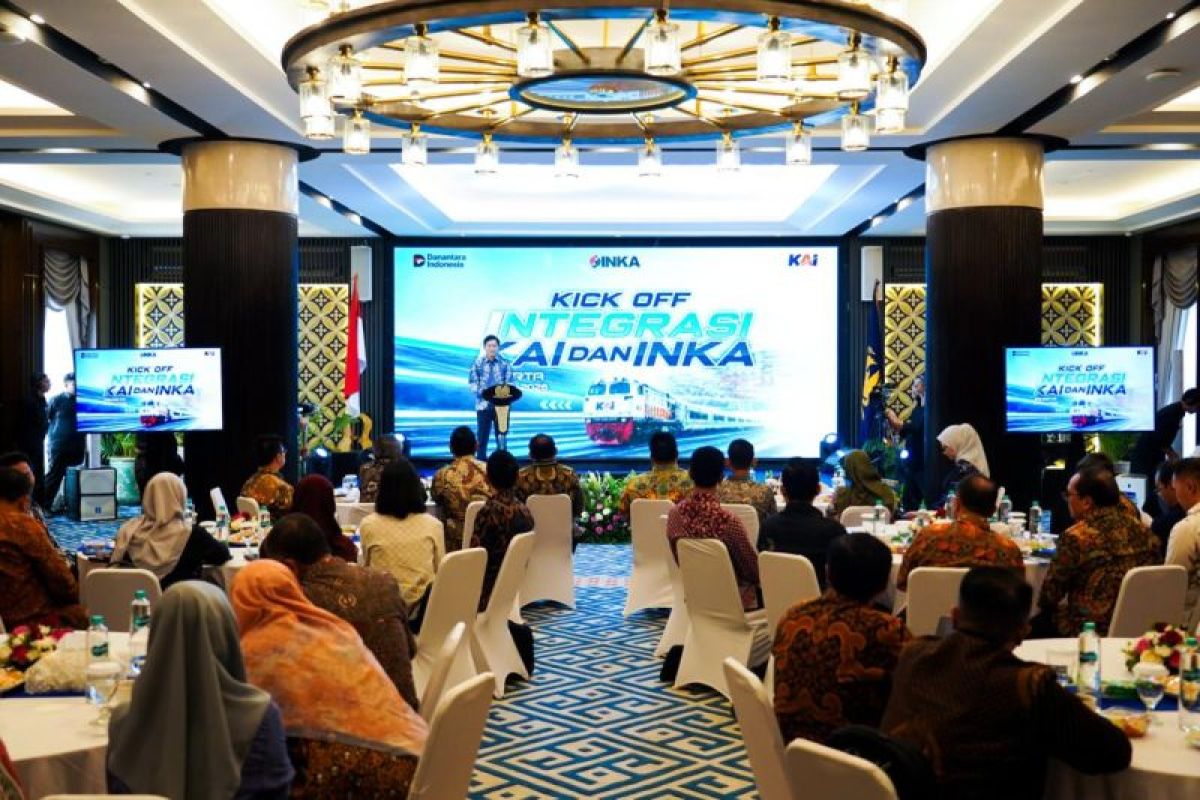
Jakarta (ANTARA) - PT Kereta Api Indonesia (Persero) and PT Industri Kereta Api (Persero) have begun a strategic integration process with a kick-off event held at the Jakarta Railway Centre ballroom on Tuesday (21/7/2026).
The event was attended by officials from Danantara Asset Management, the boards of directors of KAI and INKA, the Project Management Office (PMO) team, consultants, and the leadership of both companies. The integration is directed at aligning projected railway service requirements with the capabilities of the national manufacturing industry.
Desty Arlaini, Senior Vice President for Business Performance & Asset Optimization in Danantara Asset Management’s Logistics Cluster, said the integration process must begin with a shared vision among all leaders and staff of the two companies.
“All leaders need to have the same vision, build shared value, and place customer needs as the primary orientation. KAI and INKA must become one team that respects each other’s competencies,” Desty said.
According to Desty, leadership, trust, and work culture are key factors in the integration process. Every decision is directed at creating added value for railway users, the companies, shareholders, and the state.
KAI Chief Executive Bobby Rasyidin said the integration of KAI and INKA opens up major opportunities for the development of Indonesia’s railway manufacturing industry. Long-term rolling stock requirements demand increasingly connected planning between KAI as the operator and INKA as the producer.
“The integration of KAI and INKA is a major step towards building an increasingly strong national railway industry ecosystem. Rolling stock demand projections need to be translated into more aligned planning for design, production capacity, testing, and product delivery,” Bobby said.
One of the greatest potentials comes from the need for electric trains (KRL). Based on KAI’s initial calculations, demand for KRL up to 2040 is projected to reach around 156 train sets.
This projection demonstrates the significant room for growth in the national manufacturing industry. Meeting it will require gradual increases in production capacity, stronger technology mastery, quality assurance, and alignment between operator needs and producer capabilities.
“The need for around 156 KRL train sets up to 2040 illustrates the scale of the opportunity to develop this industry. That figure does not yet include diesel trains, long-distance rolling stock, locomotives, and freight service equipment,” Bobby said.
According to Bobby, this opportunity is one of the reasons KAI supports the integration process with INKA. A more coordinated relationship between operator and manufacturer is expected to strengthen demand certainty, production readiness, and the development of rolling stock suited to the character of services in Indonesia.
Several countries with advanced railway industries have also built strong connections between operators and manufacturing companies. This model helps align rolling stock demand projections, technology development, product standardisation, and long-term production capacity.
“KAI strongly supports this integration because its impact is directly linked to future services. The stronger the national manufacturing industry, the greater our ability to provide rolling stock that is safe, reliable, comfortable, and suited to the public’s needs,” Bobby said.
Bobby added that manufacturing will become an important part of developing KAI’s business ecosystem. The integration gives both companies room to prepare more measurable demand projections while improving the competitiveness of Indonesian-made railway products.
KAI Group recorded 258.99 million customers in the first half of 2026, up 7.55 per cent compared with the same period the previous year. This growth in mobility must be matched by adequate rolling stock capacity to maintain safety, reliability, and service quality.
“The success of this integration requires consistency, improved competencies, and the application of best industry practices. We want to build a national railway manufacturing industry capable of supporting service development and Indonesia’s progress towards Golden Indonesia 2045,” Bobby said.
PT INKA (Persero) Chief Executive Bambang Jatmika said the kick-off marks an important milestone in an integration plan that has been discussed for several years. The integration will bring together KAI’s experience in understanding operational requirements with INKA’s expertise in the design, engineering, and production of rolling stock.
“This integration is part of the aspiration to build a strong national railway industry. KAI and INKA have interrelated roles, from mapping rolling stock needs to production that supports services to the public,” Bambang said.
According to Bambang, closer coordination will help the two companies align demand projections, production planning, testing schedules, handover processes, technology development, and product quality improvement.
The integration is expected to strengthen national industrial capacity in meeting rolling stock requirements in a more planned manner, in line with the development of railway services across various regions of Indonesia.
“The synergy between KAI and INKA is expected to strengthen the national railway manufacturing industry and produce products that are safe, reliable, comfortable, and suited to the public’s needs,” Bambang concluded.