
KAI aims to complete INKA acquisition by November this year
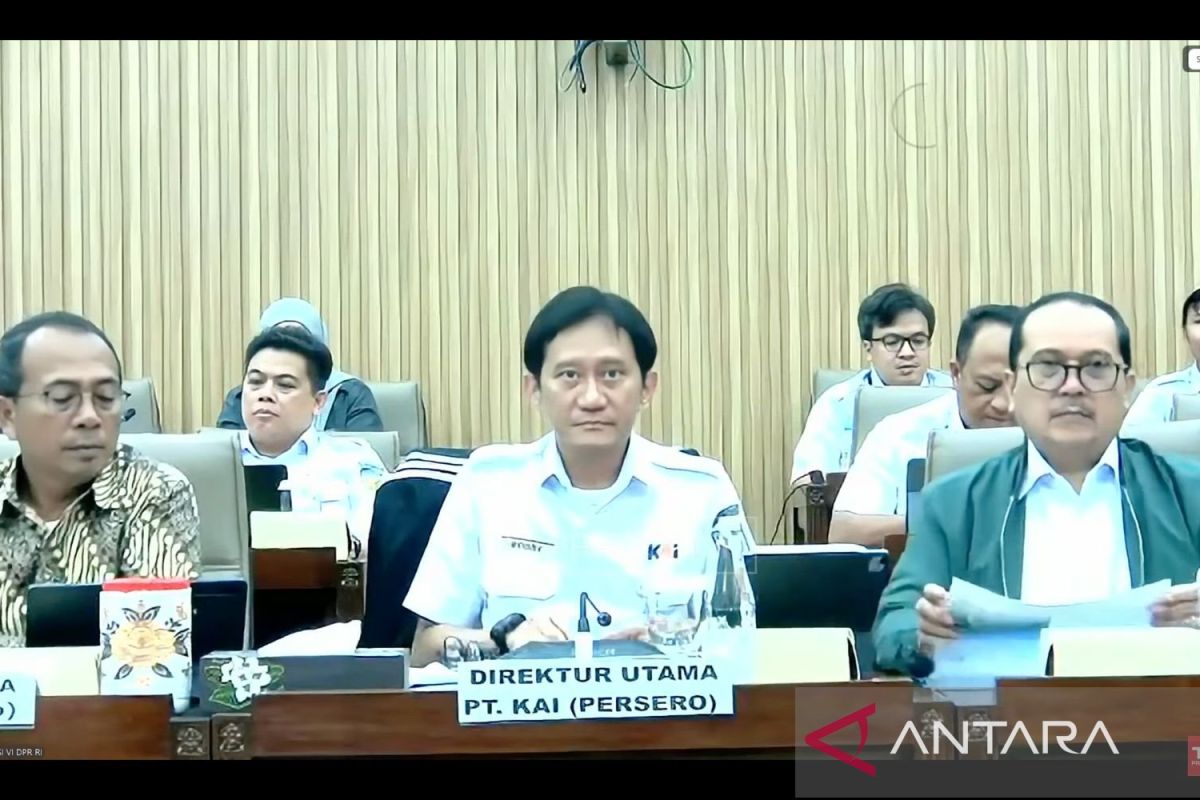
Jakarta (ANTARA) - PT Kereta Api Indonesia (Persero), known as KAI, has revealed that the acquisition of PT INKA is expected to be completed by November this year, supported by Danantara’s involvement in the integration process of the two companies.
“In our 2026 roadmap, we expect the signing of the INKA acquisition to occur in November. This will allow the joint roadmap we have developed to commence in 2027, including engagement with technology partners or principals, as well as preparations for the MRO business,” stated I Gede Darmayusa, KAI’s Director of Portfolio Management and Information Technology, during a hearing with Commission VI of the Indonesian House of Representatives (DPR RI) in Jakarta on Wednesday.
Gede explained that Danantara issued a mandate to KAI and INKA on 1emb18 May 2026 to conduct due diligence and a comprehensive study regarding the integration of the two companies. The study aims to strengthen the certainty of railway rolling stock supply, increase operational efficiency, build long-term synergy, and support the fundamental business recovery of INKA.
Gede also detailed KAI’s rolling stock requirements for the next five years, which include approximately 2,000 bottom dump wagons, 1,200 flat wagons, 652 passenger carriages, and 30 electric multiple unit (KRL) train sets for the Greater Jakarta (Jabodetabek) area.
Beyond meeting rolling stock needs, the integration plan is driven by several challenges previously faced in procuring trains from INKA. The integration of KAI and INKA is being pushed to improve delivery precision and the quality of railway rolling stock, which have remained challenges for both companies.
“With the integration of KAI and INKA, we hope both companies can establish a long-term procurement roadmap, rather than relying on annual or short-term plans, so that all R&D and manufacturing preparations at INKA can be planned from start to finish,” Gede explained.
He added that the integration is expected to provide long-term order certainty, allowing INKA to strengthen manufacturing investments and its supply chain. Furthermore, the integration is expected to improve INKA’s financial condition through the development of manufacturing businesses and maintenance, repair, and overhaul (MRO) services.
“Based on current conditions, the orders we have secured for INKA over the next five years are approximately IDR 18.9 trillion. Meanwhile, the MRO or recurring income business is around IDR 3 trillion per year, totaling about IDR 15 trillion over the next five years,” said Gede.
He also expressed hope that by 2029, INKA could evolve into a more financially healthy railway manufacturing company with a strong and sustainable MRO business.
In drafting the integration plan, Gede stated that they are benchmarking against several integration models of railway operators and manufacturers in various countries, including Russia and Japan. In Russia, the national operator Russian Railways acquired the manufacturer Transmashholding to align product development and research roadmaps. In Japan, Japan Railways (JR) fully acquired Japan Transport Engineering Company (J-TREC), enabling design control from the early stages and the implementation of ‘design for maintenance’ concepts.
Gede noted that these integration models result in procurement cost efficiencies, certainty in long-term planning, and research and development directions that better suit the operator’s needs. “Based on the conditions in Russia and Japan, we are confident that the integration of KAI and INKA will provide positive benefits for both parties,” Gede said.
He also highlighted China’s experience in building a national railway industry. According to him, the success of the CRRC Group is inseparable from policies requiring global manufacturers or principals to establish partnerships with local companies. “Therefore, we hope that with the integration of KAI and INKA, it will be accompanied by support from strong principals, whom we will require to form strategic partnerships if they wish to supply rolling stock to KAI. This should involve not just procurement cooperation, but also technology transfer and facility transfer with INKA,” Gede concluded.