
KAI Accelerates Energy Transition, Begins Testing B50 Biodiesel
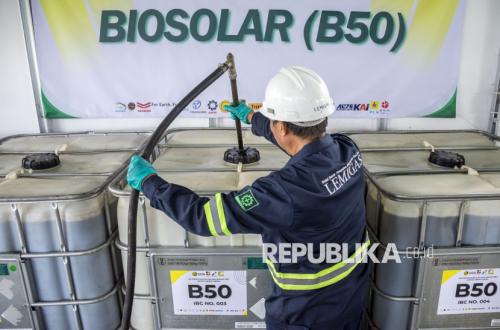
PT Kereta Api Indonesia (Persero) has begun testing the use of B50 biodiesel in train operations as part of efforts to accelerate the energy transition and support the government’s new renewable energy programme. President Director of KAI, Bobby Rasyidin, stated that the use of B50 is a continuation of the biodiesel utilisation roadmap that the company has implemented in stages over recent years. He noted that the energy transformation in the transport sector requires measured operational readiness to maintain safety, service reliability, and energy efficiency. “Indonesia’s energy transformation requires a transport sector capable of adapting in a measured way. KAI is strengthening the role of railways through a biodiesel roadmap from B0 to B50, ensuring each stage aligns with safety, service reliability, energy efficiency, and emission reduction,” Bobby said in a statement. He explained that the railway sector holds a strategic position in supporting the national energy security agenda because it serves public mobility and large-scale logistics distribution. Therefore, any energy efficiency efforts undertaken by KAI are expected to have a direct impact on the sustainability of public transport services and national logistics competitiveness. “KAI must ensure that the energy transition yields tangible benefits, both in terms of service reliability, energy efficiency, and contribution to environmental sustainability,” Bobby stated. Vice President of Corporate Communication at KAI, Anne Purba, said technical testing of B50 usage began in April 2026 in cooperation with the Ministry of Energy and Mineral Resources (ESDM). The testing is being conducted on locomotives and train gensets to evaluate engine performance, fuel consumption, emissions, and equipment durability under operational conditions. For locomotive testing, KAI is using a CC206 locomotive operating with the KA Sembrani train set. Meanwhile, genset testing is being carried out on the KA Bogowonto by comparing the performance of B40 and B50 fuels. “The test results will serve as the basis for KAI’s evaluation, particularly regarding engine performance, fuel consumption, operational stability, filter conditions, emission aspects, and maintenance requirements. Our principle is clear: the energy transition must proceed in tandem with operational safety and reliability,” Anne said. KAI is currently monitoring and evaluating the test results before implementing B50 more widely in its operations. The company’s biodiesel usage has increased gradually, from B20 in 2018-2019, B30 in 2020-2022, B35 in 2023-2024, to B40 in 2025-2026, before entering the B50 testing phase this year. From a sustainability perspective, the transition from B35 to B50 is projected to reduce emissions by up to 133,676 tonnes of carbon dioxide equivalent (CO2e). This figure represents the largest contributor to KAI’s decarbonisation programme for the 2025-2030 period. Bobby emphasised that KAI will continue to strengthen the role of rail-based transport in supporting the national energy transformation, ensuring that sustainability goes hand in hand with safe, reliable, and affordable transport services. “The biodiesel roadmap from B0 to B50 demonstrates that railways have a vital role in Indonesia’s energy transformation. With government support, KAI will continue to maintain reliable public transport and logistics services while strengthening its contribution to national energy security, emission reduction, and economic competitiveness,” Bobby said.