
Kagama Muda Supports UGM Students Disrupting Discussion with Budiman Sudjatmiko and Officials
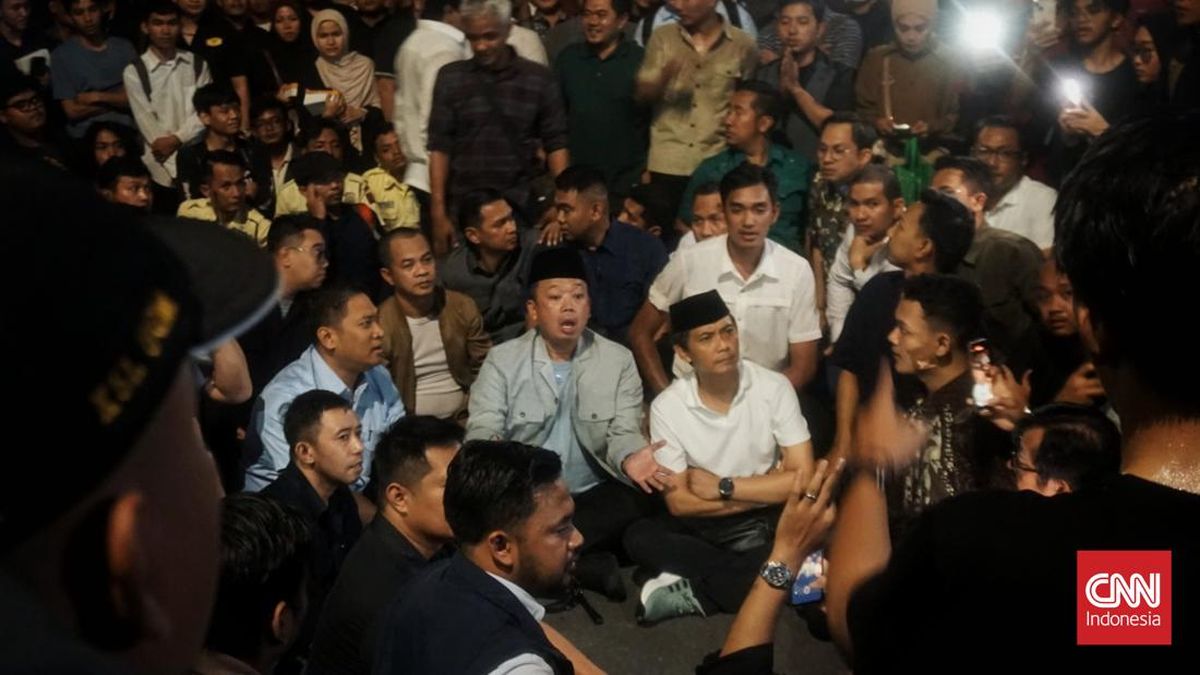
Kagama Muda Bergerak has declared its support for the action of Gadjah Mada University (UGM) students who disrupted a kopdar discussion at GIK Joglo, Sleman, Special Region of Yogyakarta, attended by three state officials on Monday (15/6). The discussion event, Kopdar Bareng Mas Dar, featured Minister of Agrarian Affairs and Spatial Planning/National Land Agency Nusron Wahid, Deputy Minister of Agriculture Sudaryono, and Head of the Poverty Alleviation Acceleration Agency Budiman Sudjatmiko. The forum’s theme was ‘Pancasila as the Unifier of the Indonesian Nation’.
Kagama is the UGM Alumni Family association. Kagama Muda Bergerak was temporarily formed by alumni with backgrounds in activism or student movements, primarily graduates from the class of 2012 and earlier. In its statement, Kagama Muda Bergerak assessed that the disruption of the discussion by UGM students must be understood as a form of criticism against the monopoly of Pancasila discourse amidst the social, economic, and political crises felt by the public.
According to the group, while rising prices of staple goods, fuel, the weakening rupiah exchange rate, massive practices of corruption, collusion, and nepotism (KKN), and various economic issues are of public concern, the excessive emphasis on Pancasila rhetoric and harmony is seen as a neglect of more urgent problems. “As a consequence of the discussion’s disruption, the criticism by UGM students must be understood as a demand for more tangible improvements in social, economic, and political conditions,” wrote Kagama Muda Bergerak in a statement received on Wednesday (17/6).
“At this point, the criticism is no longer merely at the level of democratic expression or articulation of public anxiety, but has moved into a political demand regarding the stagnation of economic improvement and the state’s inability to answer the material problems faced by society,” the statement continued. They also highlighted the strengthening involvement of military and police institutions in various civilian domains, which they called a concrete manifestation of democratic regression.
In response to these conditions, Kagama Muda Bergerak stated its position. Firstly, it supports the protest action by UGM students against Budiman, Sudaryono, and Nusron. According to them, the action is a form of expressing anxiety over public hardship as well as a manifestation of resistance against state authoritarianism and the students’ solidarity with the people. Kagama Muda Bergerak emphasised that student criticism of these public officials is a form of citizen participation. It is legitimate and constitutionally guaranteed to voice the aspirations of communities affected by various policies deemed erroneous.
“The tradition of criticism, solidarity with the people, and the courage to express opinions are inseparable parts of the intellectual and democratic life of higher education institutions, including Gadjah Mada University,” they wrote. Therefore, Kagama Muda Bergerak rejects all efforts of delegitimisation, intimidation, or stigmatisation against students exercising their constitutional right to criticise state administrators. They also asserted that campuses must be spaces that recognise and preserve the legitimacy of criticism against state administrators, and guarantee the growth of freedom of thought and expression as part of the intellectual and democratic function of higher education.
Furthermore, Kagama Muda Bergerak urged state administrators to respond to civil society criticism substantively and openly, rather than viewing criticism as a threat to power. In the final part of its statement, the group called on all elements of civil society to unite, protect one another, and build solidarity amidst the crisis to fight against the suppression of democratic space currently being carried out by state administrators.