
Kaesang Seen as Strengthening PSI's Image as a Youth Party
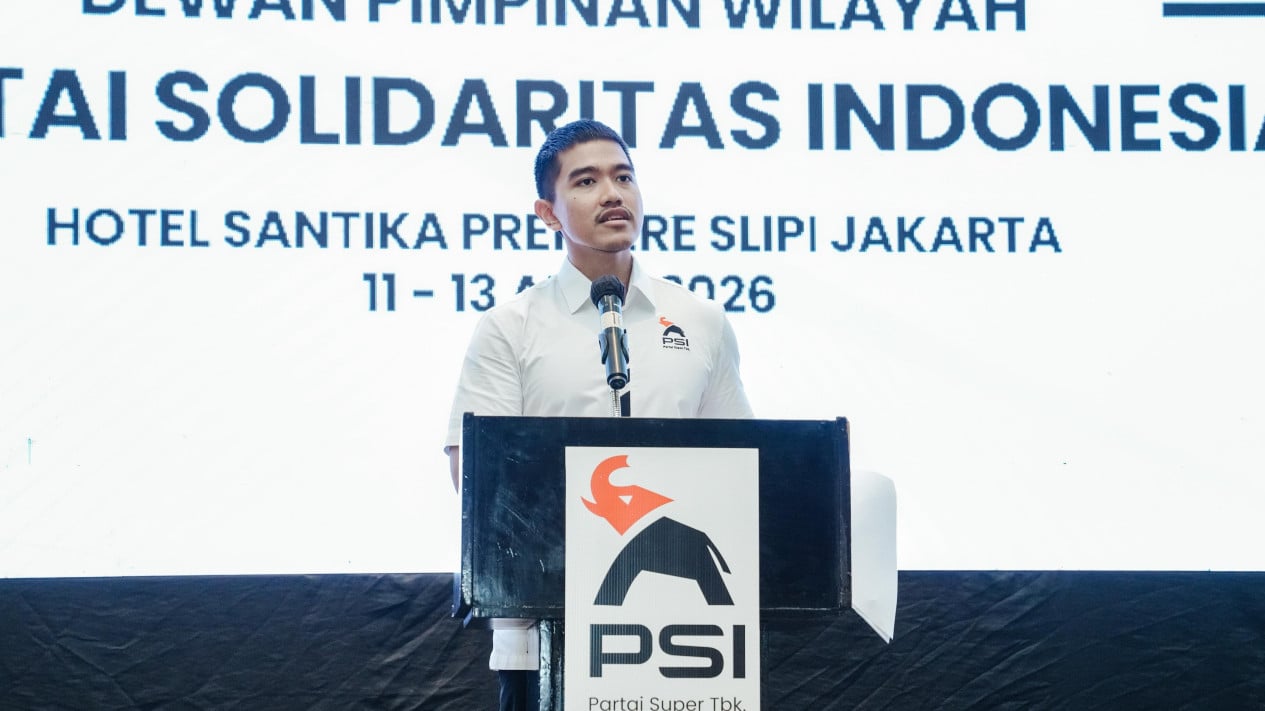
A survey by the Indonesian Survey Institute (LPI) has revealed that the Chairman of the Indonesian Solidarity Party (PSI), Kaesang Pangarep, is receiving a positive response, with his leadership seen as reinforcing the party’s image as a party for the younger generation.
The online survey was conducted across 32 provinces from 10 to 17 June 2026, involving 1,922 respondents. LPI Director of Research and Policy, Fernando Emas, explained that 69.7 percent of respondents believe Kaesang’s leadership can strengthen PSI’s image as a party close to Jokowi, and 68.2 percent acknowledged that their interest in PSI was influenced by the figure of Kaesang.
Interestingly, the main reason respondents liked Kaesang was not solely his status as Jokowi’s son, but because he is considered to represent the younger generation. Fernando further explained that Kaesang’s figure is seen as capable of broadening public recognition of PSI and bringing a spirit of renewal.
The LPI survey found that Kaesang Pangarep’s appeal to PSI stems from his image as a representation of youth. A total of 72 percent stated that Kaesang is seen as representing the younger generation, making it the most cited reason by respondents. Additionally, 65 percent of respondents believe Kaesang will make PSI better known to the public, while 61 percent feel Kaesang brings a spirit of renewal to politics.
“This finding is interesting because it shows that Kaesang’s appeal has its own selling point, independent of his father’s shadow. However, these two factors—the Jokowi factor and the Kaesang factor—ultimately reinforce each other in shaping PSI’s image as a youth party associated with Jokowi’s political representation,” Fernando explained.
The survey findings show that, on average, 64.9 percent of the public view PSI as a populist party like Jokowi. In detail, 30.5 percent of respondents answered ‘quite populist’, 25.5 percent answered ‘populist’, and 8.9 percent answered ‘very populist’. Meanwhile, 21.4 percent of respondents said it was ‘less populist’, 11.7 percent answered ‘not populist’, and 2 percent chose not to answer or did not know.
The LPI survey also found that, on average, 64.2 percent of the public believe that the influence of Jokowi’s support remains quite strong in affecting public consideration of political party choices.