
KAEF Integrates End-to-End Services to Eliminate TB by 2030
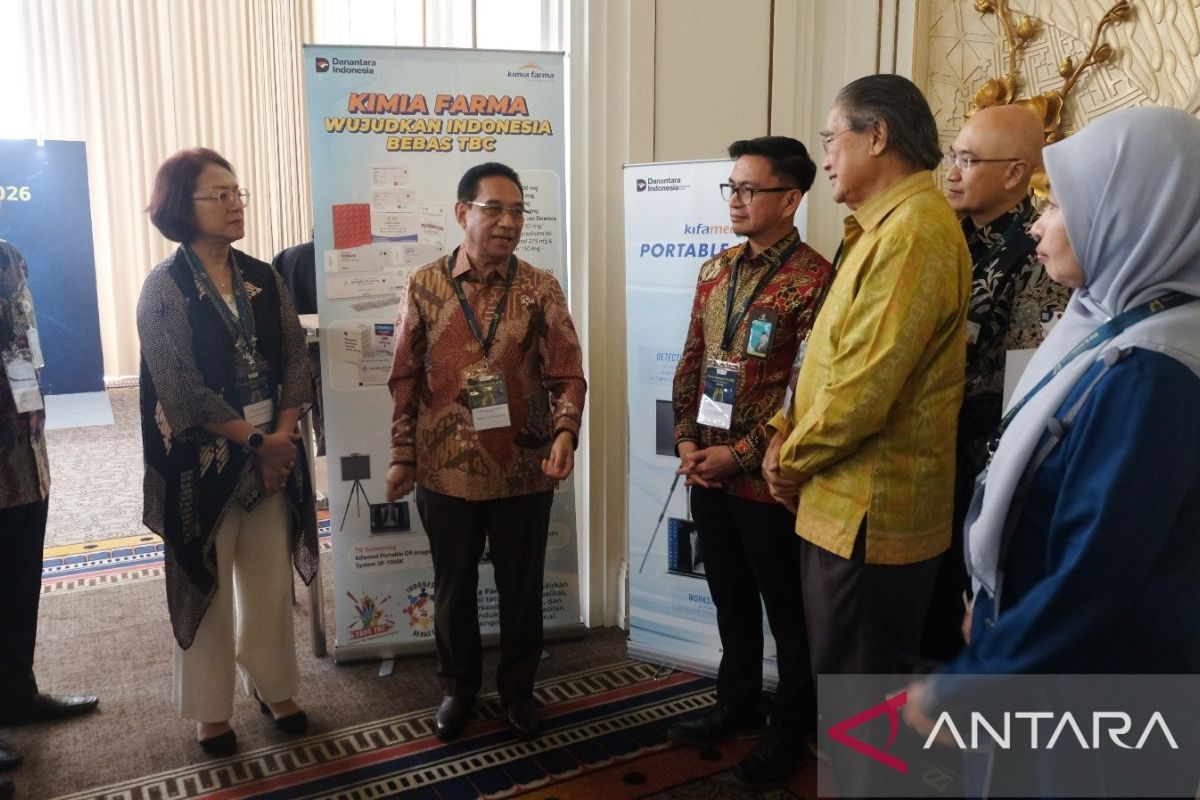
PT Kimia Farma (Persero) Tbk (KAEF) has affirmed its strategic role as the backbone of national health by integrating its value chain from upstream to downstream to accelerate the elimination of Tuberculosis (TB) by 2030. KAEF Commercial Director Hanadi Setiarto stated that the company possesses integrated capabilities spanning the production of raw materials and finished drugs, distribution, and healthcare services to support the government’s priority health agenda for a TB-free Indonesia by 2050. “KAEF has an end-to-end integrated ecosystem from production and distribution to healthcare services to support national health, including TB elimination by 2030,” he said in a statement received in Jakarta on Tuesday. According to the 2024 Global TB Report and data from the Indonesian Ministry of Health in 2025, Indonesia ranks second globally after India, with an estimated 1,090,000 TB cases and approximately 125,000 deaths per year. KAEF’s commitment to TB elimination is demonstrated by its complete portfolio of TB treatment drug variants, covering the needs for both Drug-Sensitive TB (DS-TB) and Drug-Resistant TB (DR-TB). Several preparations are already in Fixed-Dose Combination (FDC) form, specifically designed for both adult and paediatric patients. In response to resistance challenges and the need for more effective therapy, KAEF continues to develop and prepare production for innovative TB therapies. One such product is the anti-infective TB drug Moxifloxacin, launched in 2025. KAEF is also preparing production readiness to support the implementation of more effective TB regimens in the future. On the upstream side, the company relies on modern production facilities in Jakarta and Banjaran with a massive capacity exceeding 500 million tablets per year. This is not only about meeting medical needs but also about strengthening national pharmaceutical sovereignty and reducing dependency on imported raw materials and finished drugs. Beyond manufacturing drugs, KAEF also supports the provision of diagnostic infrastructure for early TB detection in the field, including the provision of TB LAMP testing equipment and X-ray-based screening to accelerate the early screening process. Supported by 44 branches across Indonesia, KAEF aims to optimise the distribution of JKN programme drugs and TB logistics needs consistently, safely, and evenly, including to the Frontier, Outermost, and Disadvantaged (3T) regions. Meanwhile, in the downstream ecosystem, KAEF has more than 1,000 pharmacy networks, over 350 health clinics, and 65 medical laboratories that can serve as integrated treatment centres. This network plays a role in supporting patient therapy adherence through pharmacists, managing clinical referrals, and integrating patient data in real-time into the Ministry of Health’s Tuberculosis Information System (SITB). “This end-to-end value chain integration is KAEF’s contribution as a strategic partner to the government to realise the target of TB elimination by 2030 and a TB-free Indonesia by 2050,” he added. In the context of President Prabowo Subianto’s Astacita vision, accelerating TB control holds strategic significance as the disease impacts not only public health status but also productivity, social protection, health financing, and the quality of human resources.