
Kadin Views Indonesia's OECD Accession as Strengthening Business Regulatory Certainty
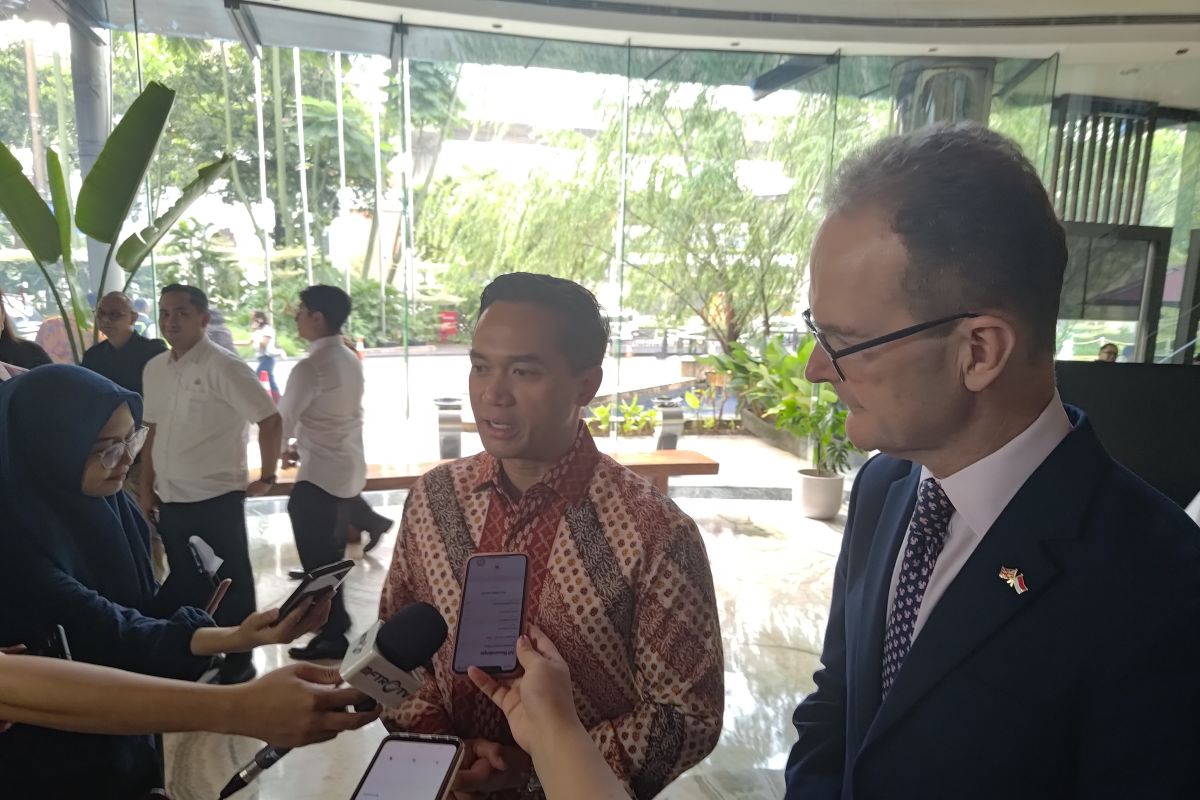
The government’s decision to pursue OECD accession is a strategic choice that aptly supports Indonesia’s ambition to become a developed nation by 2045.
Jakarta (ANTARA) - The General Chairman of the Indonesian Chamber of Commerce and Industry (Kadin), Anindya Bakrie, stated that the business community supports Indonesia’s accession process to the Organization for Economic Co-operation and Development (OECD).
He described OECD accession as a strategic step to propel Indonesia towards developed nation status by 2045 through improvements in governance and policy standards.
“The government’s decision to pursue OECD accession is a strategic choice that aptly supports Indonesia’s ambition to become a developed nation by 2045,” Anindya said during a national seminar on Indonesia’s OECD accession in Jakarta on Tuesday.
The Indonesian government previously expressed its intention to become an OECD member in 2023, received the accession roadmap on 2 May 2024, and submitted the initial memorandum on 3 June 2025 as an assessment of national regulatory alignment.
Currently, the accession process will proceed to the technical review stage, scheduled for July 2026.
He assessed that OECD membership would help increase regulatory coherence and Indonesian government standards, as well as create a more predictable business environment for business actors.
According to him, regulatory certainty is an important factor for the business world, given that investors highly consider policy stability and institutional quality in making investment decisions.
Anindya revealed that Kadin’s survey results show nearly 50 percent of business actors in Indonesia plan to expand in the next six months.
However, around 20 percent of respondents still view bureaucracy and regulations as the main obstacles in conducting business.
“The market values trust, investors value certainty, and trust relies on institutional quality,” he said.
He added that OECD accession is expected to serve as a catalyst for improving the business ecosystem through increased transparency, accountability, and policy standards aligned with international practices.
Anindya emphasised that the OECD accession process is not merely a government agenda but a collective effort by all elements of the nation, including the business world.
“This is not just a government effort, but an effort by the entire nation, including the business world, to drive Indonesia’s economic transformation,” he stated.
On that occasion, Kadin, together with the Coordinating Ministry for Economic Affairs, also launched the OECD Private Sector Playbook as an initial guide for private sector involvement in Indonesia’s OECD accession process.
The British Ambassador to Indonesia, Dominic Jermey, expressed his country’s support for Indonesia’s OECD accession process, including in encouraging private sector involvement in policy reforms.
According to him, early private sector involvement in the accession process is key to ensuring that the reforms undertaken are effective and deliver tangible impacts to the economy.
“OECD accession is an important element in driving Indonesia’s economic growth, improving regulations, and increasing certainty for the business world,” Jermey said.