
Kadin Urges MSCI to Assess Indonesia’s Capital Market Objectively
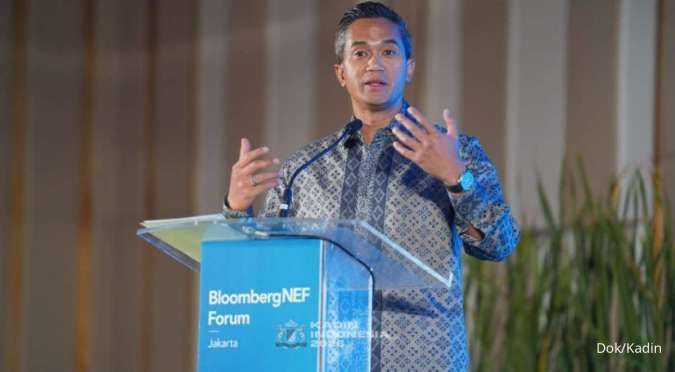
KONTAN.CO.ID, JAKARTA — The Indonesian Chamber of Commerce and Industry (Kadin) has asked Morgan Stanley Capital International (MSCI) to assess Indonesia’s capital market objectively and proportionately amid a proposal to change the country’s classification from emerging market to standalone market.
Kadin chairman Anindya Novyan Bakrie said MSCI’s evaluation should take account of market conditions as a whole and the progress of ongoing capital-market reforms.
“At the same time, we urge that Indonesia be assessed comprehensively, on the basis of evidence and proportionately. Shortcomings must be addressed, but the progress already made should also receive a fair assessment,” Anindya said in an official statement on Friday (16 October 2026).
MSCI had previously said it would consider consulting on a change to Indonesia’s classification if sufficient progress was not evident by its November 2026 index review.
“The public and business community are entitled to an explanation: why was a reclassification consultation opened before the November review deadline that had previously served as the benchmark? What new findings underpin this step, and how has Indonesia’s reform progress been taken into account?” Anindya said.
In his view, the proposed change could affect investor confidence, business financing and the interests of public shareholders. If implemented, standalone-market status would place Indonesia outside MSCI’s emerging-market index group.
The consequences could include adjustments to global investors’ portfolios, a narrower investor base, and pressure on share valuations and companies’ access to financing.
Market pressure was also evident in trading on Friday (16 October 2026). The Jakarta Composite Index (JCI) closed down 11.57% at 5,185.10 amid concerns about MSCI’s proposal.
“The impact reaches companies that need capital to expand, create jobs and drive the economy. Millions of investors and public shareholders also have a stake in a healthy market and balanced assessments,” Anindya said.
Kadin said assessments of Indonesia’s capital market should take into account the number, diversity and quality of listed companies; market capitalisation; trading frequency and value; market infrastructure; and progress in corporate governance.
However, Anindya acknowledged that market size was not the sole indicator of investment suitability. Ownership transparency, the quality of shares available to the public, or free float, investor accessibility and the integrity of price formation should also be considered.
“We believe Indonesia’s capital market deserves to remain in the emerging-market category. Issues involving particular shares or parties must be addressed firmly and in a measured way,” he said.
Kadin therefore supports eight capital-market reform programmes being carried out by the Financial Services Authority (OJK), self-regulatory organisations (SROs) and industry participants.
The agenda includes raising the minimum free-float threshold to 15%, with transitional provisions for existing listed companies; strengthening transparency over ultimate beneficial owners (UBOs); and improving the quality of share-ownership data.
Other programmes include preparing for the demutualisation of the stock exchange, consistently enforcing regulations and sanctions, improving listed-company governance, deepening the market in an integrated manner, and strengthening collaboration among stakeholders.
Kadin also urged the government, regulators, market participants and listed companies to accelerate capital-market improvements. Enforcement against transaction manipulation, concealed ownership and misleading disclosures should be consistent and transparent.
Listed companies were also urged to improve disclosure of affiliations and ultimate beneficial owners, ensure the quality of their free float, and treat public shareholders fairly.
“We must use MSCI’s assessment as a spur to improve. Criticism from outside should be answered with data, action and verifiable results. Protecting public investors, enforcing the rules and building a transparent market are in Indonesia’s own interest,” Anindya said.
Source: jawawa.id (https://jawawa.id/newsitem/kadin-urges-msci-to-assess-indonesias-capital-market-objectively-1792241413)
Originally published by investasi.kontan.co.id (https://investasi.kontan.co.id/news/kadin-minta-msci-objektif-nilai-pasar-modal-indonesia), translated from Indonesian