
Kadin Urges Boosting Sustainable Standards in Nickel Downstreaming to Answer Global Market Demands
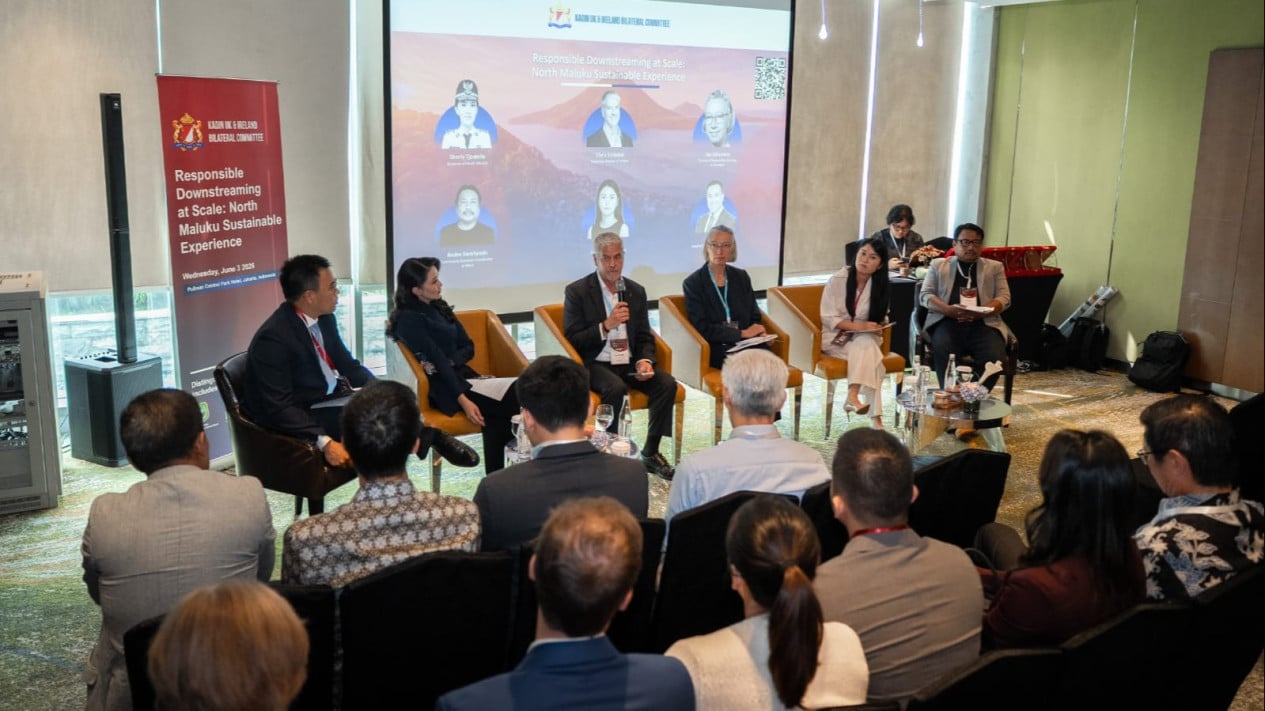
Indonesia is continuously working to ensure that the success of nickel downstreaming is measured not only by production capacity and investment value, but also by the ability to meet sustainability standards which are increasingly becoming a prerequisite for global market access. This was the main focus of the discussion ‘Responsible Downstreaming at Scale: North Maluku Sustainable Experience’, organised by Kadin’s UK and Ireland Bilateral Committee as part of the Indonesia Critical Minerals Conference 2026. The discussion brought together regional governments, industry players, international organisations, and critical mineral sector stakeholders to explore North Maluku’s efforts, which could serve as a global reference for responsible downstreaming practices amidst the rising demand for critical minerals to support the global energy transition. This discussion is a series of activities from the North Maluku Sustainability Trip at the Indonesia Weda Bay Industrial Park (IWIP) held on 1-2 June. Kadin’s UK and Ireland Bilateral Committee Head for ESDM, Ovan Tito, also presented the visit conducted by Kadin and the speakers to IWIP in North Maluku. The visit aimed to see firsthand the development of the nickel downstreaming ecosystem in North Maluku and the efforts made to become a global reference for responsible downstreaming practices. ‘Many participants came with various perspectives and expectations about Indonesia’s nickel industry. However, after seeing the on-the-ground operations, the environmental investments made, and the openness of various parties in dialogue, we saw an industrial ecosystem operating at world-class scale and continuously striving to improve its sustainability standards,’ said Ovan. The impact of downstreaming is evident from its significant contribution to the national economy. The export value of nickel derivative products increased nearly tenfold from US$3.3 billion in 2018 to approximately US$34 billion in 2024, reflecting the increasing added value created domestically. With a contribution of around 13–15% to the world’s nickel supply, North Maluku has now become one of the most strategic nodes in the global critical mineral supply chain. In the first quarter of 2026, North Maluku’s economy grew by 19.64%, the highest in Indonesia, supported by continuously developing processing and mining activities. Iron and steel-based commodities, nickel, and inorganic chemicals even contributed 96.65% of the region’s total exports, demonstrating the central role of downstreaming in North Maluku’s current economic structure.