
Kadin Targets Rp2,300 Trillion in Investment as Indonesia’s Economy Faces Pressure
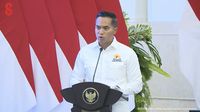
The outflow of foreign funds from Indonesia’s capital market is one of the challenges weighing on the national economy. Amid this pressure, businesses are also facing rising investment targets, from Rp2,000 trillion in 2026 to Rp2,300 trillion in 2027.
Anindya Bakrie, chairman of the Indonesian Chamber of Commerce and Industry (Kadin), said about Rp80 trillion in foreign funds had left Indonesia’s capital market so far this year. This is a signal that businesses need to assess the economic outlook more cautiously, particularly as financial markets come under pressure.
Anindya also highlighted a decline in capital-market performance, which he said had reached 31%. Including the impact of exchange-rate movements, the fall was estimated to be close to 40%.
“At Kadin, you could say we have to choose whether to go left or right. The data show that Rp80 trillion in foreign funds has already left the capital market this year. The market is currently down 31%; if we add the 7% movement in the exchange rate, the decline becomes 38%, or almost 40%,” Anindya said at Kadin’s National Coordination Meeting on Investment, Downstreaming, Energy and the Environment in Jakarta on Tuesday (13 October 2026).
Economic and financial-market pressures are not the only challenges to consider. Indonesia also faces the risk of natural disasters, including forest and land fires, which could disrupt economic activity and have social consequences.
Amid these challenges, the government is targeting 6% economic growth in 2027. This goes hand in hand with an ambition to increase realised investment to Rp2,300 trillion next year, up from the Rp2,000 trillion target for 2026.
Anindya said changing economic conditions could also reshape the competitive landscape for businesses. He pointed to the 1997–98 economic crisis, which showed how difficult periods can bring major changes to business structures and competition.
“Every crisis brings a change of guards, a changing of players. That is inevitable,” Anindya said.
For businesses, the challenge is to understand these changes while identifying opportunities that can still be developed. Investment opportunities must still be pursued, but business decisions cannot be based solely on optimism about economic growth targets. Risks must be assessed to ensure investment plans are realistic.
“However, we cannot simply be optimistic just to look impressive. Of course, we have to be careful in making our choices,” Anindya said.
Source: jawawa.id (https://jawawa.id/newsitem/kadin-targets-rp2-300-trillion-in-investment-as-indonesias-economy-faces-pressure-1791913830)
Originally published by cnbcindonesia.com (https://www.cnbcindonesia.com/news/20261013183915-4-775868/kadin-bidik-investasi-rp-2300-t-saat-ekonomi-ri-dibayangi-tekanan/amp), translated from Indonesian