
Kadin Targets a Larger Share of Production in Indonesia for Global Brands
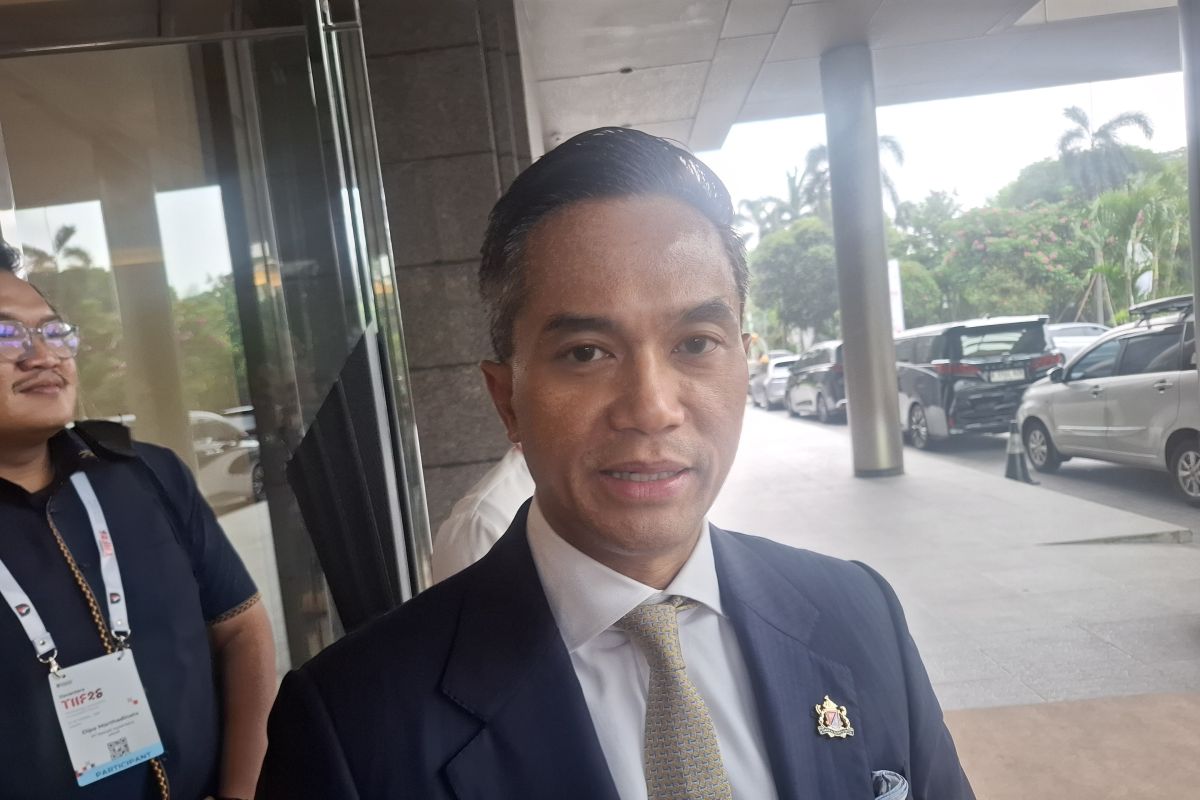
Indonesia is already part of the global supply chain, and tomorrow we will say that we also want to increase our share of capacity within each global brand and have our own brands.
Jakarta (ANTARA) – Indonesian Chamber of Commerce and Industry (Kadin) chairman Anindya Novyan Bakrie said the organisation is targeting a larger share of domestic production for global brands, alongside the development of Indonesian brands of its own.
“Indonesia is already part of the global supply chain, and tomorrow we will say that we also want to increase our share of capacity within each global brand and have our own brands,” Anindya said after attending the Danantara Technology Innovation Investment Forum (DTIIF) 2026 in Jakarta on Wednesday.
He said the plan would be discussed and presented at Kadin’s National Leadership Meeting on 29–30 October 2026.
Anindya did not specify the targeted increase in production share or when it should be achieved.
He said Indonesia needed to strengthen its processing capabilities and technological expertise so that domestic industry could produce higher-value goods and deepen its involvement in global supply chains.
“Without processing or making major advances, Indonesia will, of course, remain only a market,” he said.
During a panel discussion, he cited the industrialisation of Japan, South Korea and China, which have developed natural resources into finished products by strengthening their manufacturing and technological capabilities.
Anindya said the transformation would require a skilled workforce, long-term financing and technology partnerships with international companies to improve the competitiveness of domestic industry.
Efforts to expand the role of Indonesian producers in international markets align with Kadin’s planned Buy from Indonesia campaign, which aims to increase purchases of Indonesian goods and services by overseas buyers.
On 22 October 2026, Kadin said its book, “We Buy From Indonesia: Behind the World’s Greatest Products”, documents the participation of Indonesian producers in the supply chains of around 80 global brands, including Tesla, IKEA and Uniqlo.
The book describes domestic producers’ contributions, from supplying raw materials and components to producing finished goods, across sectors including footwear, food and beverages, cosmetics, electronics and electric vehicles.
Kadin also wants to leverage existing business relationships to secure more orders, increase production capacity and create opportunities for more suppliers from across the regions.
Alongside expanding industrial capacity, Anindya sees opportunities to grow Indonesia’s export markets through trade ties with partner countries.
He named China and the United States as Indonesia’s main trading partners, while saying European countries were increasingly promising destinations for Indonesian products.
“China is naturally the country with which we have the largest transactions, followed by the United States. But European countries appear to be emerging markets that need our products,” he said.
During the panel discussion, Anindya said economic cooperation between Indonesia and the European Union offered opportunities to trade footwear, textiles, clothing, electronics and furniture.
Beyond Europe, he sees BRICS member countries as potential markets for expanding Indonesia’s trade relations and economic cooperation.
According to Trade Ministry data, Indonesia’s exports of manufactured goods reached US$159.55 billion, or around Rp2,894 trillion, in January–August 2026, up 7.87 per cent from the same period a year earlier.
Manufacturing accounted for 85.95 per cent of total non-oil and gas exports during the period.
China was Indonesia’s largest destination for non-oil and gas exports in January–August 2026, with a 25.55 per cent share, followed by the United States at 12.07 per cent and India at 6.88 per cent.