
Kadin Survey: War Forces Majority of Companies to Tighten Their Belts
JAKARTA, KOMPAS.com - A survey by the Kadin Institute reveals that the majority of companies are choosing to implement operational cost efficiencies in response to geopolitical pressures.
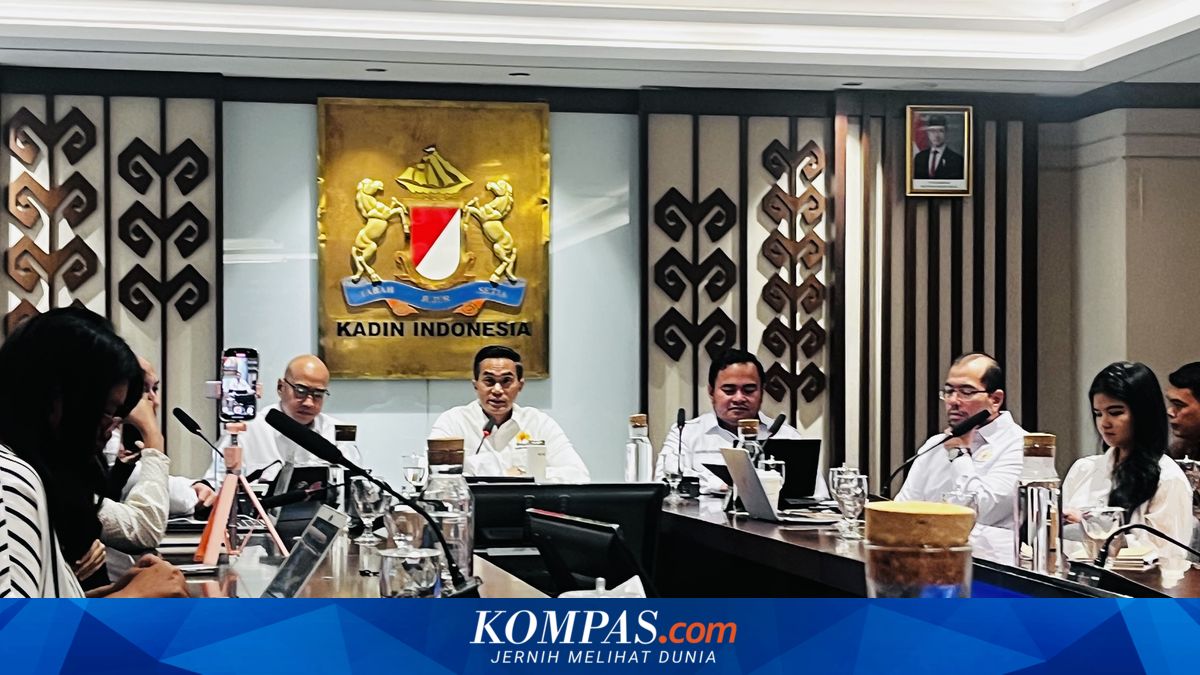
Kadin Indonesia General Chairman Anindya Bakrie stated that the war in West Asia (Middle East) has made fuel oil (BBM) prices expensive.
“But it also leads to an increase in operational or operational expenditure (Opex), without being accompanied by an increase in purchasing power,” Anindya said during a press conference at the Kadin Tower, Jakarta, on Friday (24/4/2026).
Anindya noted that in facing an industry crisis, there are two choices: tightening the belt or immediately pursuing growth.
Kadin Institute Insight Director Fakhrul Fulvian mentioned that out of 210 companies, 33.9% chose operational cost efficiency.
They opted to suppress production, distribution, and operational costs.
This strategy was chosen as a form of anticipation against the impact of the conflict in West Asia. “Everyone is thinking about implementing operational cost efficiency,” Fakhrul said.
Nevertheless, the research also revealed that 29.3% of respondents have not or do not take specific steps.
Some companies chose to wait and see the developments due to limited adaptation capacity.
Meanwhile, 9.9% of other companies chose to implement diversification of trade partners; 9.5% reviewed contracts and supply chains; and 7.1% diversified raw material sources.
“This strategy reflects efforts to reduce dependence on certain markets or suppliers to minimise the risk of global disruptions,” Fakhrul stated.
In addition, the survey revealed that for 20.9% of companies, the biggest impact felt from geopolitical turmoil is the surge in energy and commodity prices.
As a result, production and operational costs rise, squeezing profit margins across various business sectors.
Additionally, 16.2% of Indonesian companies are also affected by the weakening rupiah exchange rate and declining market demand.
The weakening exchange rate against the US dollar causes imported raw material costs to swell. “Meanwhile, declining demand reflects weakening purchasing power and trade activity, both domestic and global,” Fakhrul explained.
The survey was conducted from 17 March to 5 April to capture business players’ perceptions in the first quarter (Q1) 2026.
The survey used random sampling method on 210 Kadin members in 27 provinces selected randomly via WhatsApp and Online Survey Form. Fakhrul noted that the margin of error for this survey is 9%.